
Laundry room chaos is not just about visible mess, it usually means your laundry process keeps stopping before the job is actually finished.
Instead of adding more baskets and shelves, the real fix is creating a simple workflow that keeps laundry moving forward.
In this article, I will help you organize each stage so dirty clothes enter the system and clean clothes actually make it away.
Let’s jump in!
Why Does Laundry Pile Up Even When You’re Doing Loads Regularly?
Doing laundry regularly can feel organized, but running the washer is only one step in the full laundry process.
The real trouble starts when clothes wait too long to be sorted, folded, or returned to their proper places.
A finished wash cycle can still create clutter when clean clothes simply move from the machine into another waiting pile.
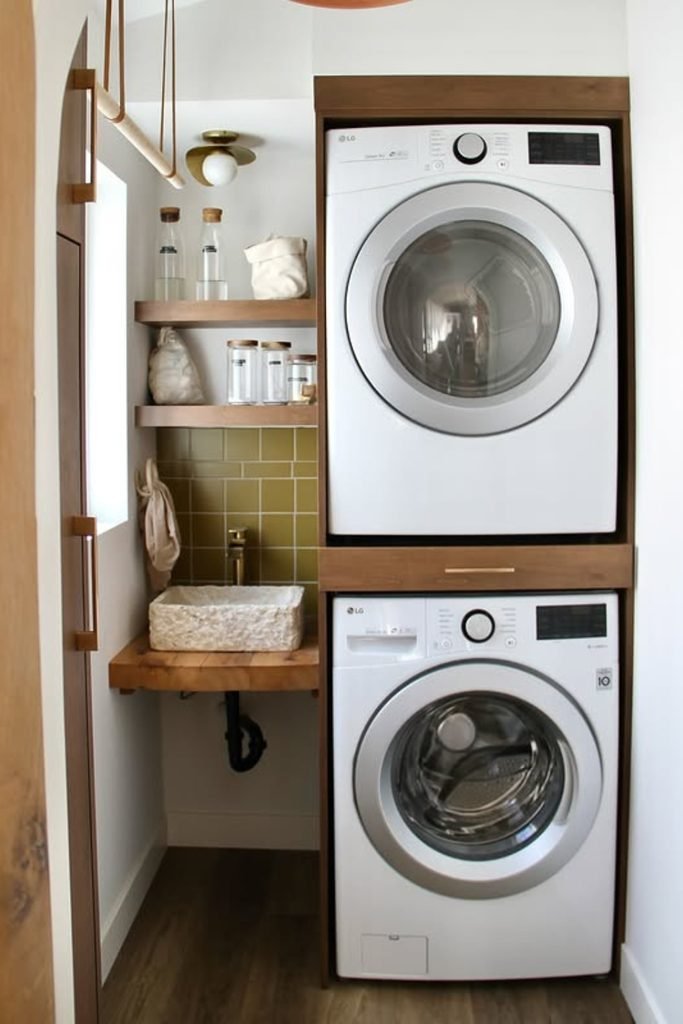
This means the problem is often downstream, where unfinished steps quietly build up even though loads are being washed consistently.
Good laundry organization should keep clothes moving through every stage instead of treating washing as the finish line.
The Real Bottleneck Isn’t Washing
The biggest laundry bottleneck often appears after drying, when clean clothes land in a basket & stay there indefinitely.
That basket starts as a temporary holding spot, but without a clear next step, it quickly becomes permanent storage.
You may keep washing new loads while yesterday’s clean clothes remain unfolded or folded but still waiting to be put away.
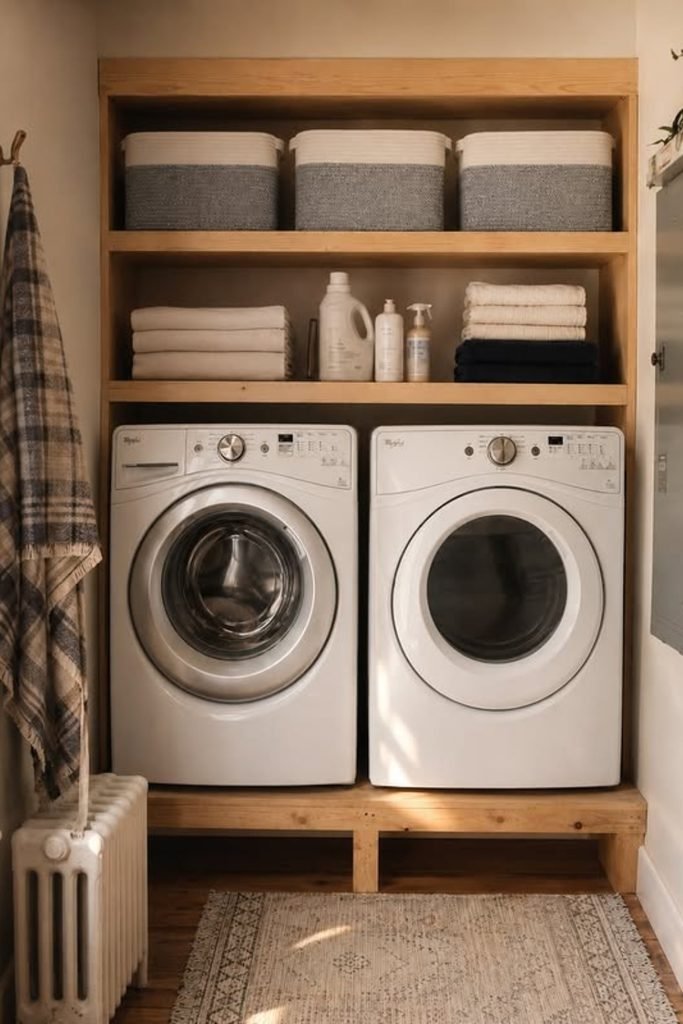
The issue usually isn’t your washer, dryer, or available storage, it’s the missing trigger that tells you to finish the process.
Without a fixed habit, such as putting clothes away immediately after folding, this final step becomes easy to postpone.
You can create that trigger closes the psychological gap between “laundry is clean” and “laundry is completely finished.”
Map Your Laundry around Actual Workflow
Laundry works best when every stage, dirty, sort, wash, dry, fold, and store, has a clear physical place.
Without dedicated spots, clothes pause between steps and slowly turn into piles on floors, machines, or random surfaces.
Mapping the room around this sequence keeps each load moving forward instead of getting stuck halfway through the process.

1. The Drop Zone
Place the hamper where family members naturally remove or bring clothes so using it requires almost no extra thought.
If the drop zone is inconvenient, dirty clothes are more likely to land on the floor or nearby furniture instead.
Choose an easy-to-reach collection point that makes putting clothes in the hamper the simplest possible option.
2. The Sorting Station
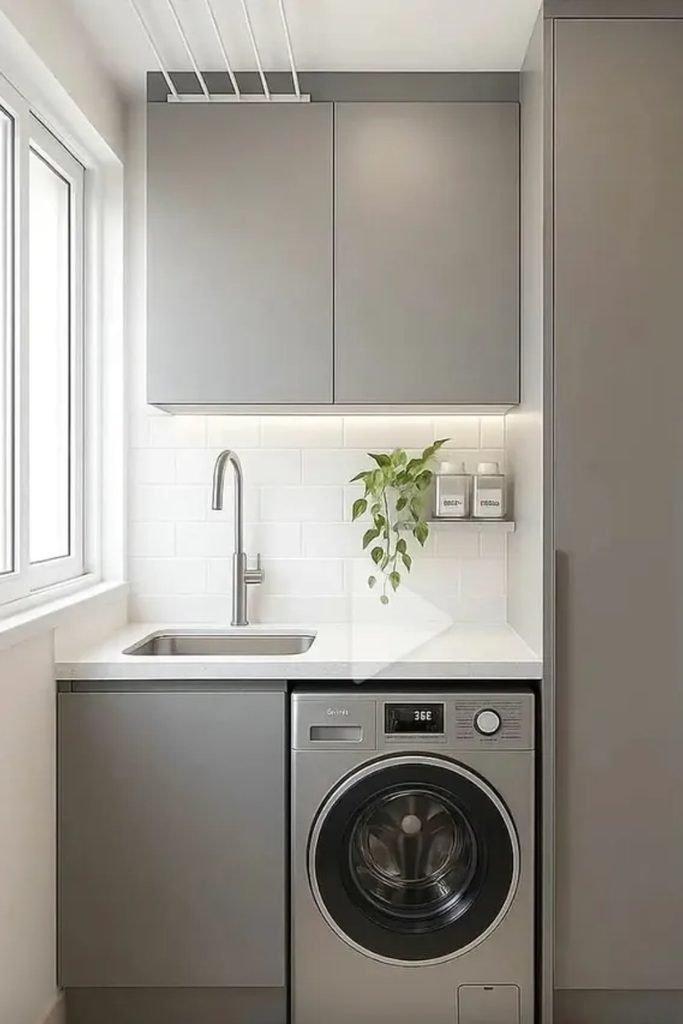
Create a sorting spot before the washer so clothes are already divided when you are ready to start a load.
Separate basics such as lights, darks, and delicates rather than sorting through one large mixed hamper every wash day.
Pre-sorting removes last-minute decisions and makes it easier to see when you have enough clothes for a full load.
3. The Wash-to-Dry Handoff Spot
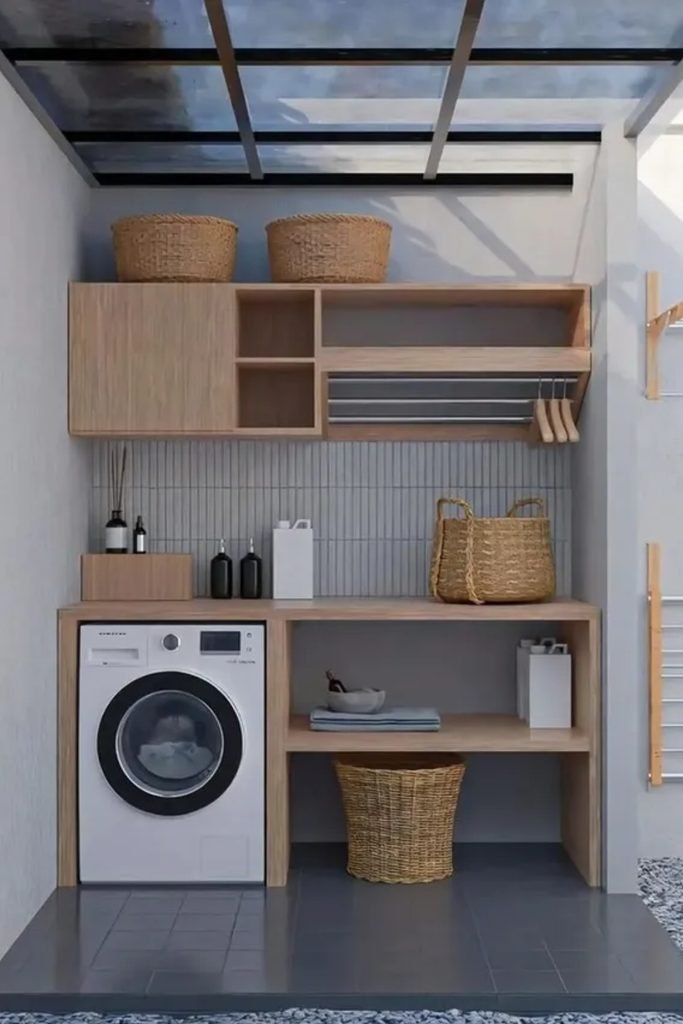
Keep a basket or clear surface beside the machines for transferring wet clothes from the washer to the dryer.
This small handoff zone prevents damp items from being dropped on the floor when the dryer is occupied or unavailable.
It also gives every load a temporary place without interrupting the natural movement from washing to drying.
4. The Fold-and-Stage Surface
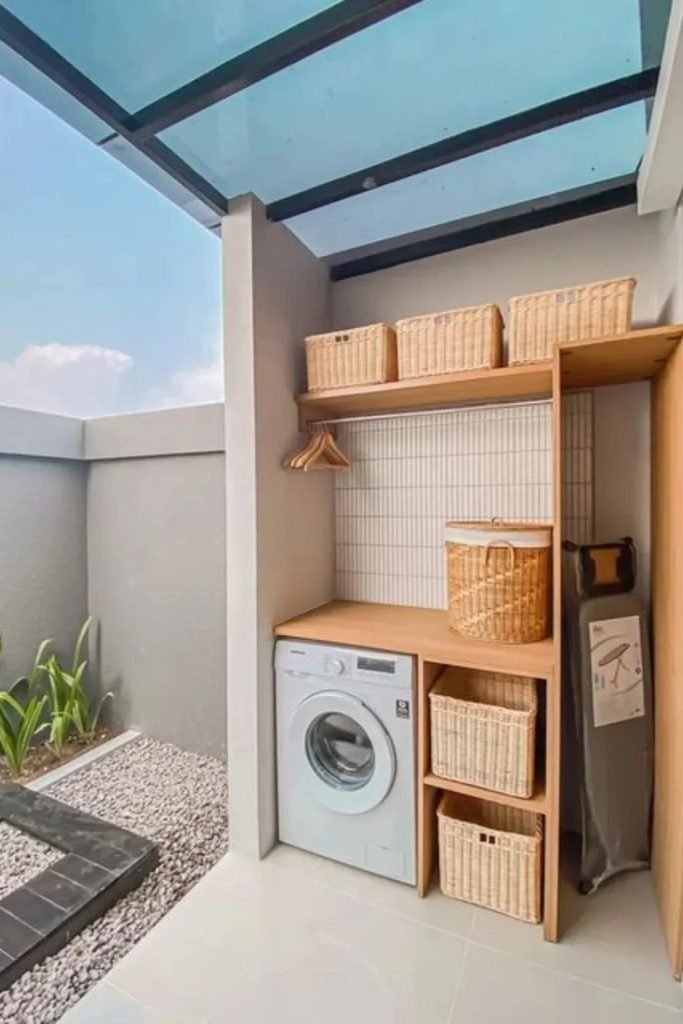
Give dry clothes a flat folding surface immediately after they come out of the dryer instead of returning them to baskets.
A nearby counter, tabletop, or machine-top surface helps you fold items while they are still warm and less wrinkled.
Once folded, clothes can be staged by room or person so the final put-away step becomes quicker and easier.
Sorting Systems to Save Time
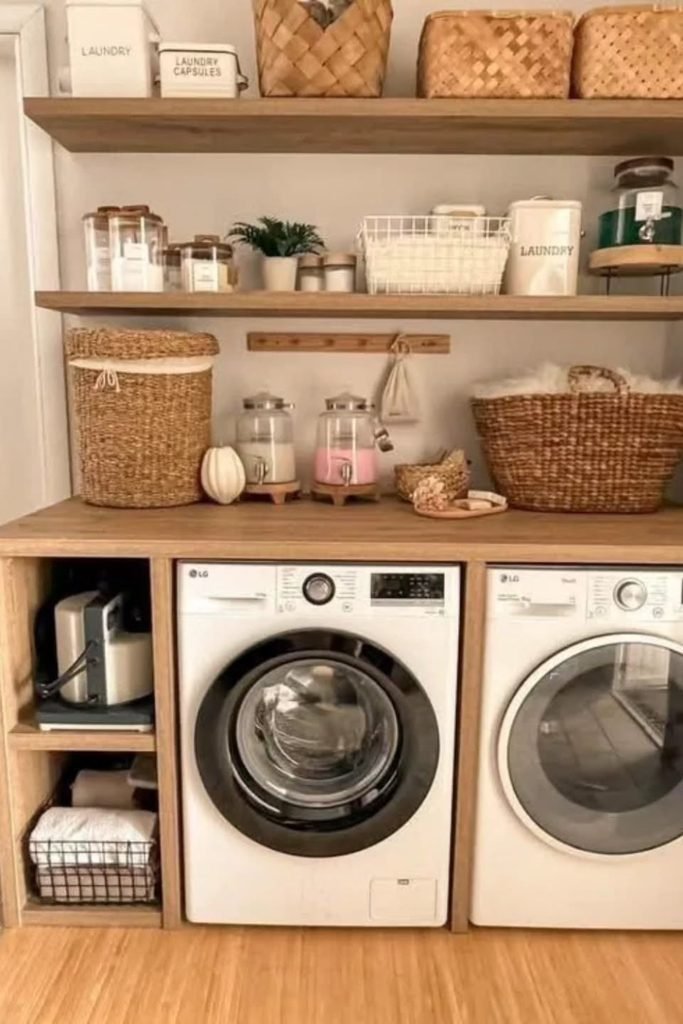
The best sorting system is simple enough that everyone can follow it without stopping to remember complicated categories or rules.
Overly detailed systems may look organized at first, but they often get abandoned once laundry starts moving quickly again.
Stick with a few useful divisions that reduce decisions and make starting the next load almost automatic.

1. Color-Coded Bins
Use different colored bins for your main laundry categories so everyone can recognize the correct place at a glance.
This visual system removes labels and decision-making from the process, which makes daily sorting much easier to maintain.
Keep the categories broad, such as lights, darks, and colors, so the system stays practical rather than overly complicated.
2. Per-Person Baskets
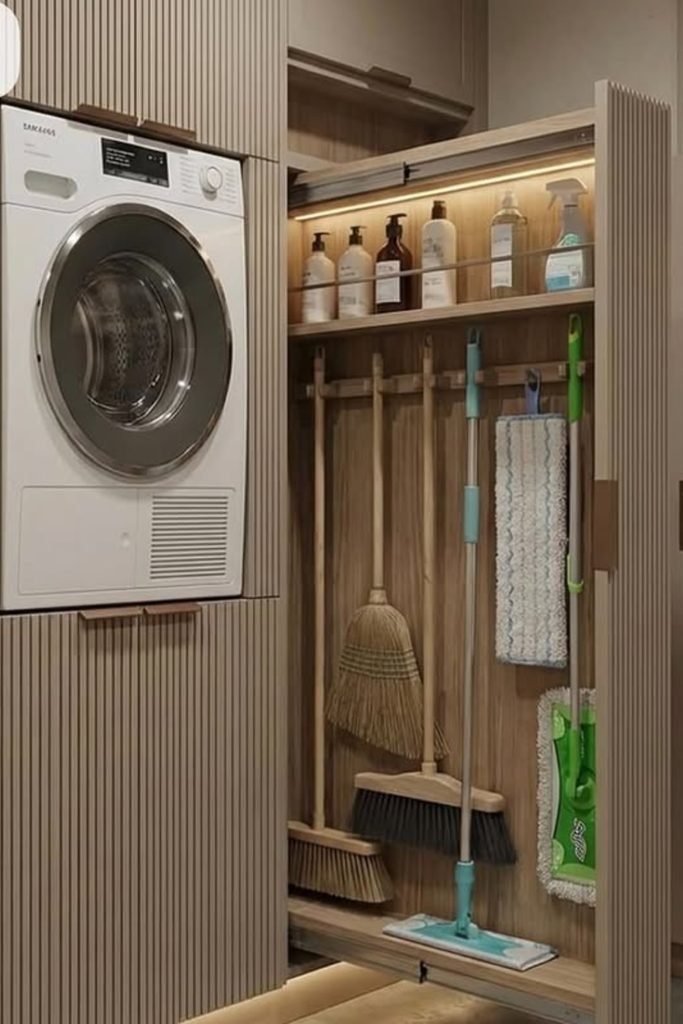
Assign one basket to each household member so clean clothes do not get mixed together after washing and drying.
This works especially well in larger households because you can fold directly into the correct person’s basket.
When folding is finished, each basket already has one destination, making the final put-away step much more straightforward.
3. Delicate and Special-Care Separation
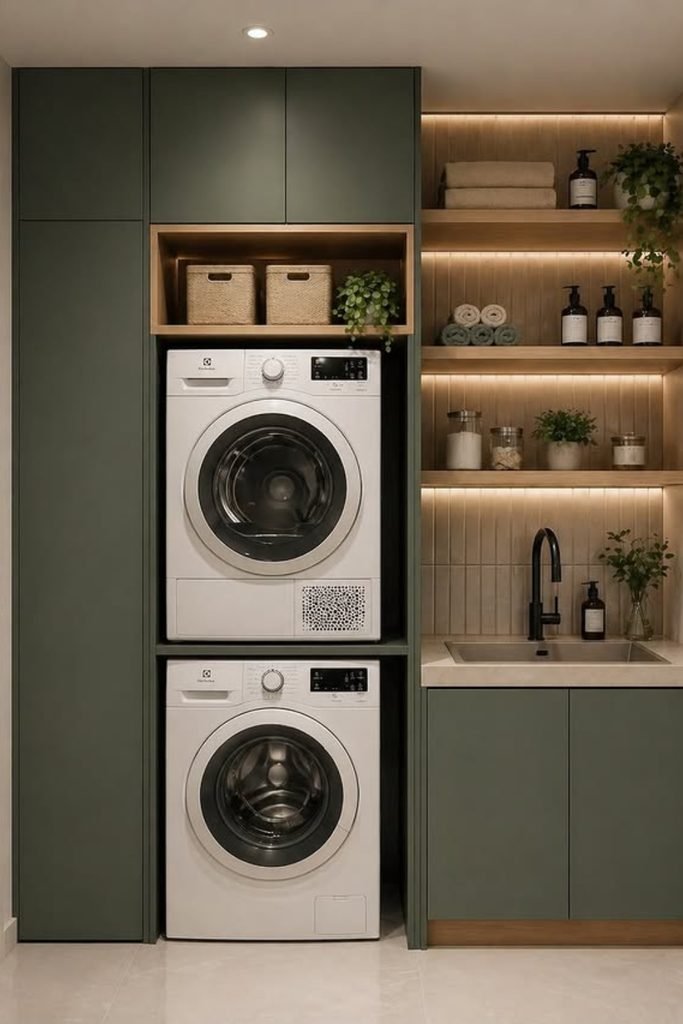
Keep one smaller bin specifically for delicates, hand-wash pieces, or anything requiring special washing or drying instructions.
Separating these items immediately prevents them from accidentally entering a regular load where heat or agitation could cause damage.
Because the category is small and specific, it adds useful protection without making your overall sorting system unnecessarily complicated.
Solve the Clean Laundry Backlog
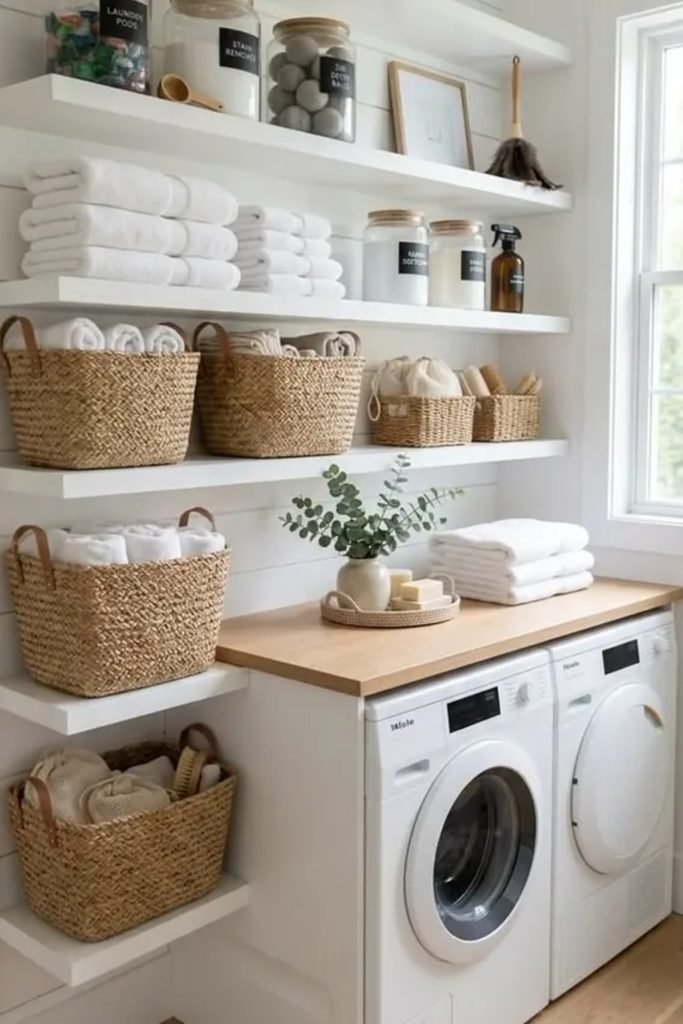
Stopping a clean-laundry backlog is less about working harder and more about creating a faster trigger for the next step.
The longer dry clothes sit untouched, the easier it becomes to postpone folding and let another load join the pile.
Build an immediate action into the workflow so clean laundry keeps moving instead of entering the familiar “later” cycle.
1. Fold Within the Same Hour
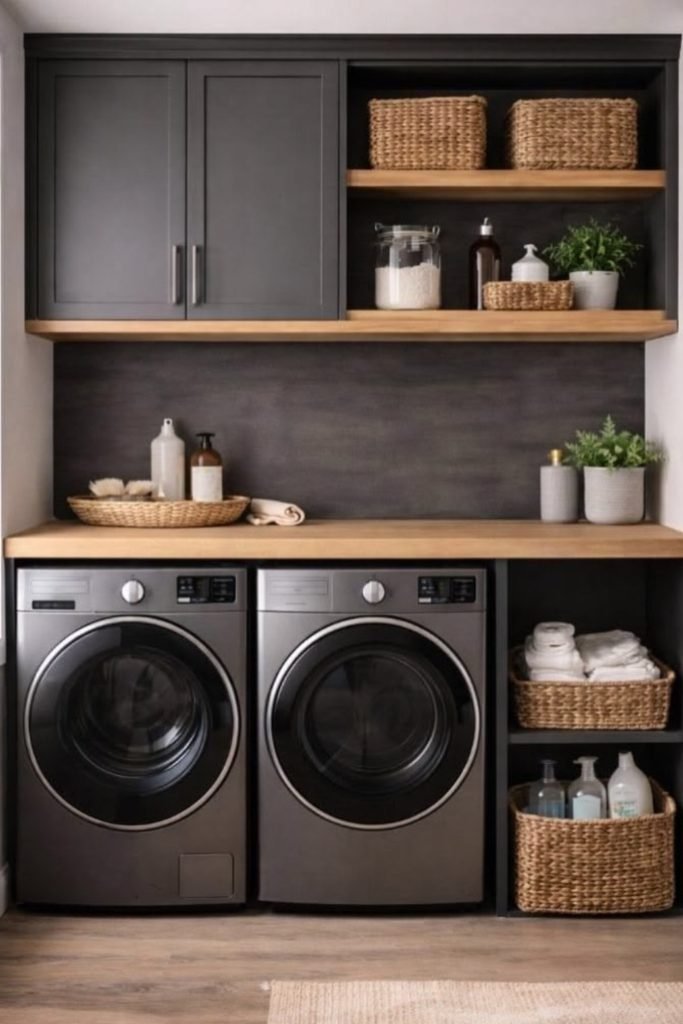
Set a timer or reminder when the dryer starts so finishing the cycle also signals that folding needs to happen.
Aim to fold within the same hour rather than leaving clean clothes in a basket until sometime later that day.
This short deadline prevents “I’ll do it later” from turning one finished load into a growing clean-laundry backlog.
2. Own Landing Basket
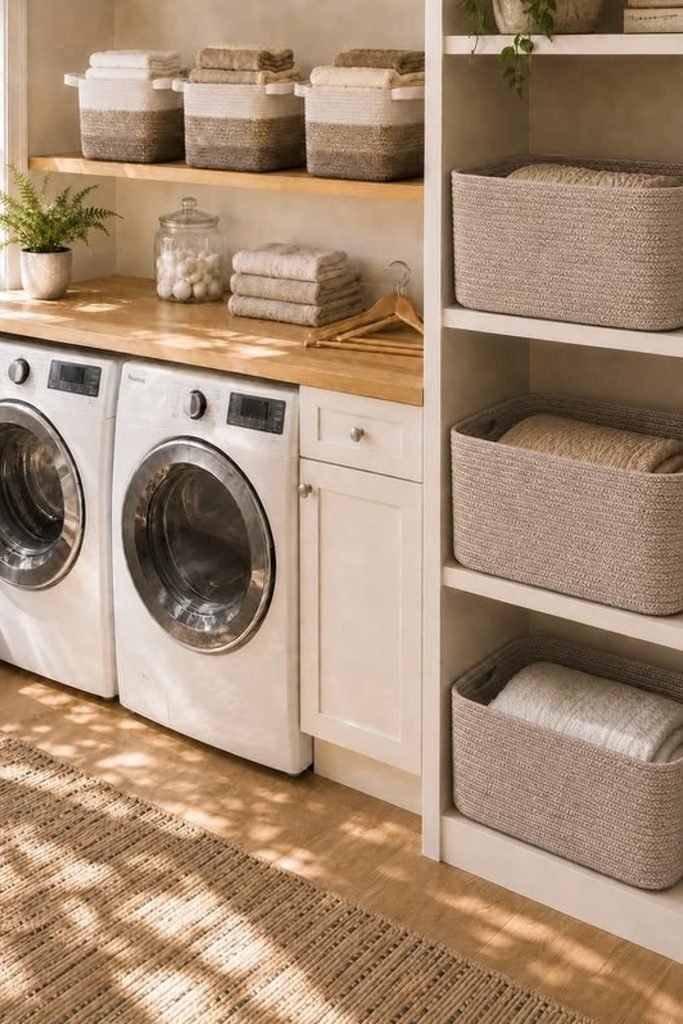
Give each household member a dedicated basket where their clean, folded clothes can land immediately after the folding stage.
Instead of one person carrying everything away, each family member becomes responsible for taking their basket back to their room.
Distributing this final step keeps clean laundry from collecting centrally and makes putting clothes away part of everyone’s routine.
Store Detergents and Supplies
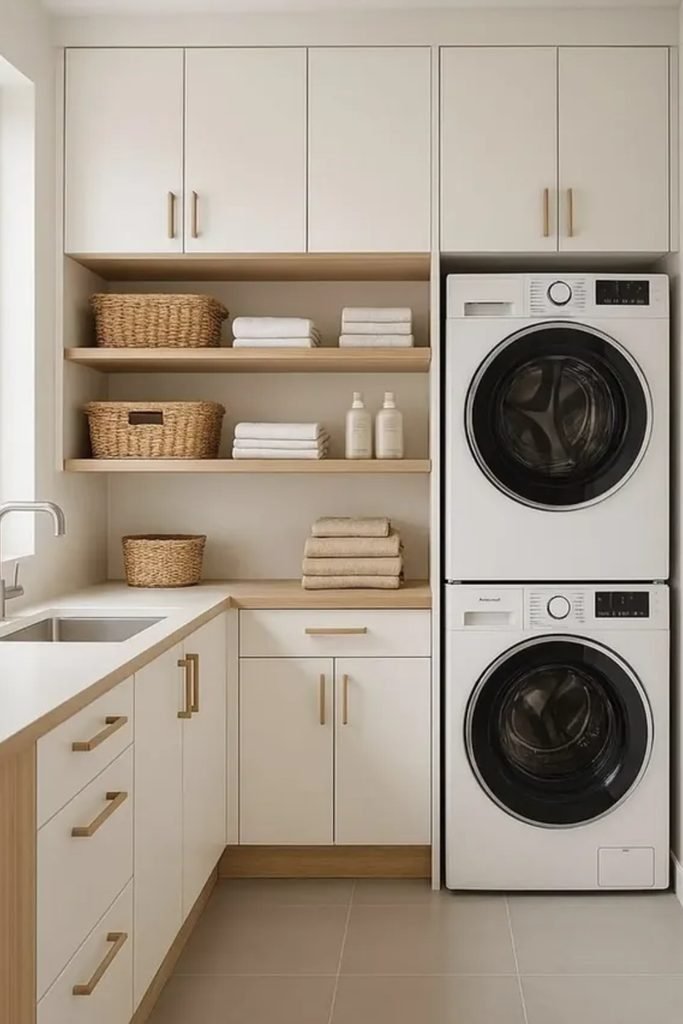
Laundry supplies should be stored according to both how often you use them and how safely they need to be positioned.
Frequently used essentials belong close to the washing zone, while hazardous or bulky products need more protected storage locations.
This approach keeps the workflow convenient without placing strong chemicals or unnecessary bulk within easy everyday reach.

1. Daily-Reach Items
Keep frequently used basics such as a stain-remover pen or small detergent pod container within easy reach of the washer.
A compact counter caddy or nearby shelf lets you grab these essentials without interrupting the washing and stain-treatment process.
Only keep small working quantities here so the everyday zone stays useful without becoming crowded with bulky laundry supplies.
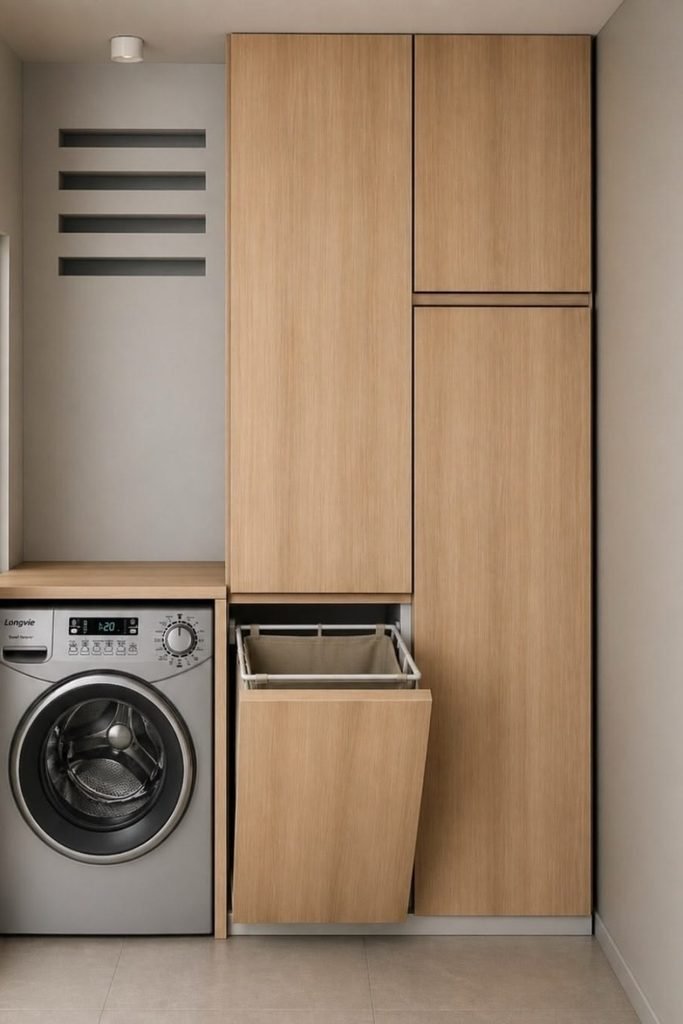
2. High-Shelf Chemical
Store bulk detergent refills, bleach, and stronger laundry chemicals on a higher, secure shelf away from children and pets.
These products do not need prime workspace because they are used less frequently than your everyday washing essentials.
Keeping hazardous and oversized supplies higher also protects the active laundry zone from clutter while maintaining safer household storage.
Make a Small Laundry Space Work
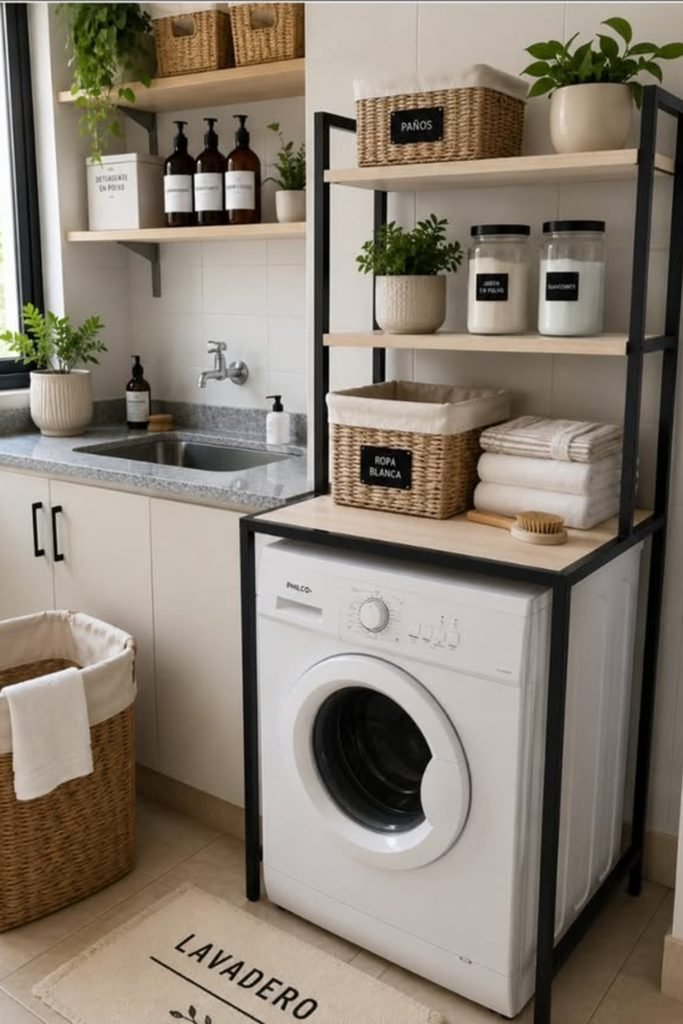
- Use stackable machines to open up floor space for baskets or a narrow storage zone.
- Add an over-the-door rack for sprays, clothespins, cleaning products, or other frequently used lightweight supplies.
- Install a wall-mounted drying rack that folds away when you are not air-drying delicate or damp clothing.
- Slide a narrow rolling cart between machines or walls for detergent, stain removers, and small laundry essentials.
- Mount a pegboard for hangers, brushes, mesh bags, and tools that otherwise clutter shelves or machine tops.
- Use magnetic holders on machine sides for small items such as dryer sheets, lint tools, or missing socks.
Controlling Odor and Mildew
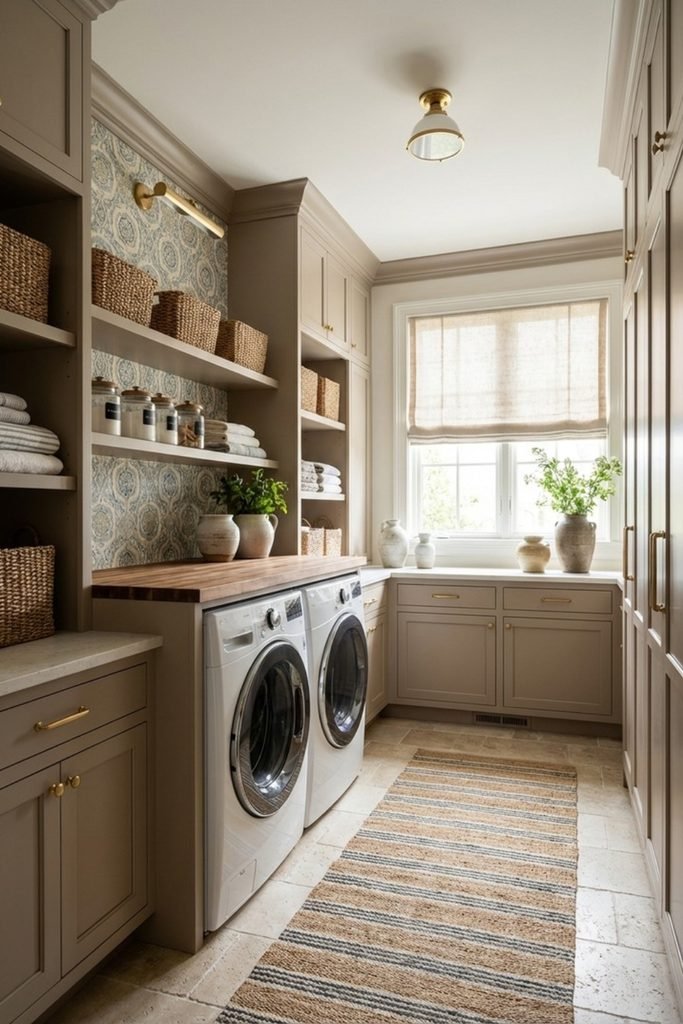
Laundry rooms naturally collect moisture, so persistent odors and mildew are often caused by habits rather than poor cleaning alone.
Wet clothes, closed machines, and trapped humidity can keep moisture sitting in the room long after a load finishes.
Building airflow and fast-drying habits into the routine helps prevent smells before they have a chance to develop.
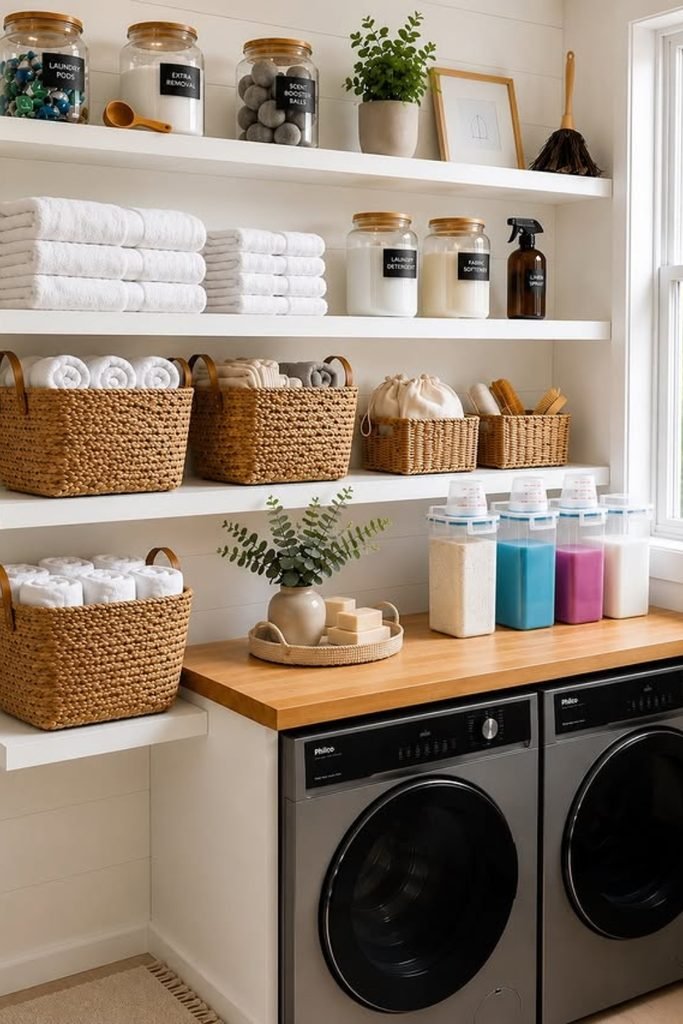
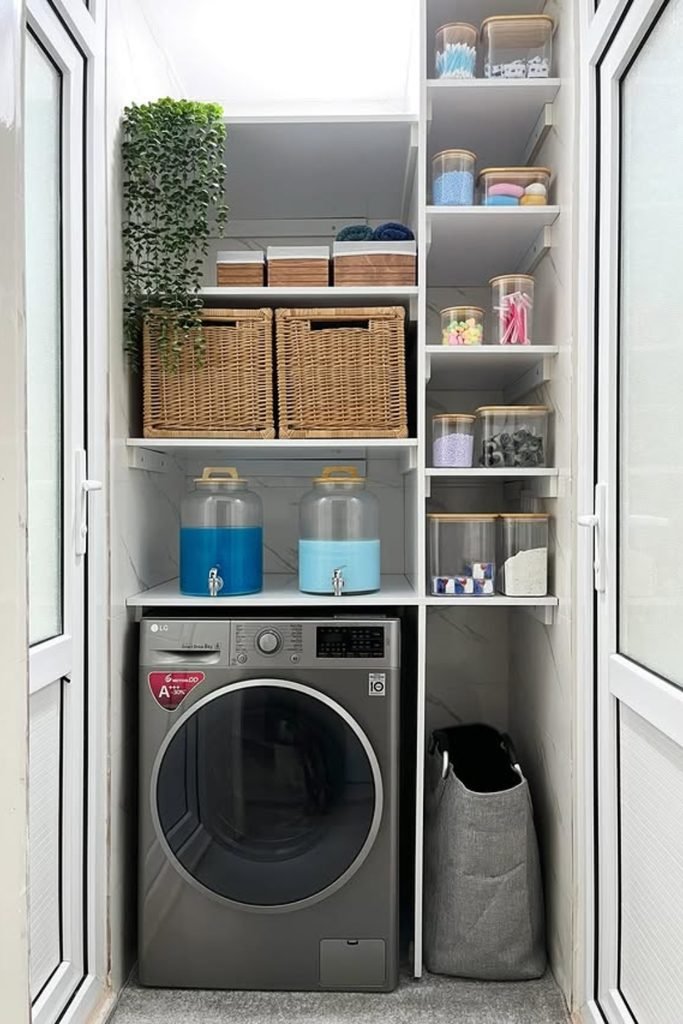
1. Ventilation and Airflow Basics
Run an exhaust fan, crack a nearby window, or leave the laundry-room door open after washing and drying.
Extra airflow helps trapped humidity escape instead of settling on walls, machines, fabrics, and other surfaces around the room.
Keep air moving until the space feels dry, especially after several loads or when air-drying clothes indoors.
2. The Damp-Clothes Rule
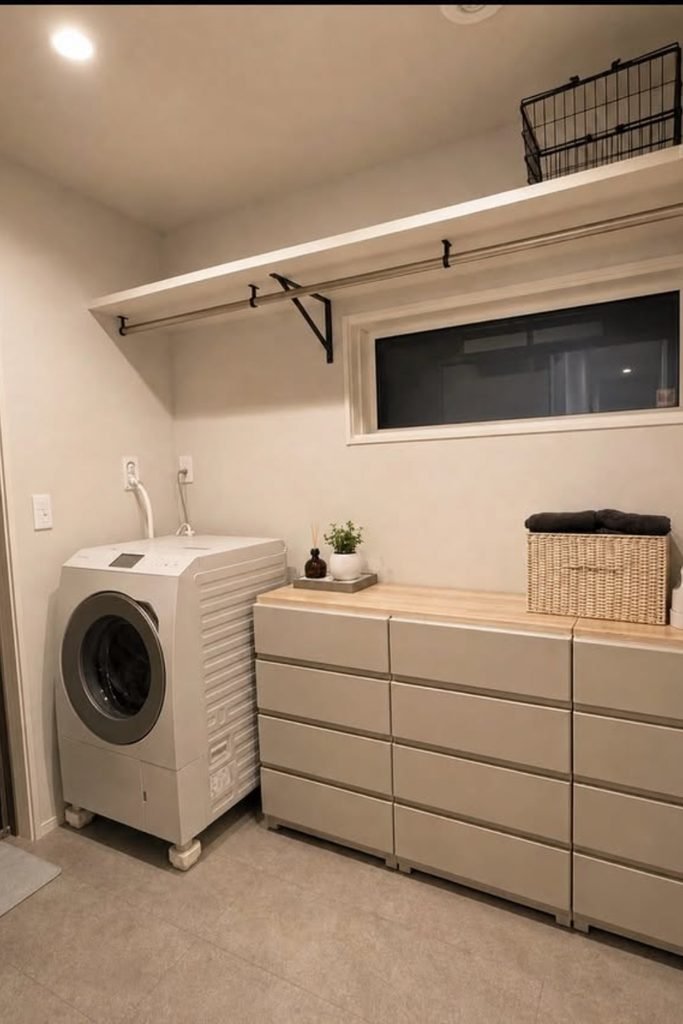
Never leave wet or damp clothes sealed inside a basket where moisture and odor can build quickly.
Move washed clothing directly into the dryer, onto a drying rack, or onto a clothesline as soon as possible.
If something cannot be dried immediately, spread it out so air can circulate instead of leaving it bundled together.
A Simple End-of-Laundry-Day Habit
Ending laundry day with two small reset steps keeps unfinished clothes from carrying over and disrupting tomorrow’s workflow.
Clearing the final load and resetting collection points closes today’s cycle instead of leaving small tasks waiting overnight.
This quick routine gives the next laundry cycle a clean starting point without requiring a bigger organization session.
1. Empty the Dryer Immediately
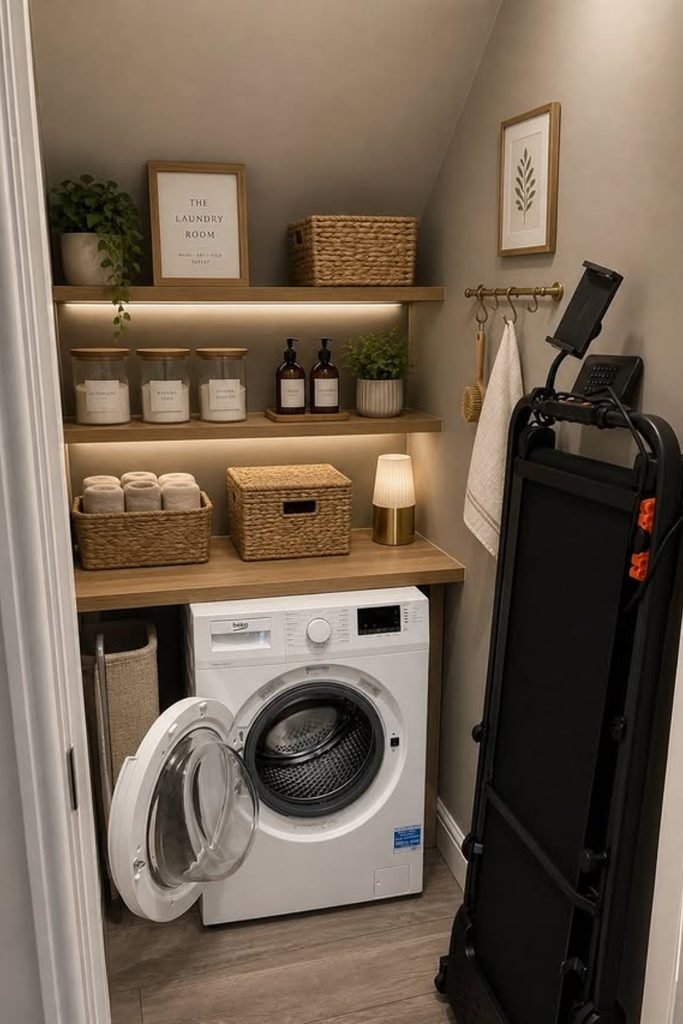
Remove clothes as soon as the dryer finishes so they do not sit inside becoming wrinkled and forgotten.
Leaving one finished load in the dryer also blocks the next wet load from moving forward through the process.
Emptying it immediately keeps the machine available and pushes clean clothes toward folding and putting away instead.
2. Reset the Sorting Bins
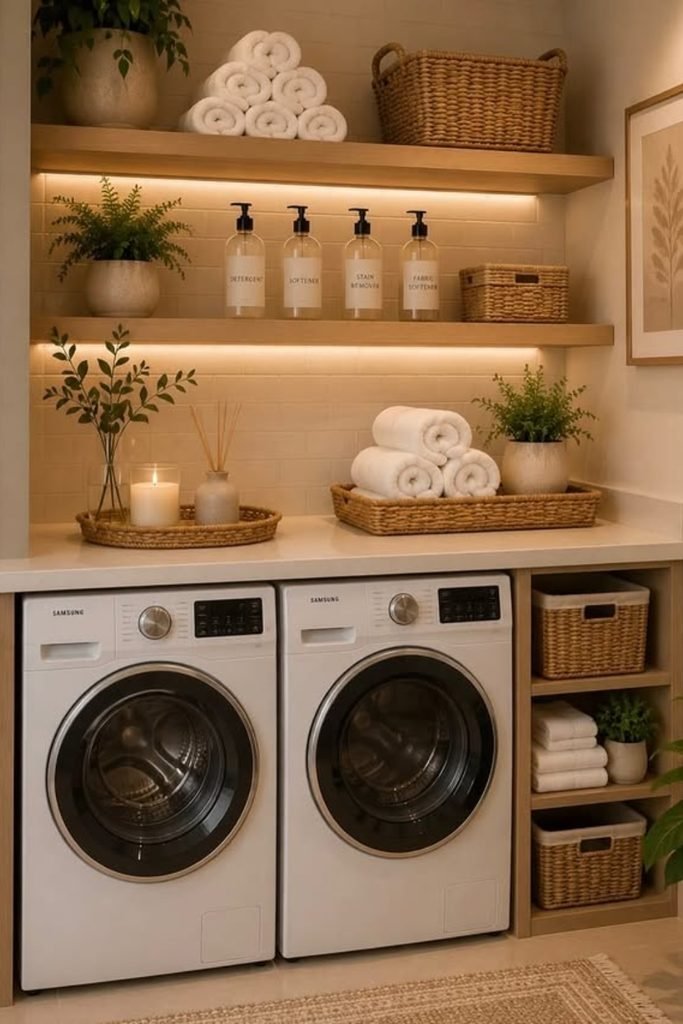
Return empty sorting bins to their designated spots once the day’s loads have moved through the washing process.
Having every bin ready means new dirty clothes can immediately enter the correct category instead of collecting elsewhere.
This small reset lets tomorrow’s laundry workflow begin smoothly without reorganizing baskets before you can even start washing.
Conclusion
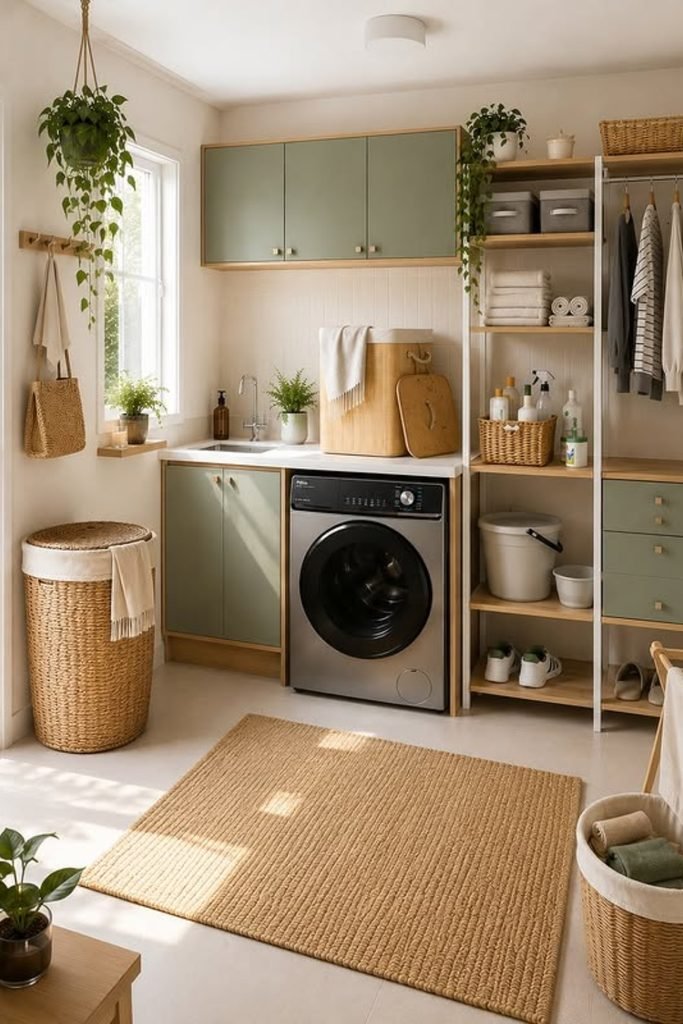
A well-organized laundry room should move clothes through a complete process rather than simply hide clutter behind baskets & shelves.
When every stage has a clear place & trigger, fewer loads get stuck between washing, folding, & putting away.
Simple sorting, quick handoffs, safe supply storage, and end-of-day resets make the entire routine easier to maintain.
You can focus on keeping laundry moving forward, & the room naturally becomes cleaner, calmer, and much easier to manage.
FAQs
How Do You Organize a Small Laundry Closet?
Use vertical space with shelves, over-the-door racks, and wall-mounted organizers instead of filling the limited floor area.
Keep everyday supplies near the machines, while baskets and less-used items should have clearly assigned storage spots.
Choose foldable or slim solutions so sorting, drying, and folding can still happen without making the closet feel overcrowded.
What’s the Best Way to Stop Clean Laundry From Piling Up?
Treat folding and putting clothes away as part of the same laundry cycle instead of separate tasks for later.
Fold clothes shortly after drying and divide them into individual baskets so every load already has a clear destination.
A fixed put-away trigger prevents clean clothes from becoming permanent basket storage while new loads continue piling up.