A garage can easily turn into a place where tools, sports gear, seasonal boxes, & random household items start piling up.
The problem usually is not a lack of space, it is simply not having a clear system for using it.
In this article, you will find practical ways to organize the things actually worth keeping in your garage.
Let’s jump in!
What Should You Keep in an Organized Garage?
A garage works best when it holds things that are bulky, durable, messy, or often used outdoors.
Instead of treating it like extra space for everything that doesn’t fit inside the house, you can first decide what really belongs there.
Once you do that, the rest of your garage can feel much easier to organize.
Things that are worth keeping in a garage include:
- Hand & power tools for repairs & DIY projects
- Lawn & garden equipment such as rakes, shovels, & trimmers
- Sports & outdoor gear that needs easy access
- Automotive supplies for cleaning & maintaining vehicles
- Cleaning supplies used around the home & outdoors
- Seasonal decorations stored between holidays
- DIY & project materials for current or future projects
- Hardware & small parts such as screws, nails, & fasteners
- Bikes & scooters used by adults or family members
- Ladders & long equipment that can be difficult to store indoors
- Recycling & waste supplies that need a dedicated spot
- Household overflow that suits typical garage conditions
How to Organize Tools?
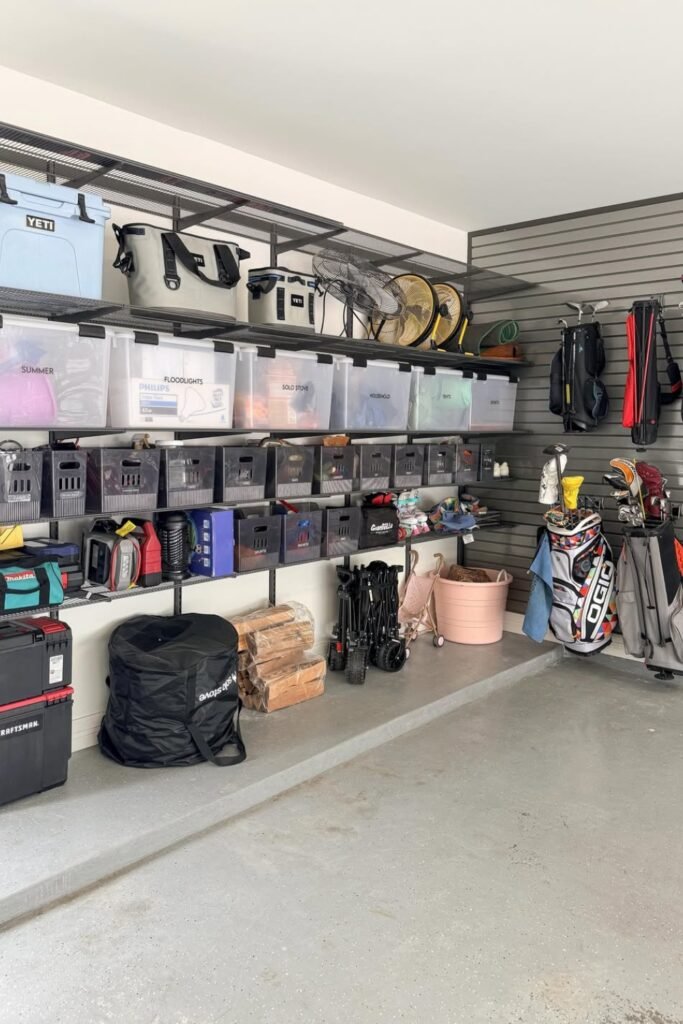
1. Labeled Wall Storage
Keep bulky garage items off the floor by pairing heavy-duty wall shelves with clear, labeled bins for seasonal gear, tools, & household supplies.
Use open baskets on lower shelves for things you grab often, while larger containers & rarely used equipment can stay higher up.
A slatwall beside the shelving can give awkward items like golf bags, folding chairs, & sports equipment their own easy-to-reach hanging spots.
2. Pegboard Workbench
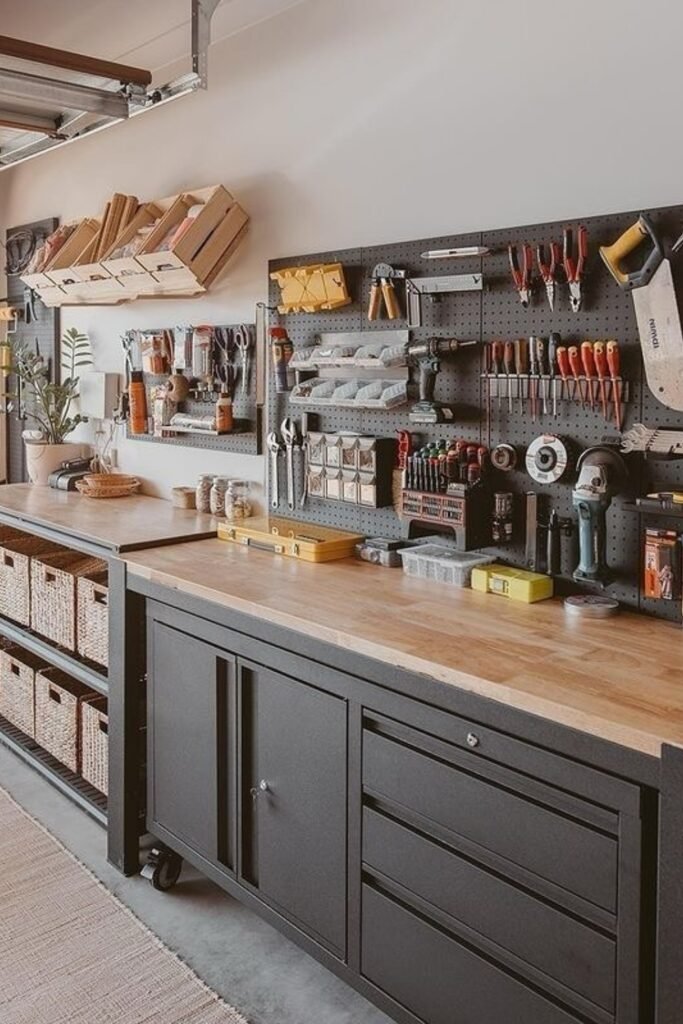
Turn the workbench wall into practical storage by hanging everyday hand tools, power tools, & small accessories on a large pegboard.
Keep the countertop mostly clear for repairs & DIY projects, while drawers & cabinets can handle heavier tools or less attractive supplies.
Add small bins, hooks, & holders across the pegboard so screws, drill bits, pliers, & frequently used tools stay within easy reach.
3. Slatwall Drop Zone
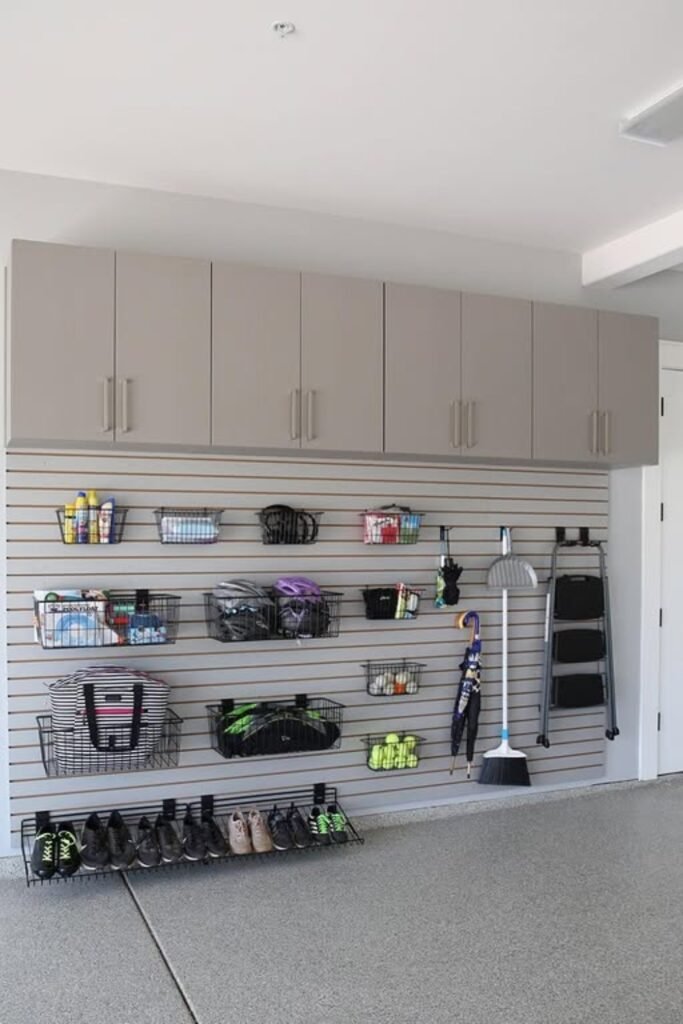
Use a slatwall system to turn an empty garage wall into flexible storage for shoes, cleaning supplies, sports gear, & everyday essentials.
Hang wire baskets at different heights so smaller items stay grouped & visible instead of getting lost inside deep cabinets or crowded shelves.
Reserve upper cabinets for less-used supplies, while frequently grabbed items stay lower where they can be picked up quickly before heading outside.
4. Vertical Bike Zone
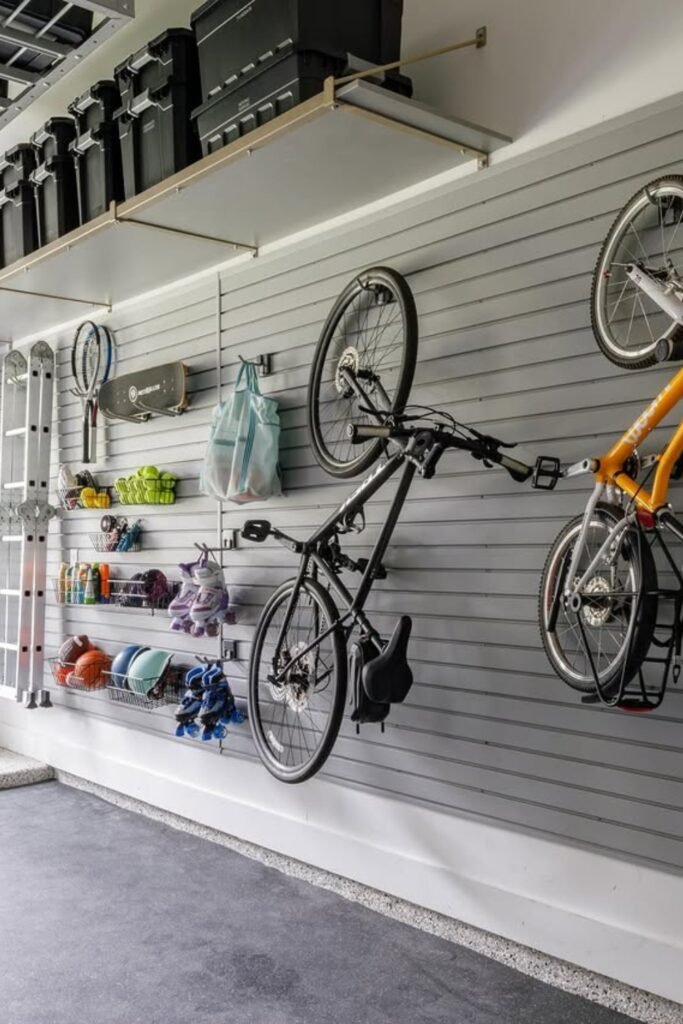
Free up valuable floor space by mounting bikes vertically on a slatwall, giving each one a secure spot without crowding the garage.
Use nearby baskets & hooks for helmets, balls, skates, rackets, & other sports gear so everything stays together in one zone.
Store rarely used boxes on overhead shelves, leaving the lower wall open for equipment you regularly need to grab & put away.
How to Organize Lawn and Garden Equipment?
1. Garden Tool Station
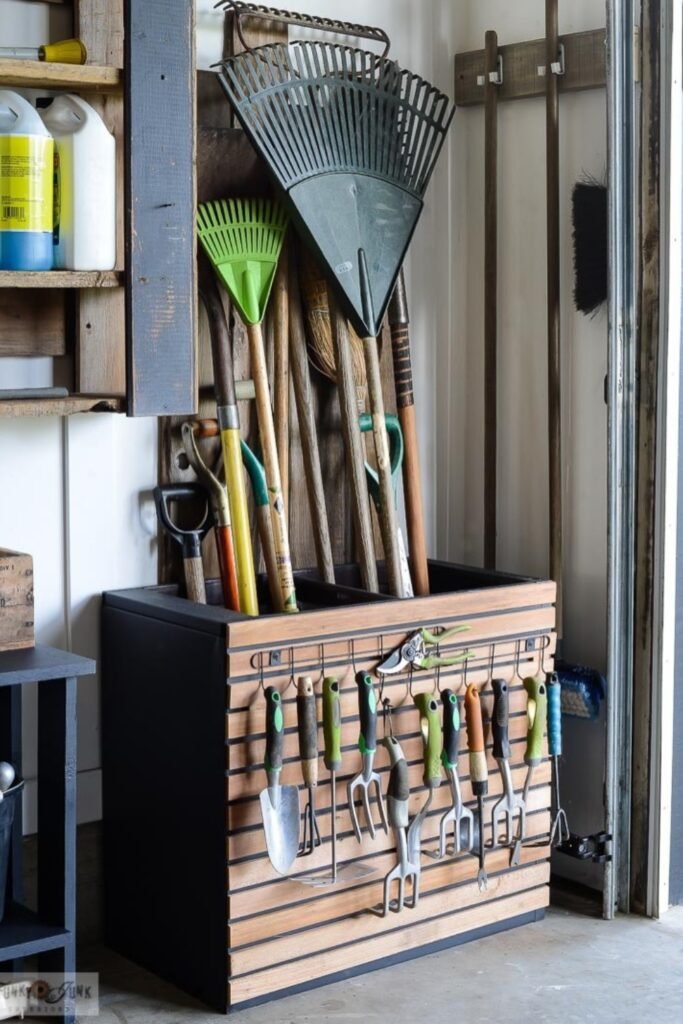
Keep long-handled garden tools upright in a sturdy DIY holder so rakes, shovels, brooms, & hoes stop falling across the garage floor.
Add hooks across the front for hand trowels, cultivators, pruning shears, & other smaller tools that can be easy to misplace.
Place the station near the garage entrance or garden access, making outdoor jobs quicker while keeping dirty equipment away from cleaner storage areas.
2. Garden Wall Zone
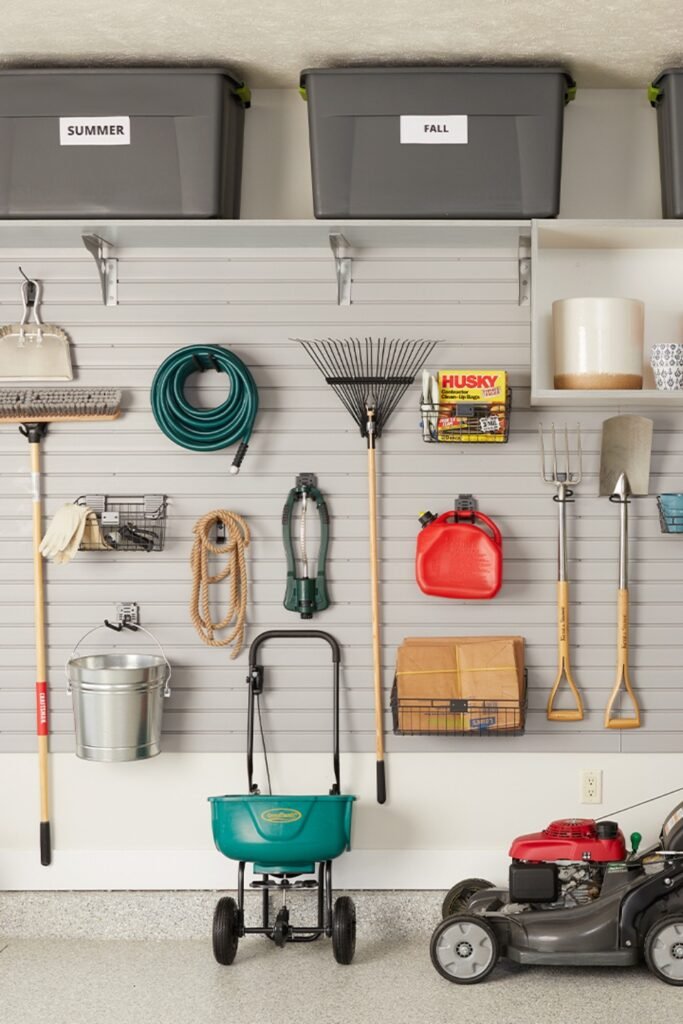
Turn one garage wall into a dedicated garden zone by hanging rakes, shovels, hoses, buckets, & smaller supplies on adjustable hooks.
Keep long-handled tools spaced apart so they’re easy to remove, while baskets can hold gloves, attachments, & frequently used gardening essentials.
Store seasonal items in labeled bins along the highest shelf, keeping valuable lower wall space open for equipment used throughout the year.
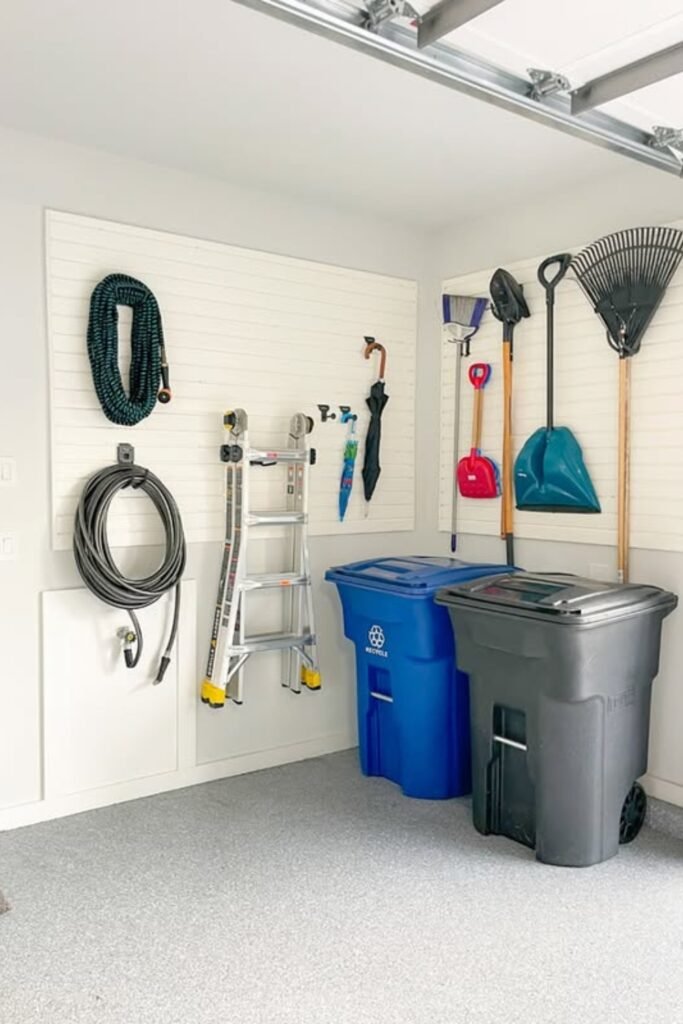
3. Utility Wall Zone
Keep hoses, ladders, rakes, shovels, & cleaning tools mounted on wall hooks so bulky equipment no longer takes over valuable floor space.
Group similar tools together & position frequently used pieces at comfortable heights, making everyday yard work & cleanup much quicker to start.
Reserve the corner below for trash & recycling bins, creating one practical utility zone without interfering with parking or walking space.
4. Garden Supply Cabinet
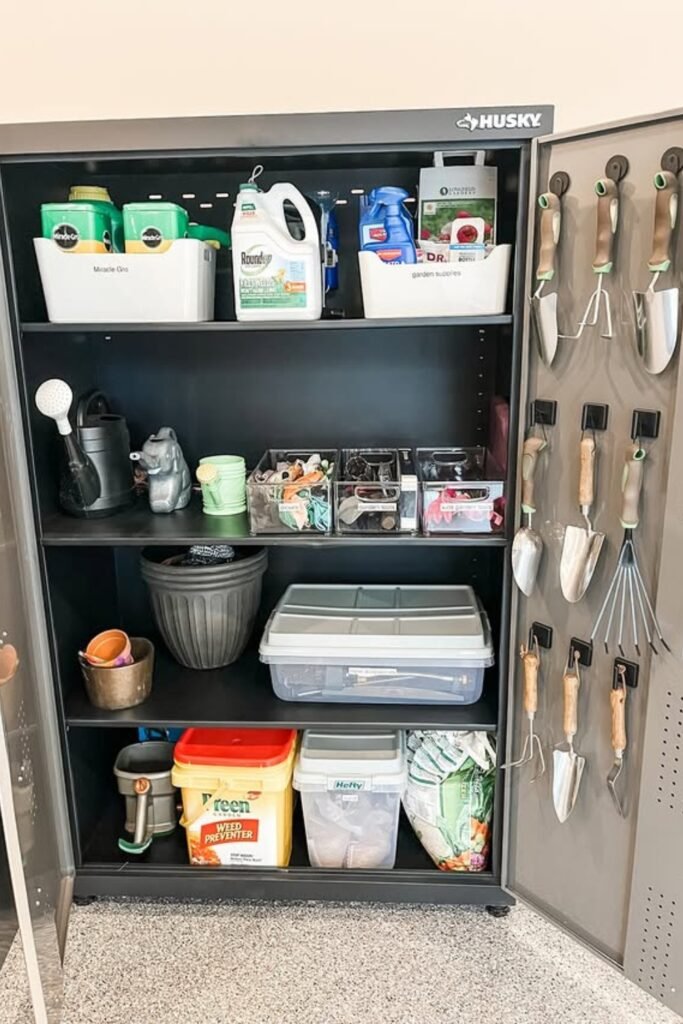
Turn a tall garage cabinet into one organized home for fertilizers, plant food, watering supplies, pots, & other gardening essentials.
Use labeled bins & small containers to separate products by purpose, preventing loose packets & accessories from getting lost across deep shelves.
Mount hand tools inside the cabinet doors with hooks, keeping trowels, cultivators, & small rakes visible without using extra shelf space.
5. Modular Garage Station
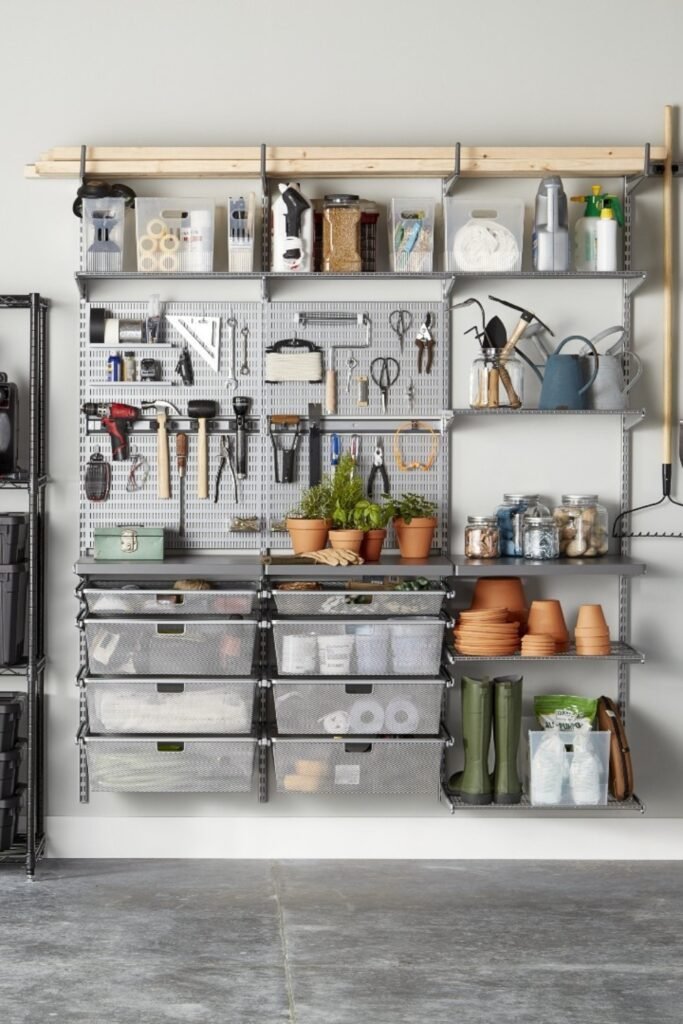
Combine wall-mounted shelves, pegboards, drawers, & freestanding racks to create separate storage spots without needing expensive built-in garage cabinets.
Keep everyday tools visible around the work area, while labeled bins & drawers handle smaller supplies that could otherwise create clutter.
Use upper shelves for lumber & rarely needed materials, leaving lower sections accessible for gardening supplies, pots, boots, & ongoing DIY projects.
How to Organize Sports and Outdoor Gear?
1. Sports Gear Wall
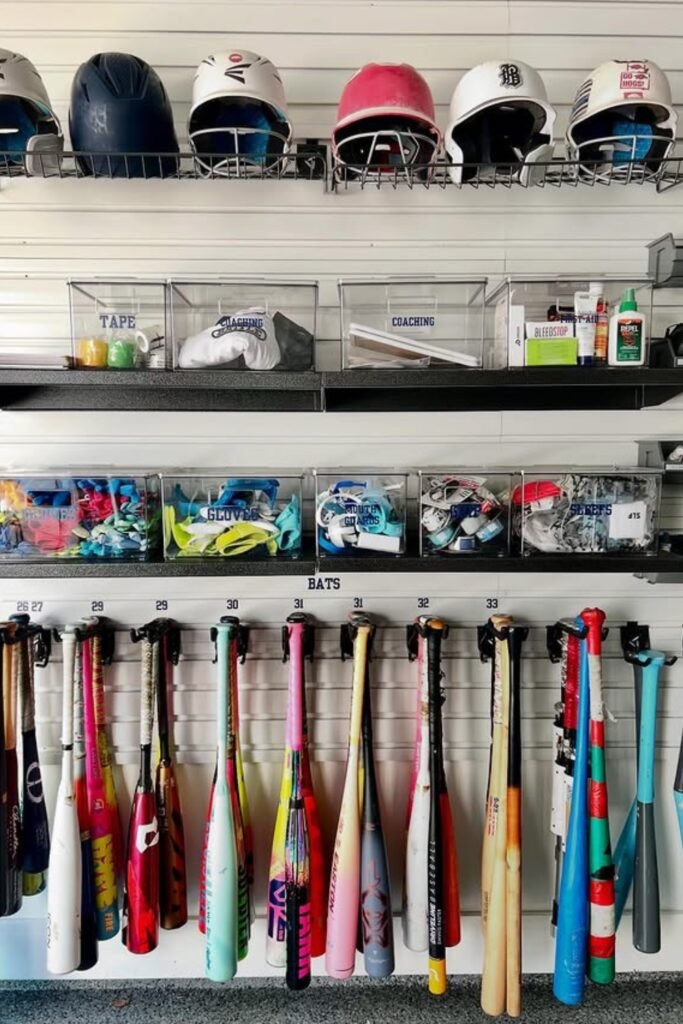
Give sports equipment its own garage wall so helmets, bats, gloves, uniforms, & smaller accessories never end up scattered across the floor.
Use clear, labeled bins for loose gear, making it easy to see what belongs together & quickly find supplies before practice.
Hang bats vertically below the shelves & keep helmets higher up, using every section of the wall without creating a crowded storage setup.
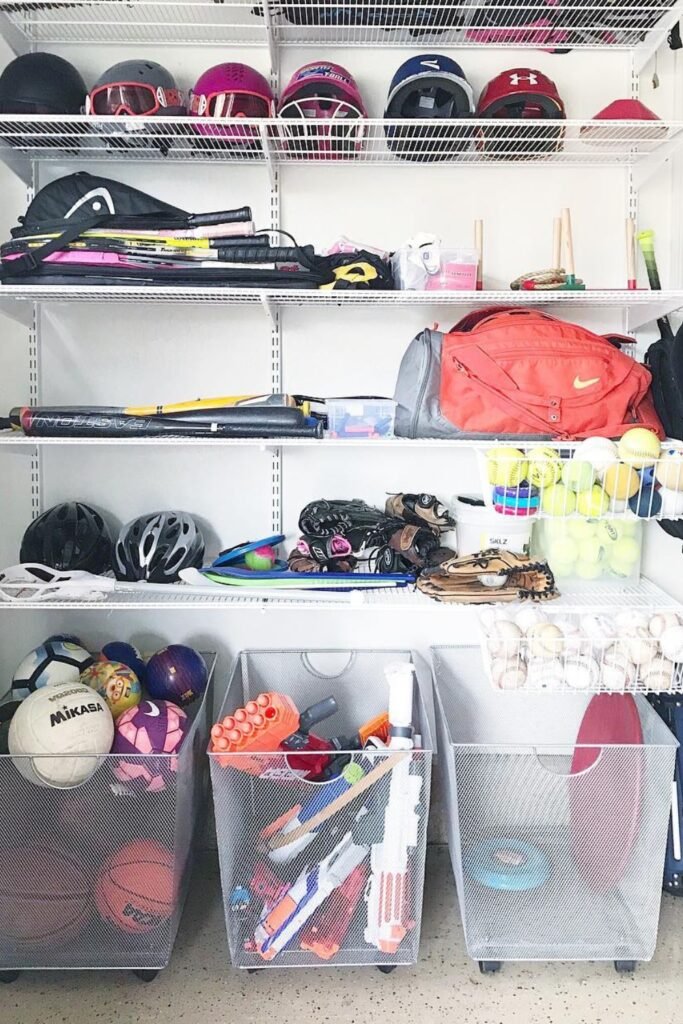
2. Sports Storage Zone
Create one dedicated sports zone with open shelving for helmets, rackets, bags, gloves, & equipment that needs quick access throughout the week.
Use large rolling baskets below for balls & bulky gear, making cleanup easier without forcing everything into small containers or crowded shelves.
Keep smaller balls in hanging baskets & group equipment by sport, so it’s easy to grab exactly what’s needed without searching through everything.
3. Vertical Sports Rack
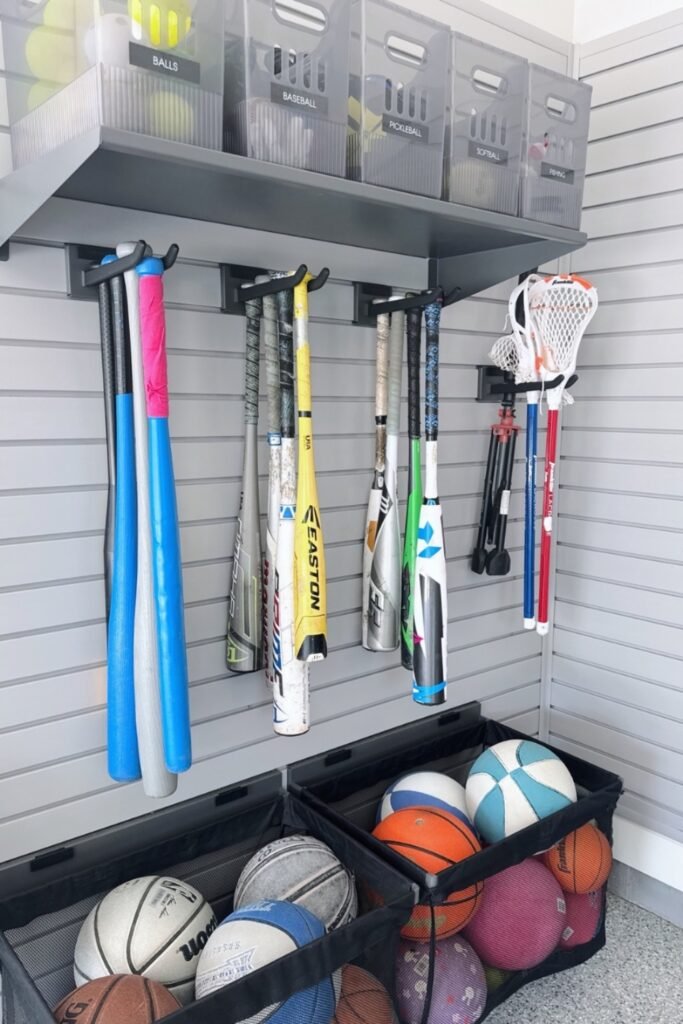
Use wall-mounted hooks to hang bats, rackets, & long sports equipment vertically, keeping awkward gear from leaning against garage walls.
Place labeled bins on the upper shelf for smaller equipment, separating balls & accessories by sport so everything stays easy to find.
Add open ball bins underneath for basketballs, footballs, & volleyballs, creating a simple grab-and-go setup that also makes cleanup much easier.
4. Full Wall System
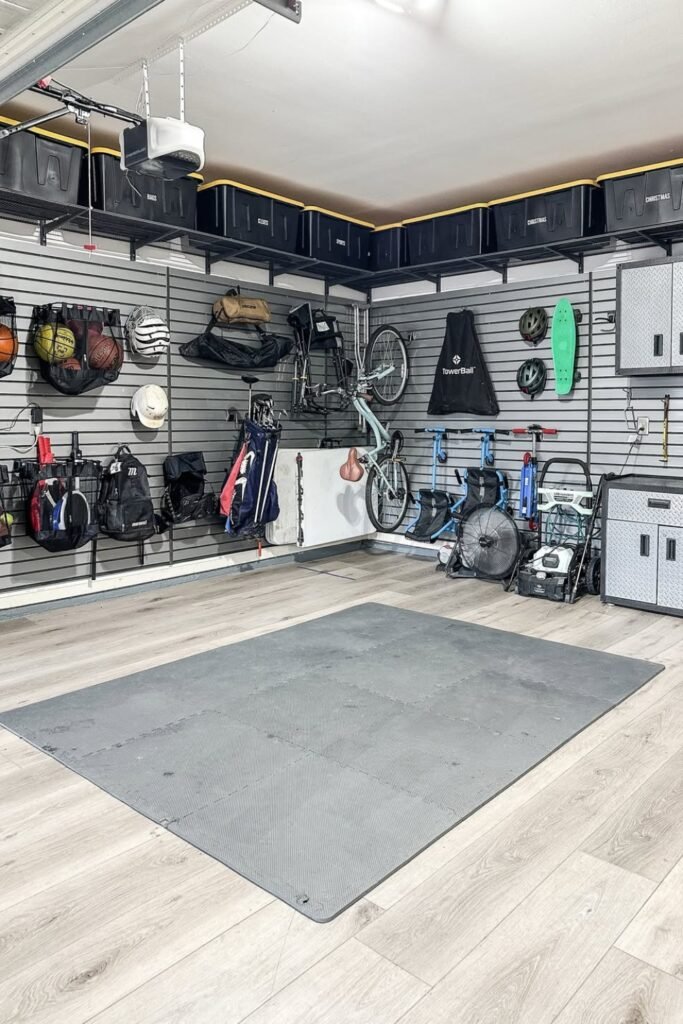
Cover the garage walls with adjustable tracks & hooks to store bikes, sports gear, helmets, bags, & bulky equipment off the floor.
Place labeled storage totes on high shelves for seasonal decorations & rarely used belongings, keeping everyday items within comfortable grabbing height.
Use separate wall sections for different activities, creating clear storage zones while keeping the center of the garage open for parking or projects.
How to Organize Automotive Supplies?
1. Car Care Wall
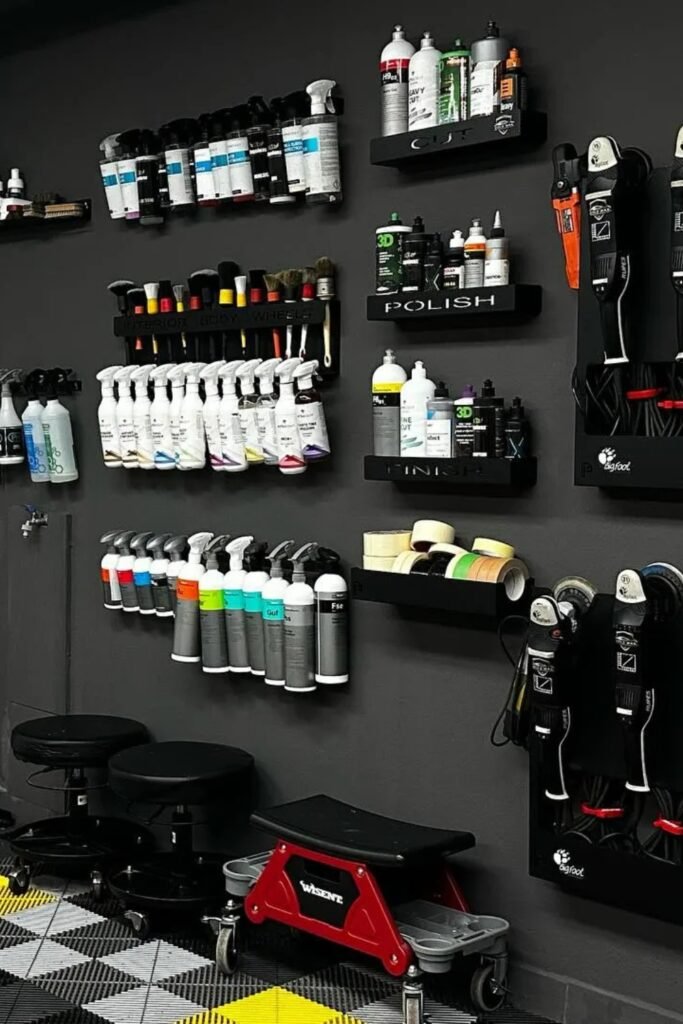
Turn one garage wall into a dedicated detailing station where sprays, polishes, brushes, & car-care products stay visible & easy to grab.
Mount compact shelves & bottle holders by product type, so cleaning, polishing, & finishing supplies never get mixed together or buried in cabinets.
Give polishers & their cords individual wall holders, keeping expensive equipment protected while leaving the floor & work surfaces completely free.
2. Power Tool Wall
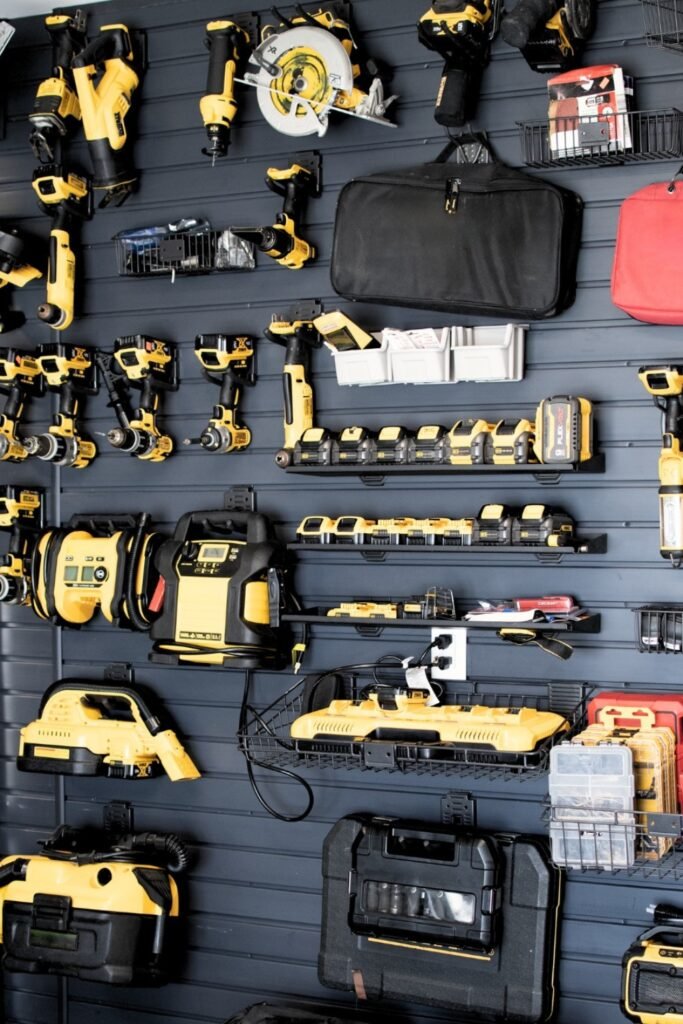
Mount power tools directly on a slatwall so drills, saws, lights, & other bulky equipment stay visible instead of filling workbench drawers.
Add narrow shelves for batteries & chargers, keeping the entire cordless system together & making it easier to spot what needs charging.
Use baskets for blades, bits, cases, & smaller accessories, giving loose pieces a permanent home while keeping valuable floor space completely open.
3. DIY Workbench Zone
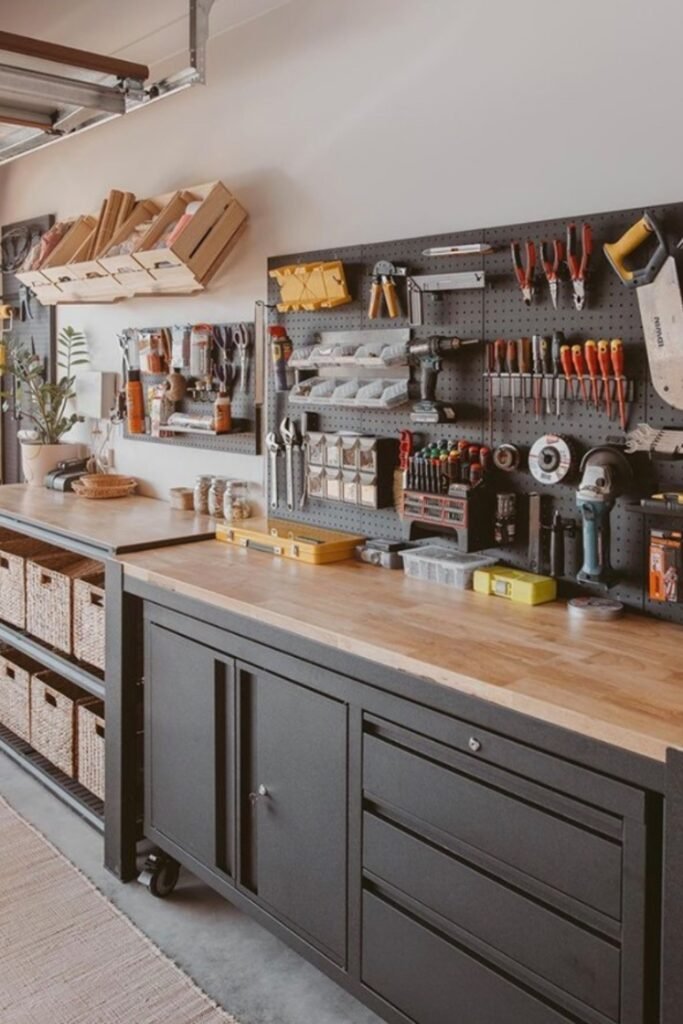
Build your main tool storage around a sturdy workbench, keeping the surface open enough for repairs, assembly, & weekend DIY projects.
Hang frequently used hand tools on a pegboard above, arranging them by type so you can find & return everything quickly.
Use drawers for heavier tools, baskets for loose supplies, & upper wall racks for scrap wood that would otherwise clutter the floor.
4. Car Wash Station
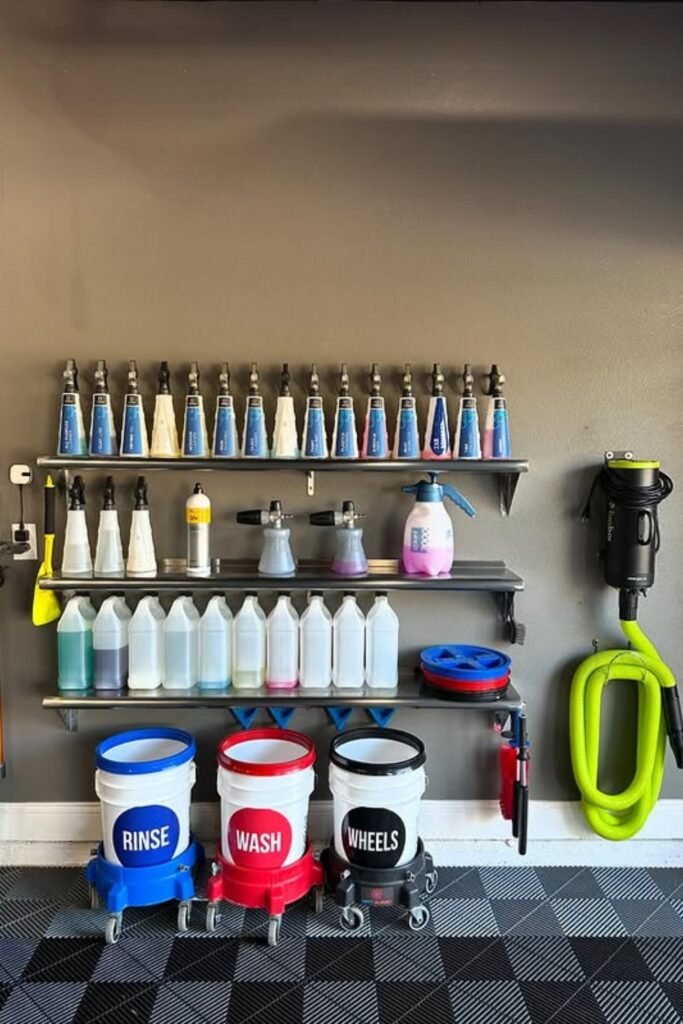
Create a dedicated car-wash wall with narrow shelves for cleaners, spray bottles, detailing products, & refills instead of scattering them around.
Arrange supplies by each cleaning step, making it easier to move from washing & rinsing to wheels, glass, & finishing details.
Keep buckets on rolling bases & hang hoses or pressure-washing equipment nearby, so the entire setup stays organized & ready to use.
How to Organize Cleaning Supplies?
Keep garage cleaning supplies together in one dedicated area instead of spreading them across different shelves.
Mount brooms, mops, brushes, & dustpans on wall hooks to save floor space.
Use portable caddies for sprays, cloths, gloves, & sponges that are regularly carried around.
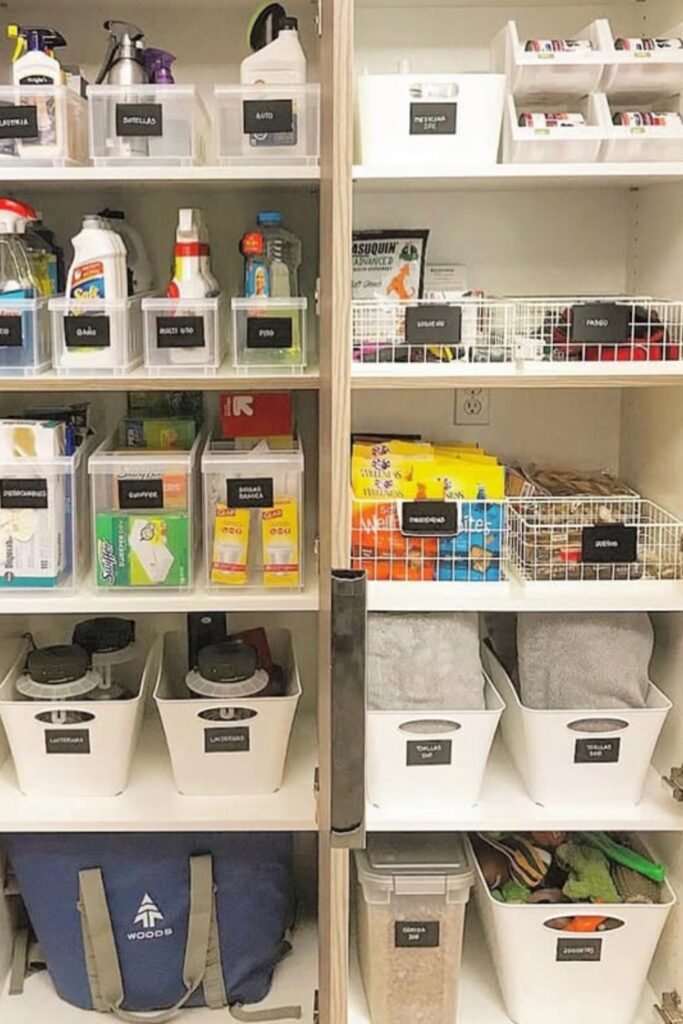
Labeled bins work well for separating car-cleaning products, household refills, & outdoor supplies.
Store heavier buckets & large containers on lower shelves, while extra products can go higher up.
This simple setup makes cleaning supplies easier to find, use, & put back.
How to Organize Seasonal Decorations?
Seasonal decorations only come out a few times each year, so they don’t need prime garage space.
Pack decorations into sturdy stackable totes & label each container by holiday or season.
You can also use different colored bins for Christmas, Halloween, fall, & other occasions to identify them quickly.
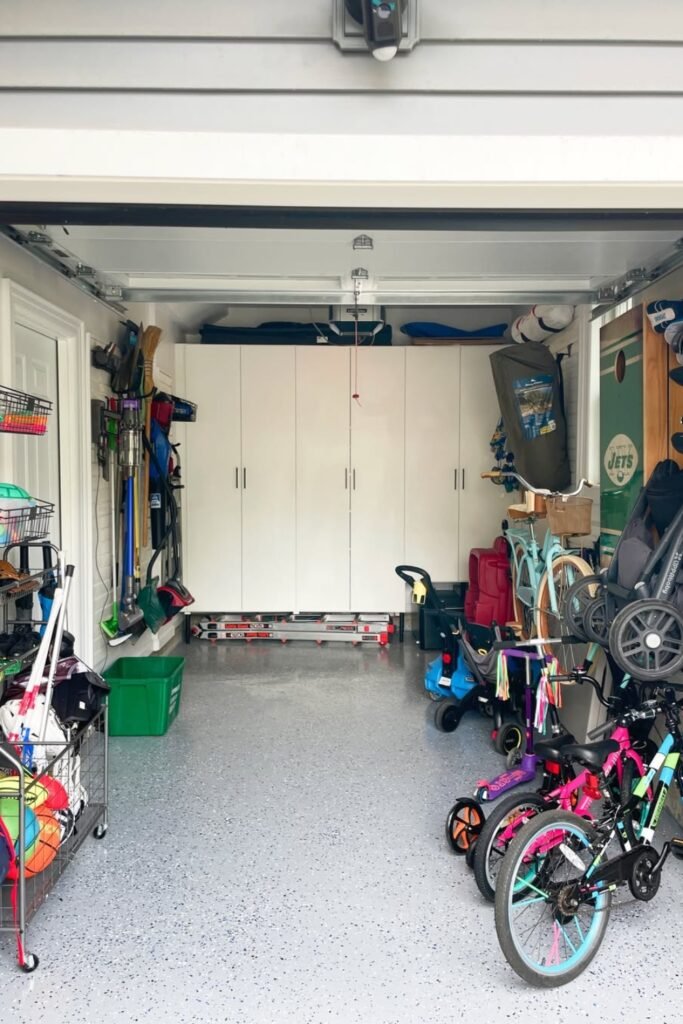
Place these containers on high garage shelves to keep everyday storage accessible.
If wall space is limited, ceiling-mounted racks can offer another practical option for storing lightweight seasonal bins safely out of the way.
How to Organize DIY and Project Materials?
Keep DIY materials close to your work area so starting & finishing projects doesn’t involve searching through the entire garage.
Store scrap wood on wall-mounted racks & keep longer boards upright in a vertical lumber organizer.
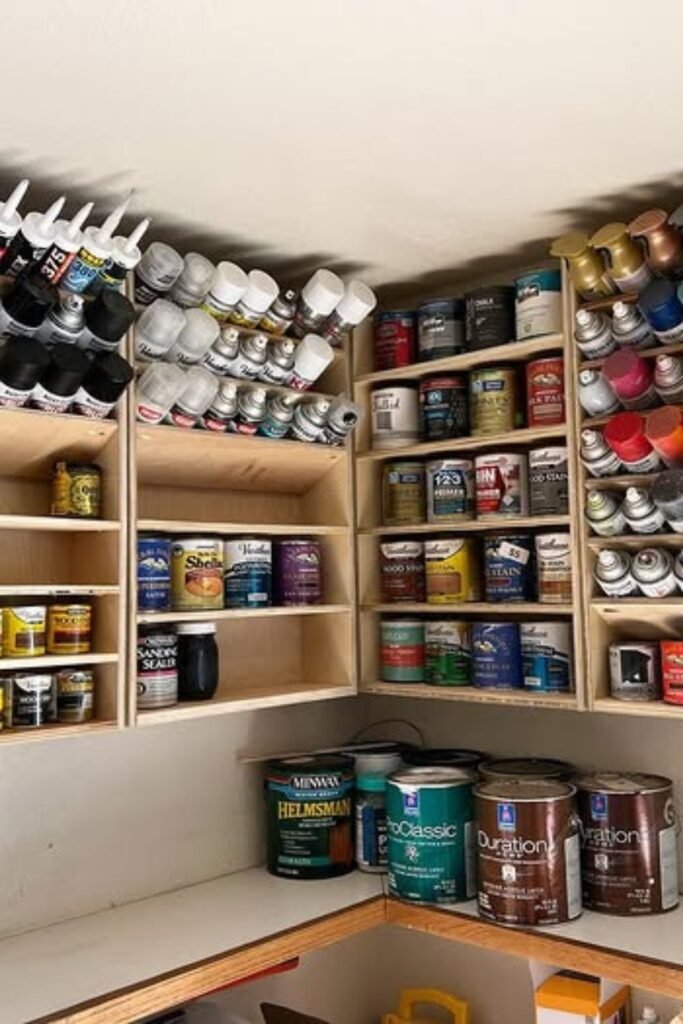
Use separate labeled bins for paint supplies, electrical items, woodworking materials, & unfinished projects.
Drawers or shelves beneath the workbench are useful for frequently used supplies & smaller materials.
Keeping each project category together also makes it easier to see what you already have before buying more.
How to Organize Screws, Nails, and Small Hardware?
Small hardware can become frustrating when screws, nails, bolts, washers, & anchors are mixed together.
Use small-parts drawer cabinets to separate frequently used pieces by type & size.
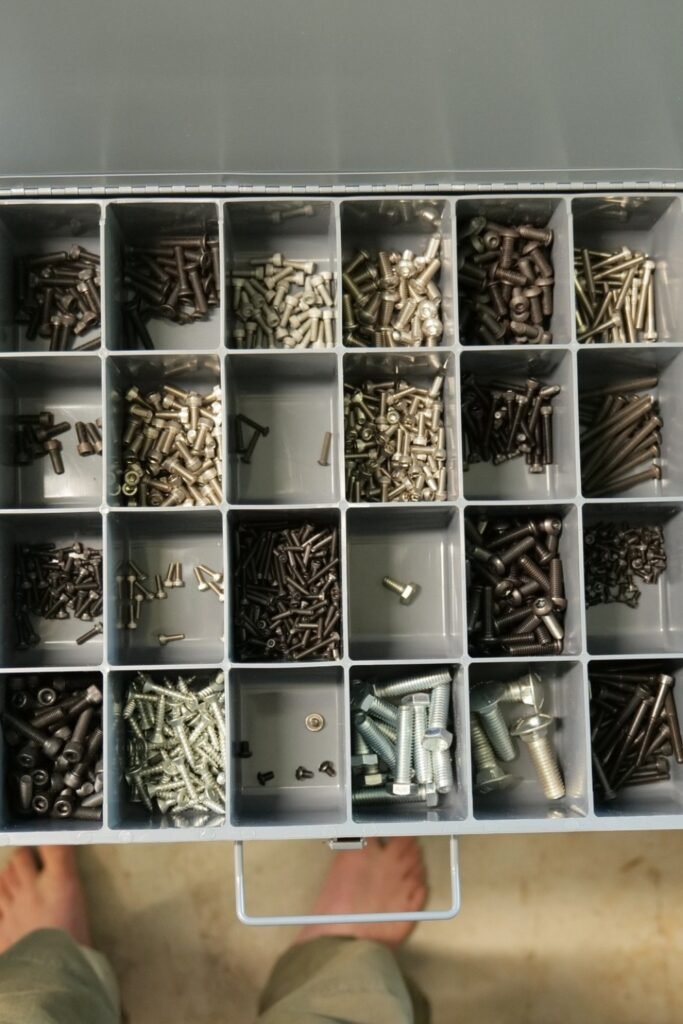
Clear jars are another simple DIY option because you can immediately see what is inside.
For portable storage, divided organizers keep different fasteners separated while moving between projects.
Wall-mounted hardware bins work especially well above a workbench.
Keeping everyday pieces visible & within reach without taking up valuable drawer or countertop space.
How to Organize Bikes and Scooters?
Bikes & scooters can take up unnecessary floor space when they are simply parked against a garage wall.
Install vertical bike hooks to store individual bikes upright, or use wall-mounted racks when organizing several together.
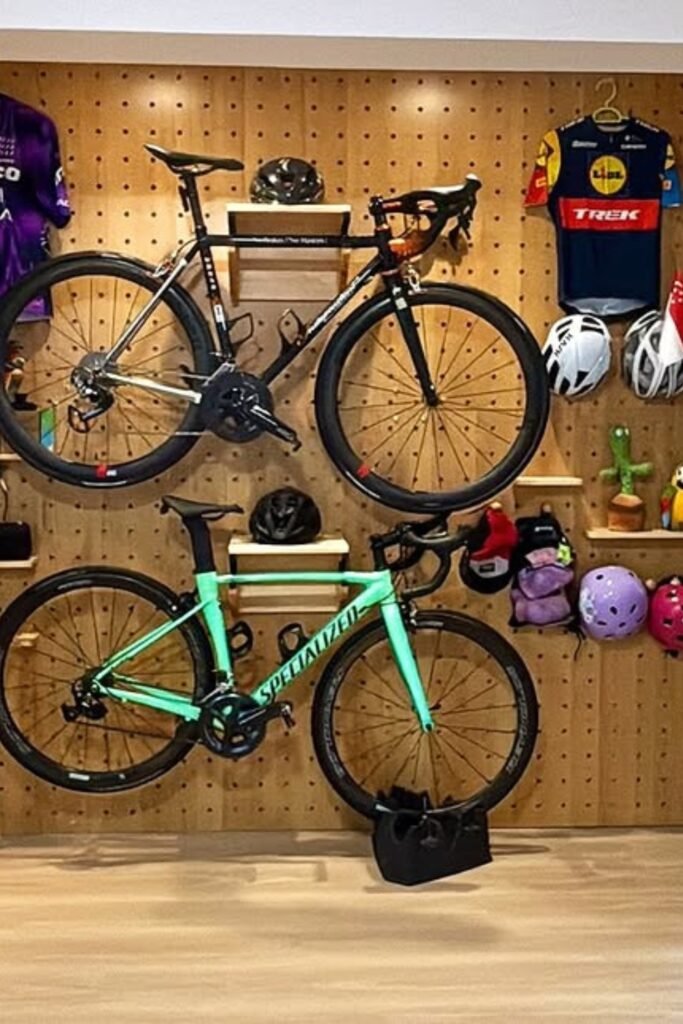
Ceiling pulley systems can work well for bikes that are only used occasionally & can be stored higher up.
For a family garage, create one dedicated bike zone with separate spots for each bike, scooter, helmet, & accessory so everything stays easy to grab & return.
How to Organize Household Overflow?
Use the garage for household overflow that is safe to store outside the main living areas.
Place bulky belongings on heavy-duty shelving & use matching labeled totes to keep smaller items contained & easy to identify.
Divide the shelves into frequently used & rarely used zones, keeping everyday extras within comfortable reach.
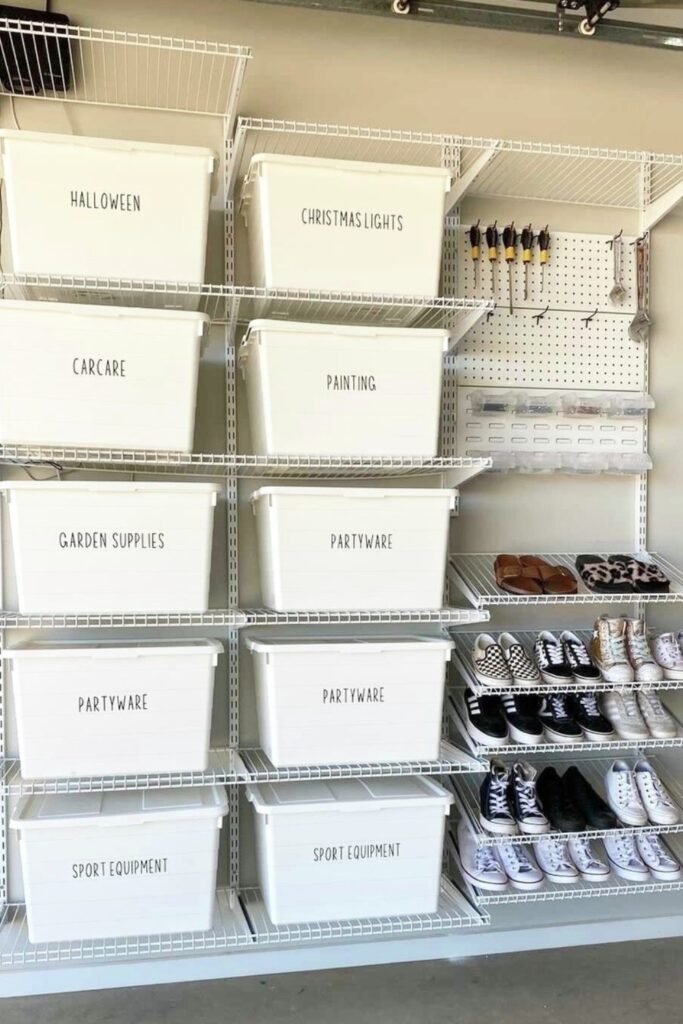
Store occasional items, backup supplies, & rarely needed belongings on higher shelves.
Avoid turning this area into a dumping spot by giving every container a clear category & permanent place.
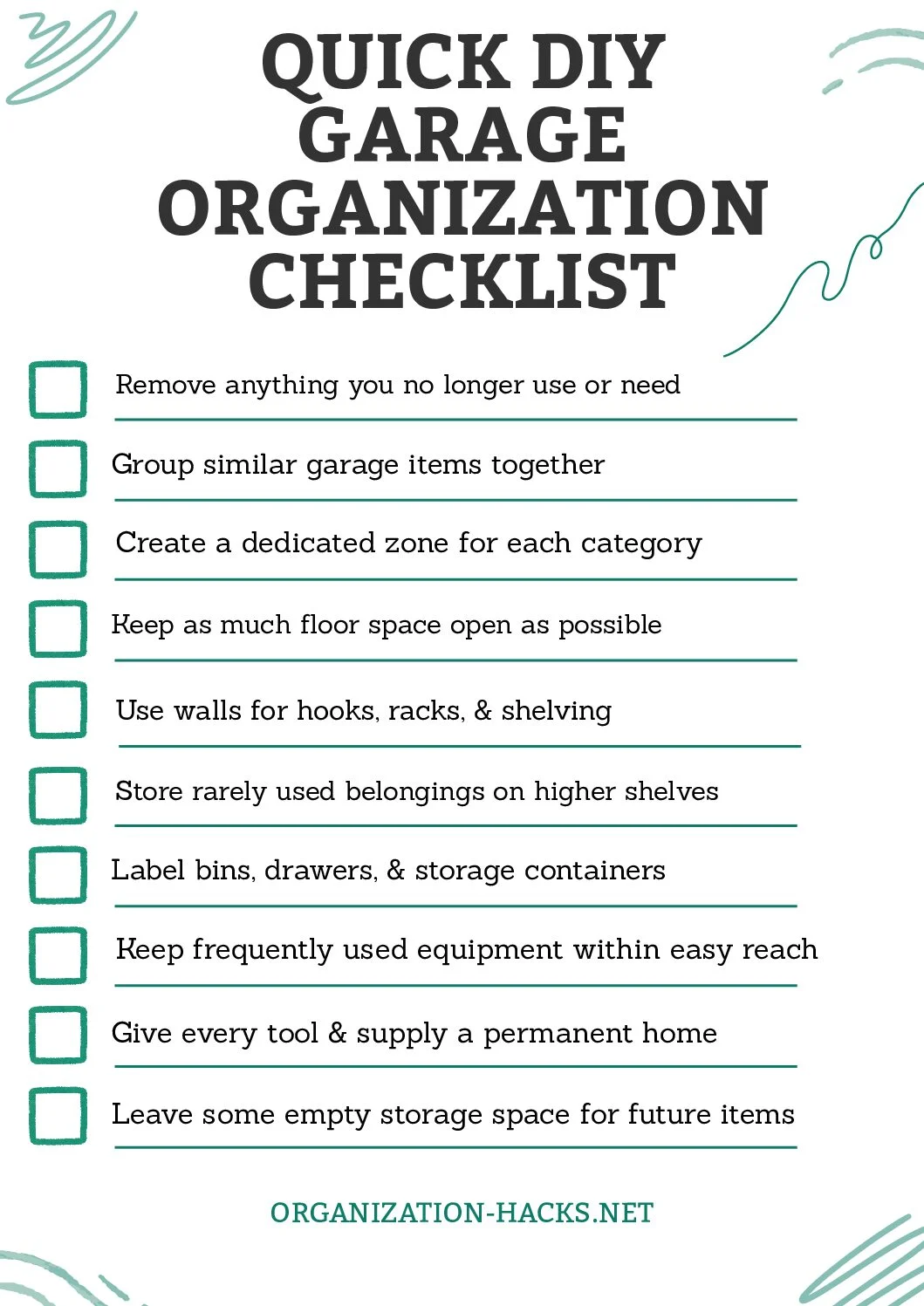
Quick DIY Garage Organization Checklist
FAQs
How Can I Organize a Garage Without Buying Expensive Storage Systems?
Start with what you already have & focus on using empty wall space.
Simple DIY shelves, pegboards, hooks, recycled containers, & labeled bins can help organize most garage items without a major investment.
You can tackle the areas causing the most clutter first, then add storage gradually as you discover what your garage actually needs.
How Do I Keep My Garage Organized After Cleaning It?
Give every item a permanent storage spot & return it there right after use.
Keep frequently used tools & supplies within easy reach while storing seasonal belongings higher up.
Every few months, check bins, shelves, & work areas for things that no longer belong. A simple reset can prevent small piles from turning into garage-wide clutter again.