Shoes can quickly pile up near doors, closets, and bedroom floors, making even an otherwise tidy space feel cluttered.
The right organization system keeps everyday pairs easy to reach while giving occasional and seasonal shoes a proper place.
These shoe organization ideas will help you create a practical system that keeps pairs visible, accessible, and easier to put away.
Let’s jump in!
How Can You Organize Shoes Around Your Daily Routine?
Keep everyday shoes near the entrance or area where you naturally take them off after coming home.
Store work, school, gym, & casual shoes in separate sections so finding the right pair takes less time.
Place frequently worn pairs at eye level or within easy reach instead of burying them behind occasional shoes.
Keep special-event and seasonal footwear on higher shelves, under the bed, or in less-accessible closet areas.
Give each family member a dedicated shelf, basket, cubby, or section to prevent everyone’s shoes from mixing together.
Choose a storage system that makes putting shoes back simple, so maintaining order becomes part of your normal routine.
Overlooked Spaces for Shoe Organization
Use the space under beds for flat shoe boxes, rolling bins, or low-profile organizers that keep extra pairs out of sight.
Turn the back of closet or bedroom doors into vertical storage with hanging pockets, racks, or slim shoe holders.
Use the bottom of wardrobes and closets for stackable shelves that make better use of unused floor space.
Add narrow storage beside dressers, entryway benches, or cabinets where standard furniture would leave awkward gaps.
Use the space under stairs for cubbies, pull-out drawers, or small shelving designed around the available depth.
Look above closet rods or doors for high shelves that can hold seasonal, formal, or rarely worn shoes.
Organize Shoes by Frequency
1. Keep Everyday Pairs Within Reach
Place your most-worn shoes where you can grab them quickly without moving other pairs.
Use lower shelves, open cubbies, or an entryway rack for shoes worn several times a week.
Keeping daily footwear visible also makes it easier to return each pair after wearing it.
2. Move Occasional Shoes Out
Store formal, specialty, or rarely worn shoes away from the easiest-to-reach shelves.
Use upper closet shelves, labeled boxes, or deeper storage areas for these occasional pairs.
This leaves your most convenient storage space available for shoes you actually use regularly.
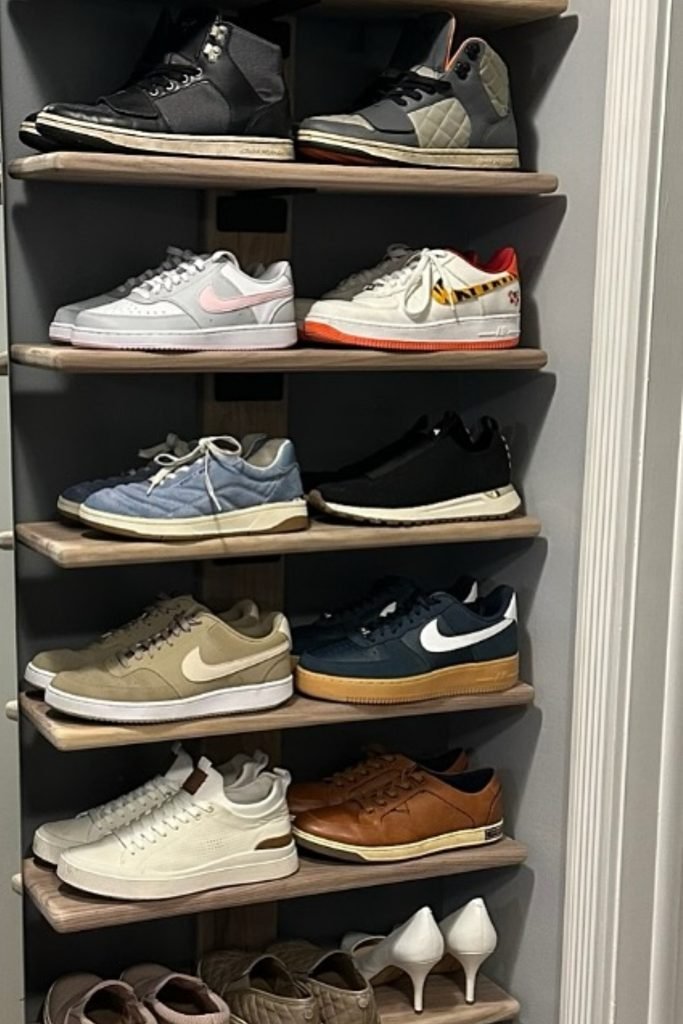
3. Rotate With the Seasons
Keep only weather-appropriate shoes in your main storage area during each season.
Move winter boots, sandals, or seasonal footwear into boxes or less-accessible storage when not needed.
Rotating shoes prevents unused pairs from taking up valuable space throughout the entire year.
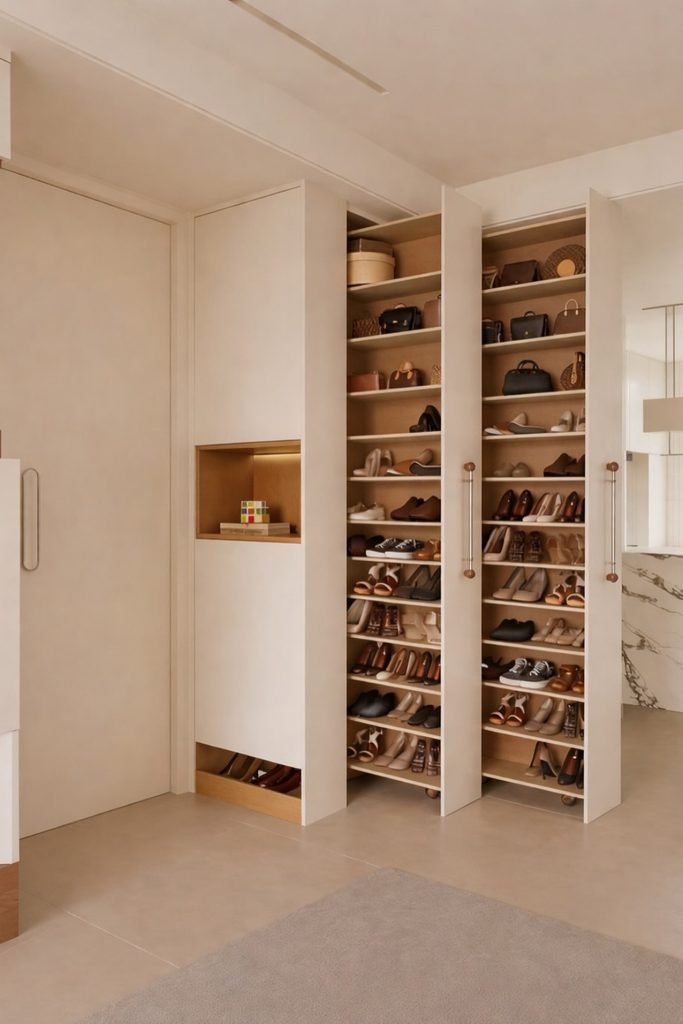
Organize Shoes Around Natural Drop Zones
1. Catch Shoes at the Entryway
Place a rack, tray, basket, or cubby near the door where shoes naturally come off.
Keep this area reserved for current everyday pairs rather than storing the entire shoe collection.
A convenient entryway setup helps stop shoes from spreading into hallways and living areas.
2. Bedroom Shoes Zone
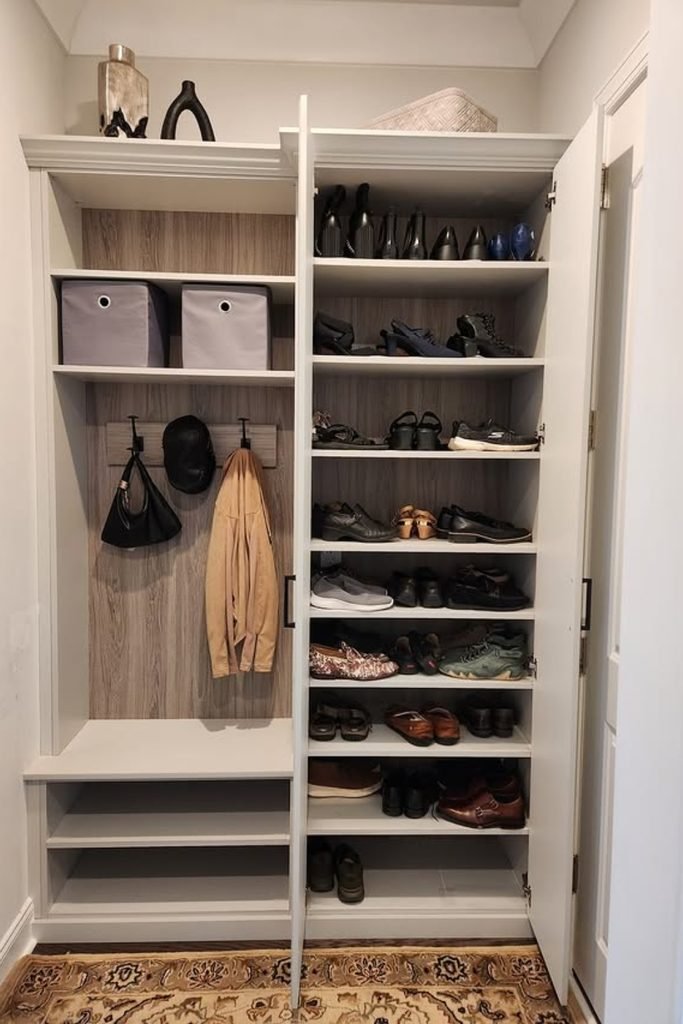
Keep shoes worn while dressing near your wardrobe, closet, or bedroom getting-ready area.
Use a compact rack, shelf, or drawer so these pairs stay separate from entryway footwear.
This keeps your morning routine smoother because your outfit and matching shoes stay close together.
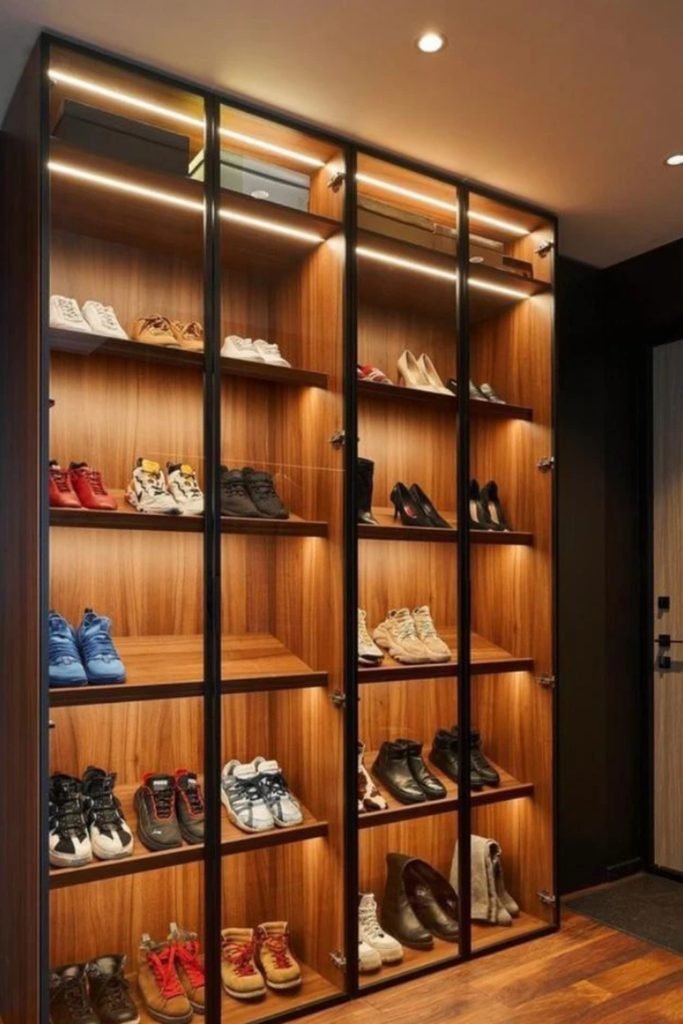
3. Create a Second Drop Zone
Add another shoe station if your household regularly enters through more than one doorway.
A small rack near the garage, back door, or mudroom can handle shoes used there.
Multiple drop zones prevent everyone from carrying shoes through the house before putting them away.
Organize Shoes Vertically
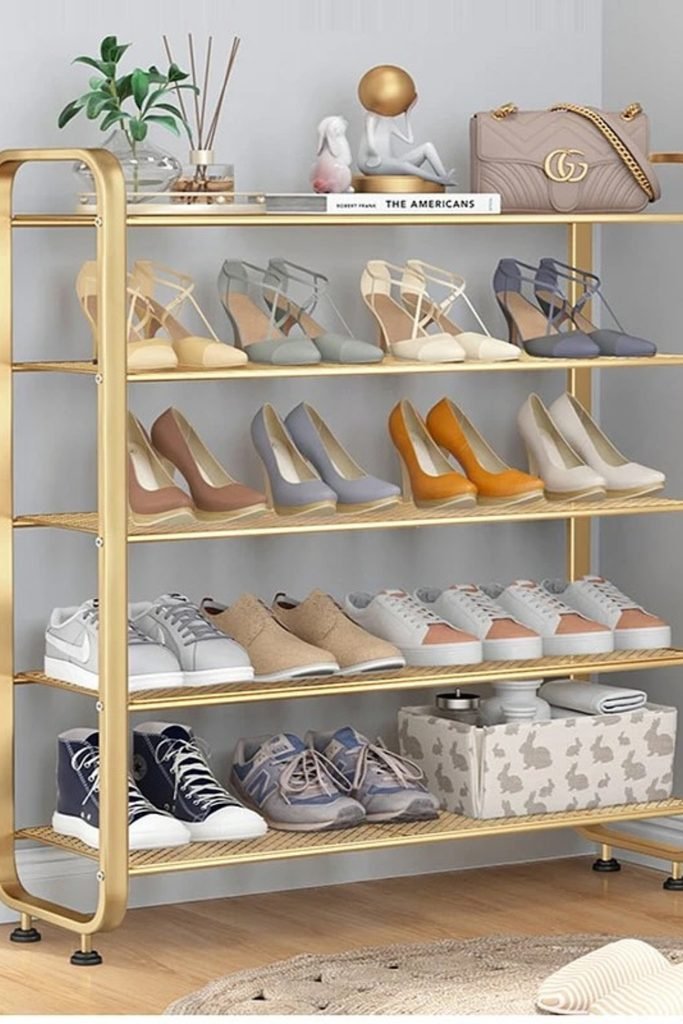
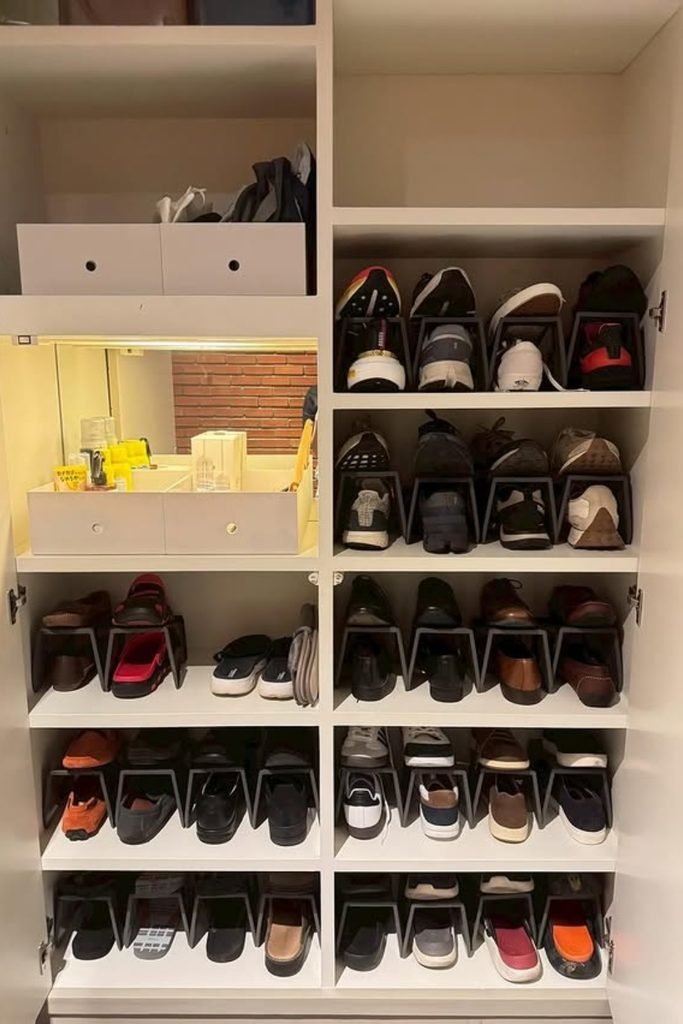
1. Stack Instead of Spread
Choose stackable shoe shelves or boxes when your available floor area is narrow.
Vertical stacking lets several pairs occupy the same footprint instead of spreading across the closet floor.
Keep frequently used pairs on lower levels and less-used shoes higher for easier daily access.
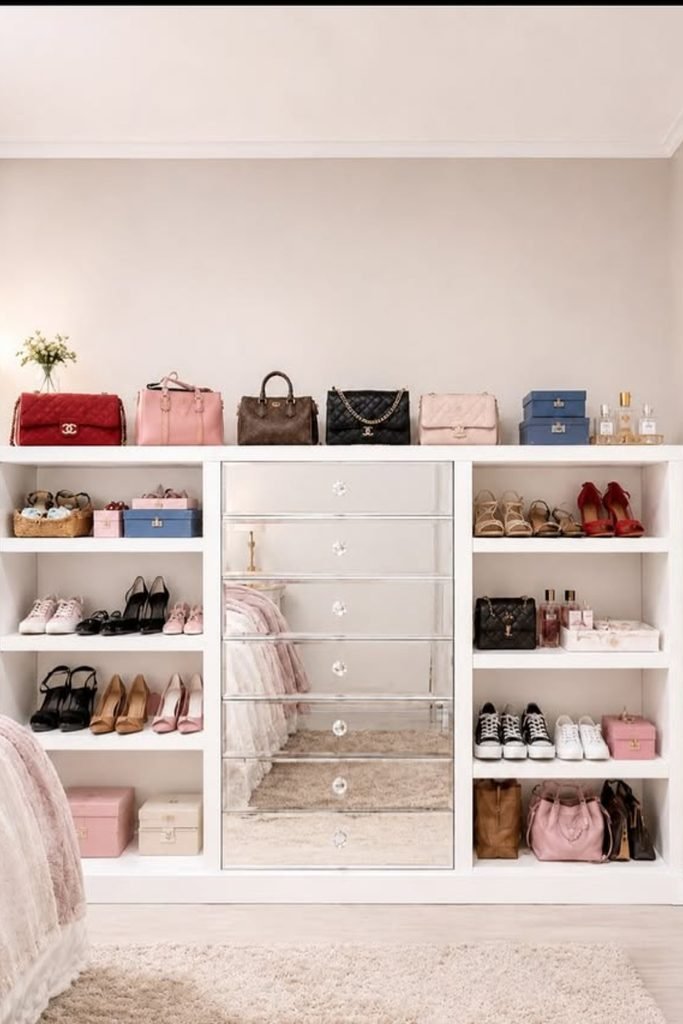
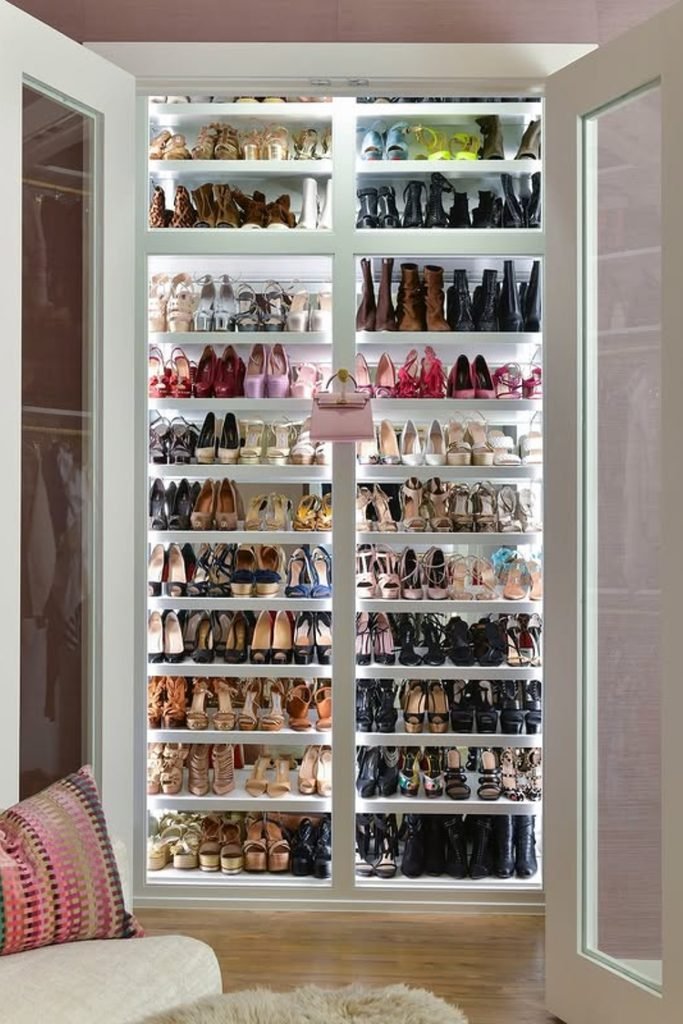
2. Take Shelving Higher
Extend shelving toward the ceiling when lower closet space is already fully occupied.
Use upper shelves for seasonal footwear, special-event shoes, and pairs you rarely need quickly.
Adding height creates extra capacity without using more valuable floor space elsewhere in the room.
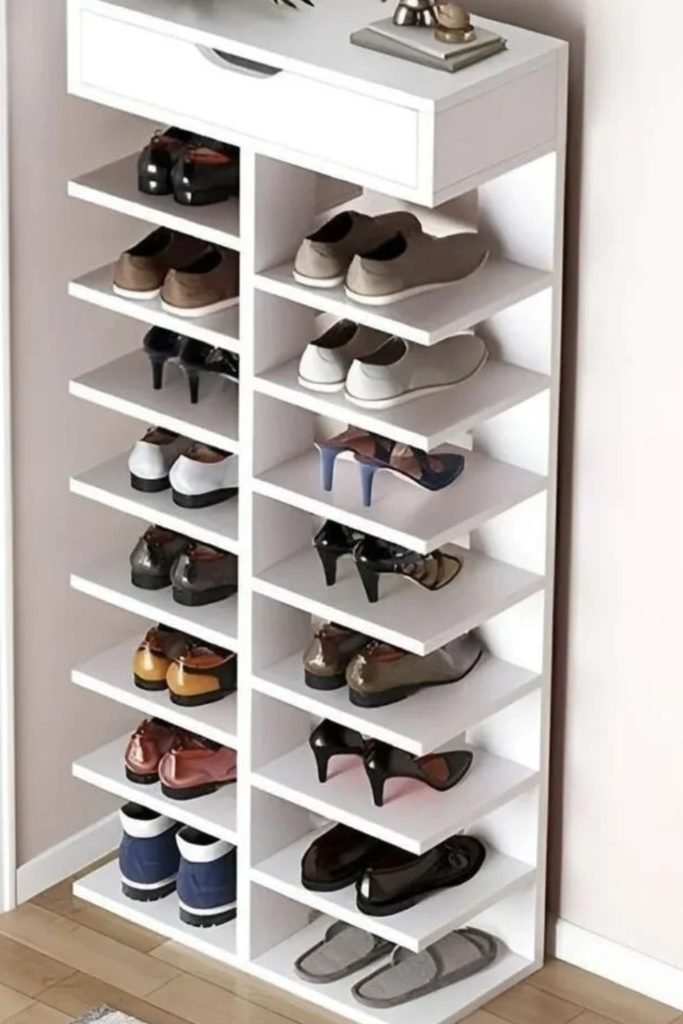
3. Put Doors and Walls to Work
Use over-the-door organizers, wall-mounted racks, or slim shelves for additional vertical shoe storage.
These options work especially well in small bedrooms, closets, apartments, and narrow entryways.
Choose shallow designs so the storage stays useful without making walkways or doors feel crowded.
Inside Furniture You Already Need
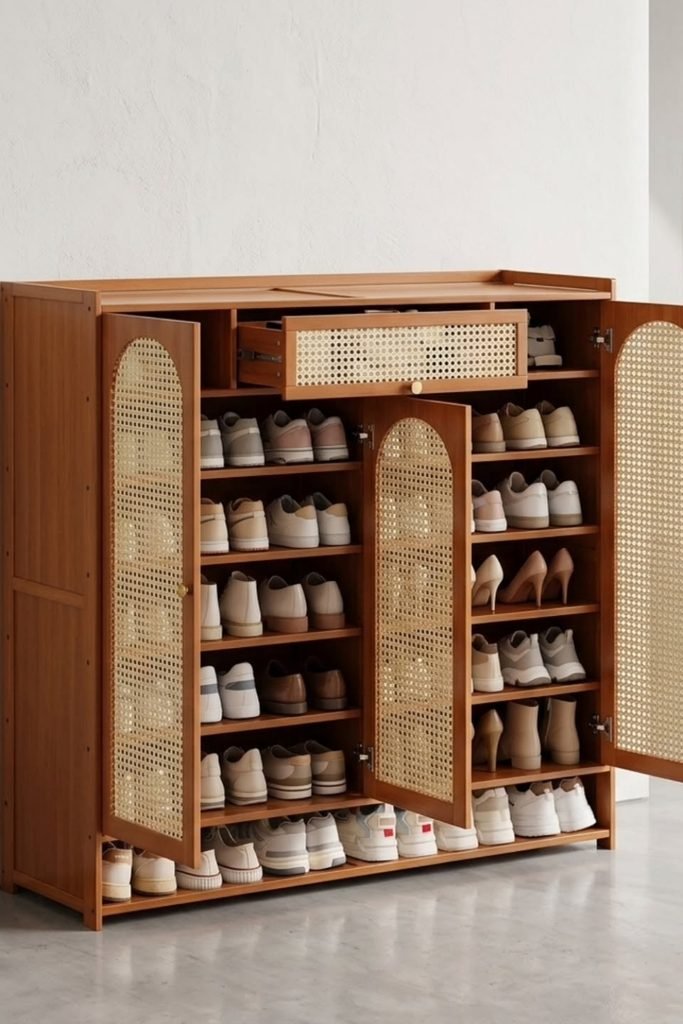
1. Bench Do Double Duty
Choose an entryway bench with cubbies, shelves, or hidden compartments underneath the seat.
Store everyday pairs below while keeping the top available for sitting when putting shoes on.
This combines seating and shoe storage without adding another separate piece of furniture.
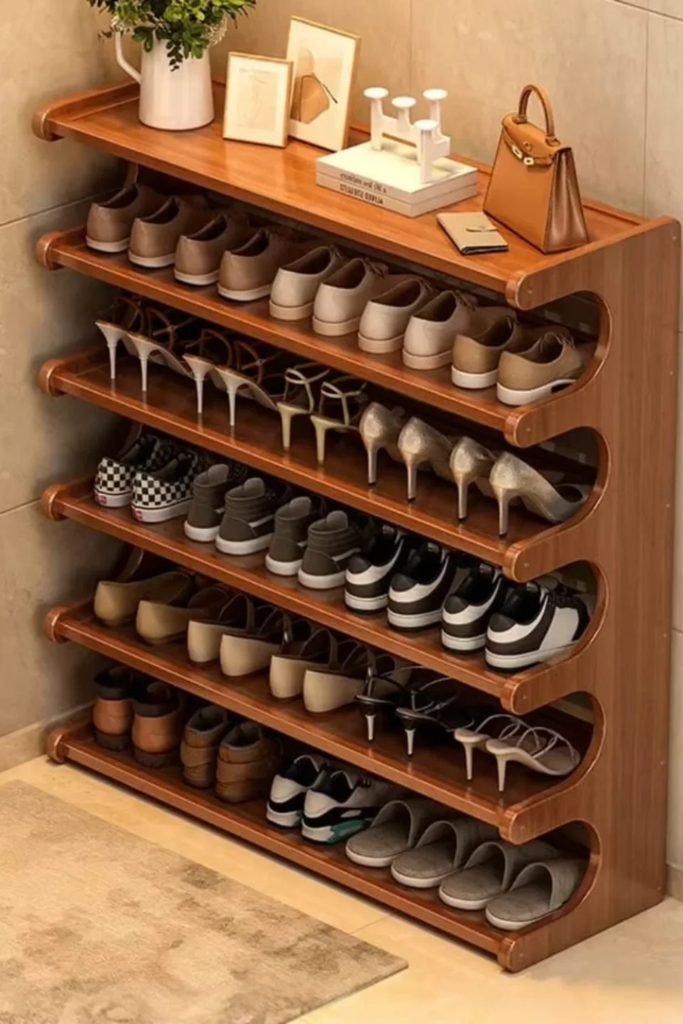
2. Claim the Space Under the Bed
Slide low shoe boxes, fabric organizers, or rolling bins underneath unused bed space.
Use this area for seasonal, occasional, or backup pairs that do not need daily access.
Clear containers or labels can help you identify shoes without pulling out every storage box.
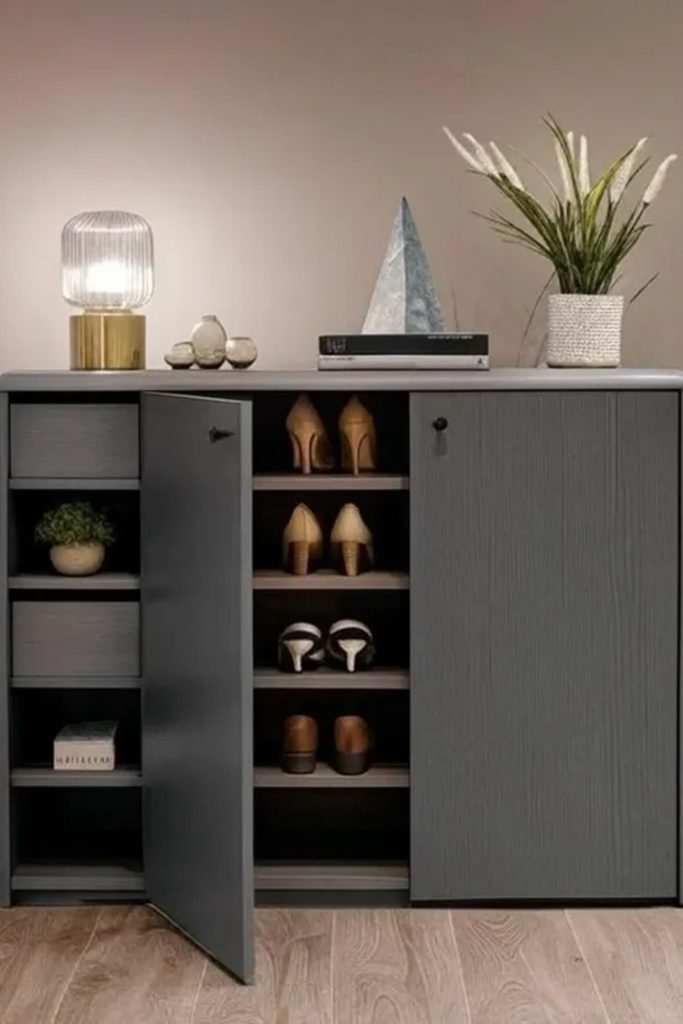
3. Turn Cabinets Into Concealed Shoe Stations
Convert an existing entryway, hallway, or closet cabinet into hidden shoe storage.
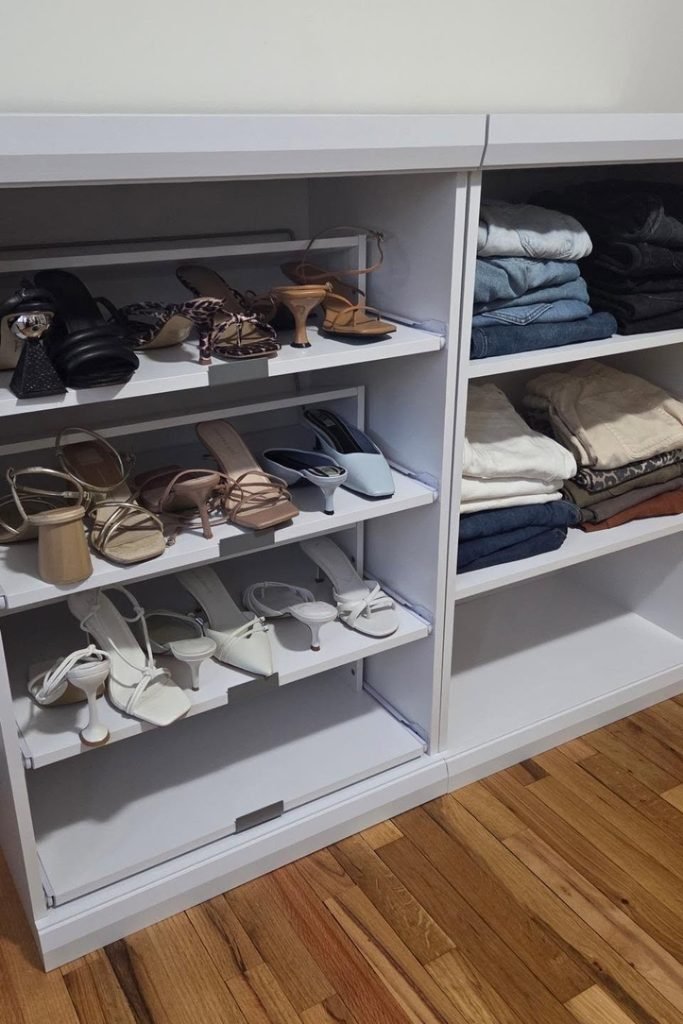
Add adjustable shelves so different shoe heights fit efficiently without wasting vertical space.
Closed doors keep footwear out of sight and help busy areas look calmer and less cluttered.
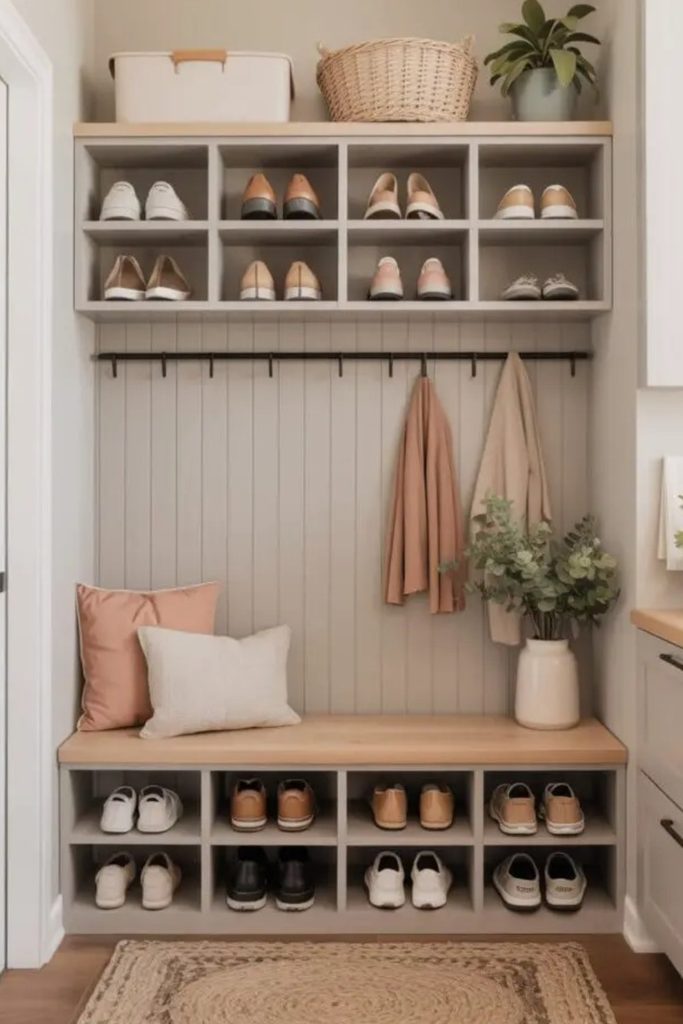
By Type, Shape, and Size
1. Sneakers
Group sneakers together on open shelves where their similar shapes make efficient rows.
Place everyday sneakers at the easiest height and occasional pairs farther up or down.
Keeping similar footwear together makes comparing options and finding the right pair much quicker.
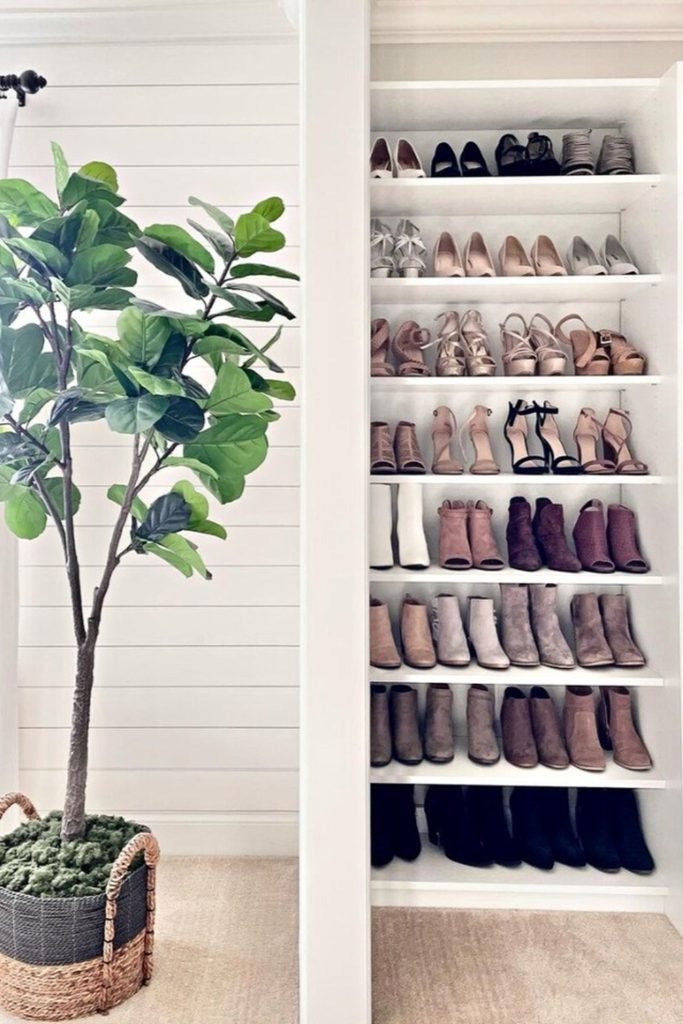
2. Boots
Reserve taller shelves or open floor sections for boots instead of forcing them into short cubbies.
Use boot shapers or simple inserts to help tall styles remain upright between wears.
Store shorter ankle boots separately so they do not waste the height needed for taller pairs.
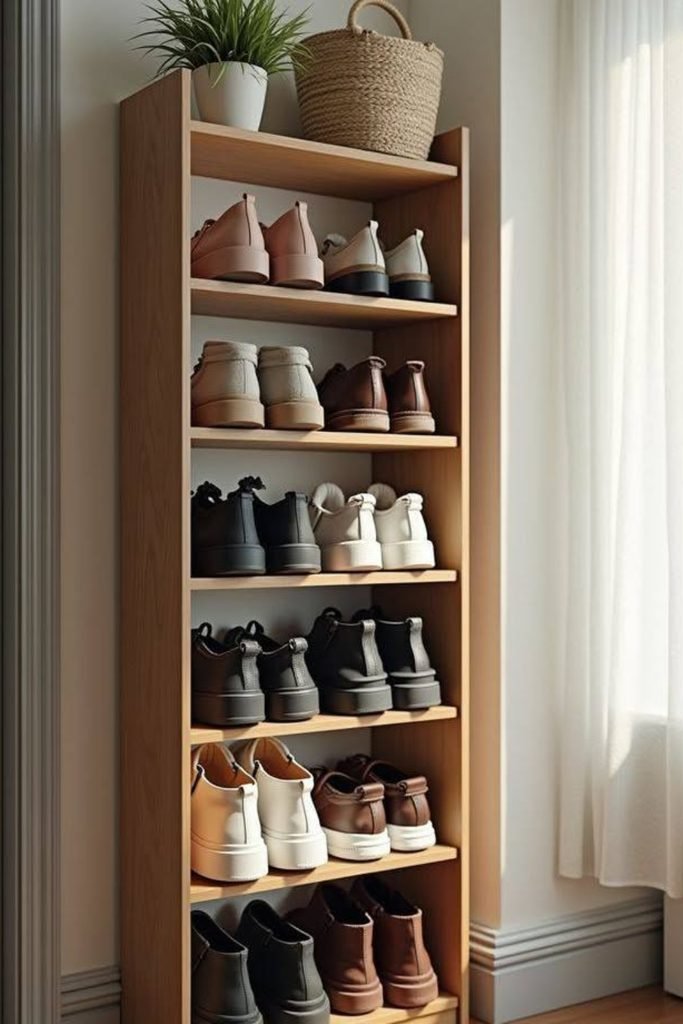
3. Flats
Use shallow shelves, narrow cubbies, hanging pockets, or compact organizers for flats and sandals.
Their slim shape allows several pairs to fit where bulkier footwear would not work.
Saving smaller spaces for slim shoes leaves deeper shelves available for sneakers, heels, and boots.
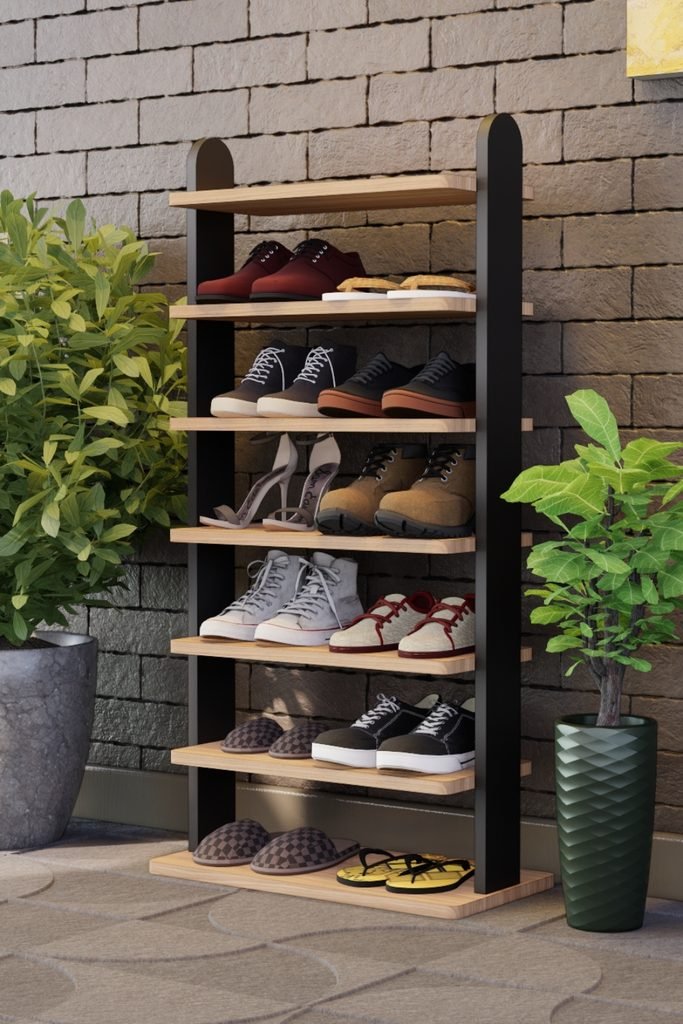
Organize Without Creating Visual Clutter
1. Display the Pairs Worth Seeing
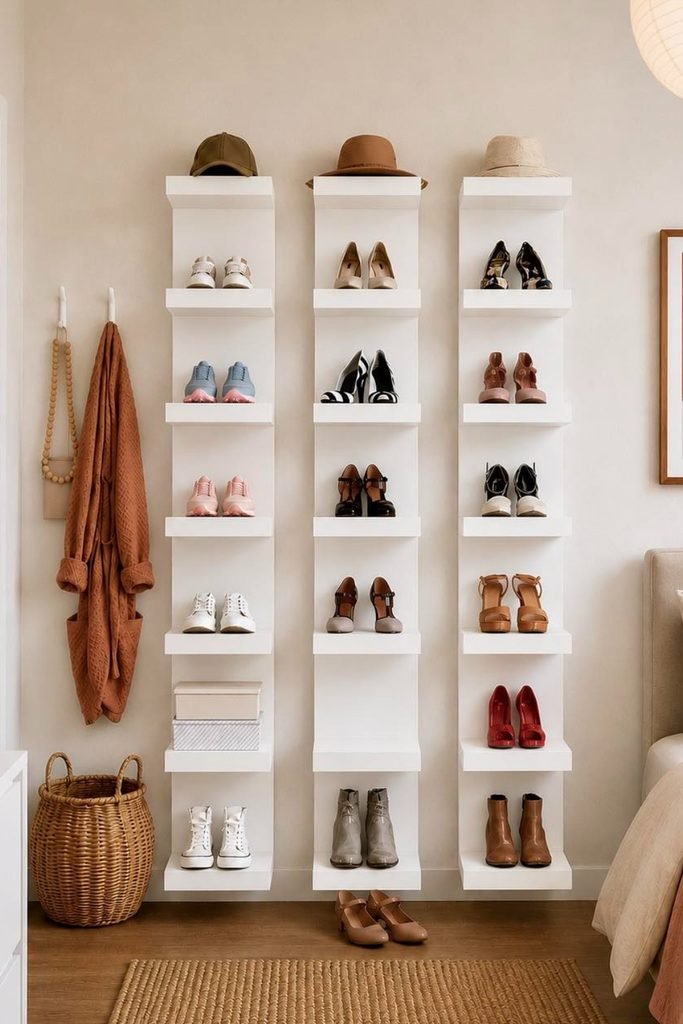
Use open shelving for attractive, frequently worn, or coordinated shoes you enjoy having visible.
Arrange pairs neatly with consistent spacing so the display feels intentional rather than crowded.
Limit the number shown to prevent decorative storage from becoming another source of visual clutter.
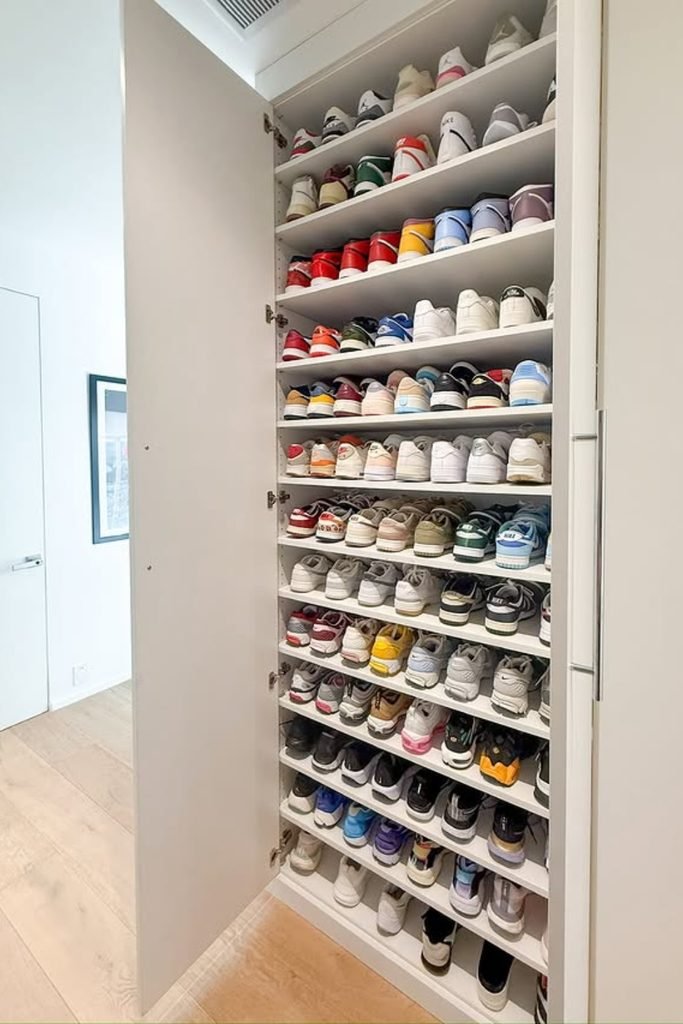
2. Hide the Busy Everyday Stuff
Place worn, mismatched, or practical everyday footwear inside cabinets, baskets, or closed compartments.
Concealed storage works especially well in entryways where many different shoe styles collect together.
Keeping these pairs behind doors helps the surrounding room maintain a cleaner overall appearance.
3. Mix Open and Closed Storage
Combine accessible open shelves with concealed cabinets to balance convenience and a tidy appearance.
Keep frequently used or attractive pairs visible while hiding seasonal and less-presentable footwear.
This flexible approach prevents you from choosing entirely between easy access and visual calm.
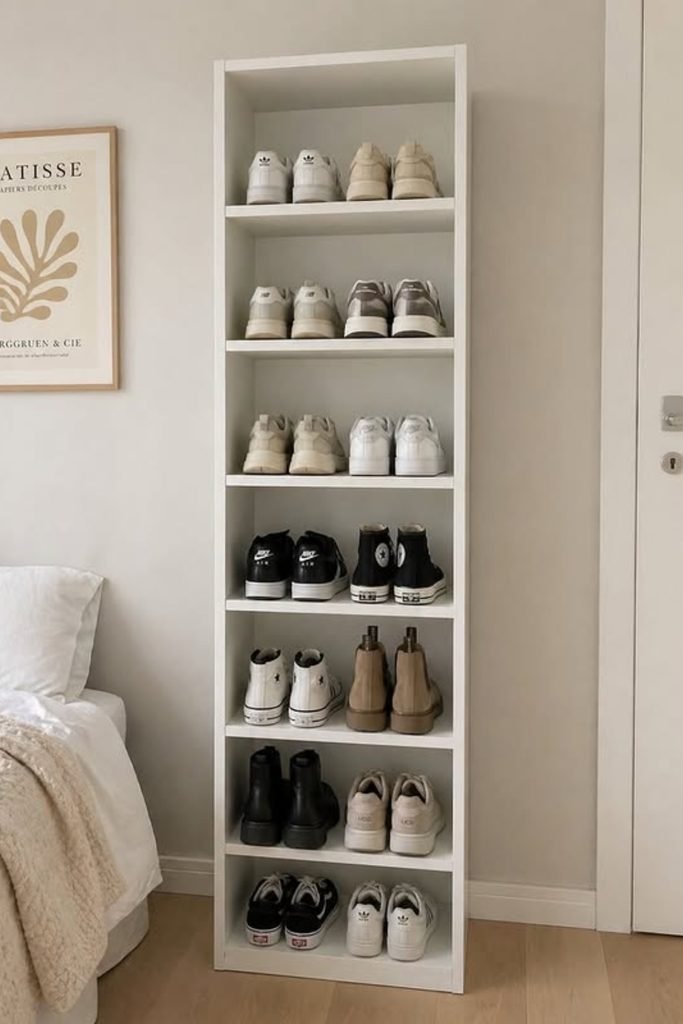
When Several People Share the Space
1. Give Everyone a Personal Zone
Assign each person a specific shelf, cubby, basket, or section within the shared shoe area.
Separate zones stop pairs from getting mixed together and make missing shoes easier to locate.
Labels can help when several family members use similar-looking footwear or share the same storage.
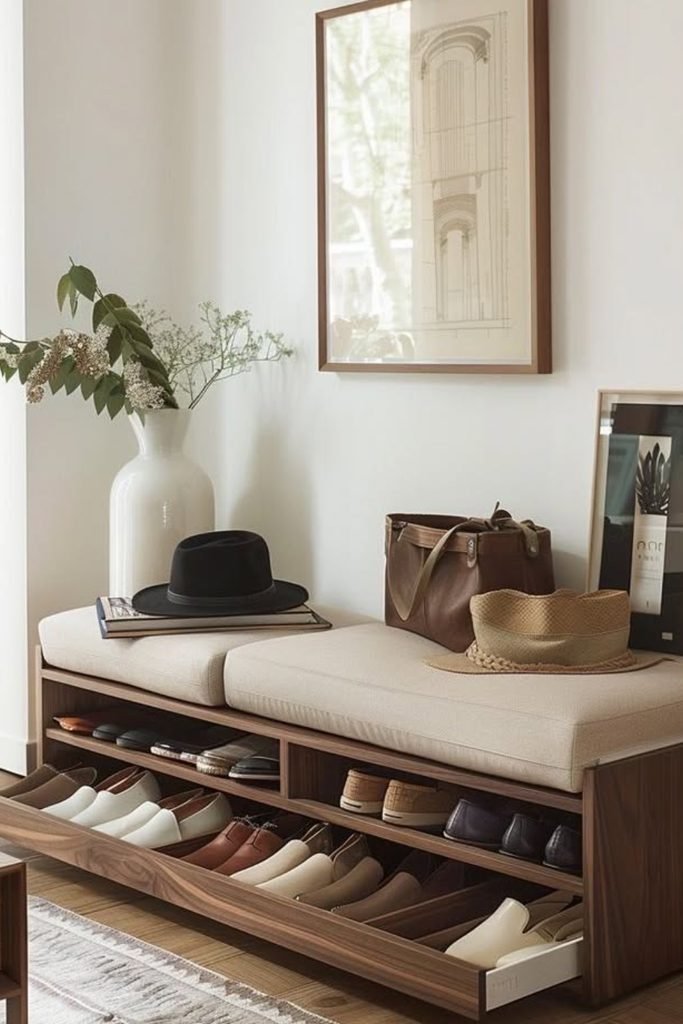
2. Bring Kids’ Storage Down
Place children’s shoe bins, cubbies, or shelves low enough for them to reach independently.
Simple open storage makes it easier for kids to put shoes away without adult help.
Keep frequently used school and play shoes closest to the front for quicker everyday routines.
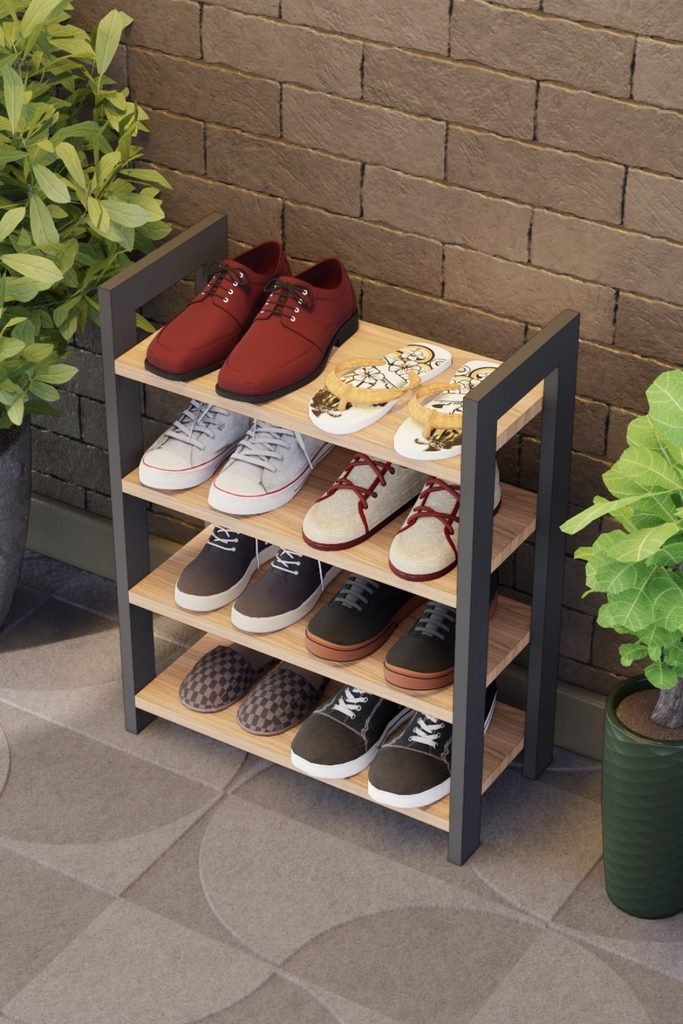
3. Set a Limit for Each Person
Give each household member a fixed amount of space for shoes kept in shared areas.
When that section fills up, extra pairs should move to personal closets or secondary storage.
Clear limits prevent one person’s collection from gradually taking over the entire organization system.
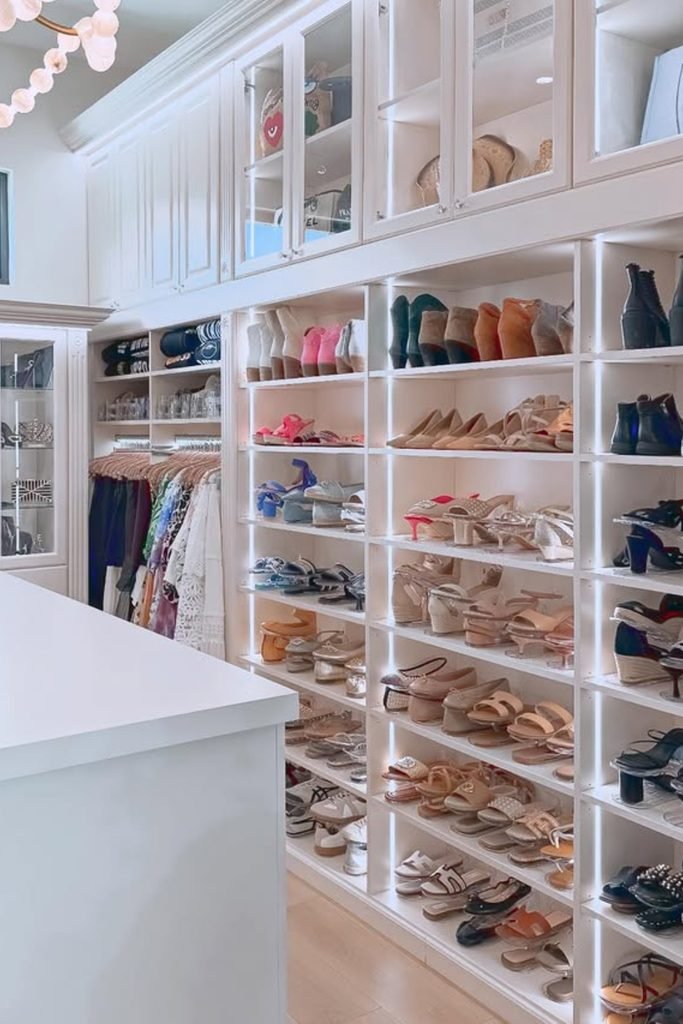
Organize Shoes So the System Stays Organized
1. Give Every Pair a Parking Spot
Assign every shoe pair a specific shelf, cubby, box, basket, or designated storage position.
A clear home removes uncertainty about where shoes should go after they are worn.
Avoid leaving overflow pairs without a place because they quickly become new floor clutter.
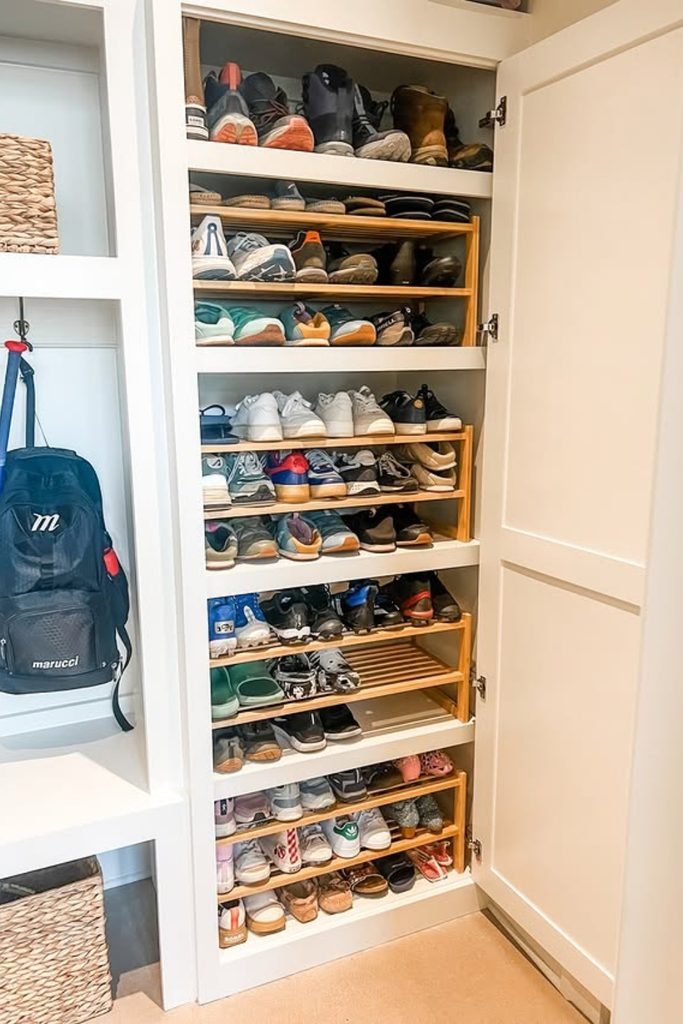
2. Use the Full Organizer
Treat completely filled shelves or cubbies as a signal that your shoe collection needs reviewing.
Avoid squeezing additional pairs into already crowded spaces where organization becomes difficult to maintain.
Move, donate, or discard unused shoes before adding anything new to the main storage area.
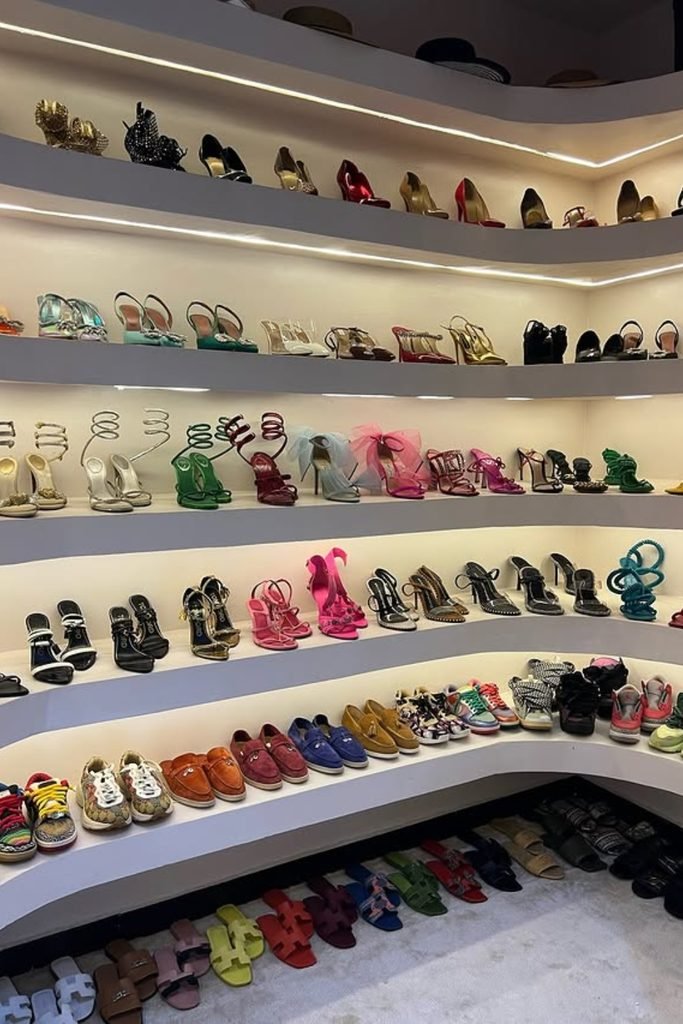
3. Do a Five-Minute Shoe Reset
Spend a few minutes regularly returning stray shoes to their assigned storage spots.
Pair separated shoes, clear the floor, and move seasonal footwear back to its proper area.
A quick reset prevents small amounts of daily shoe clutter from turning into a bigger problem.
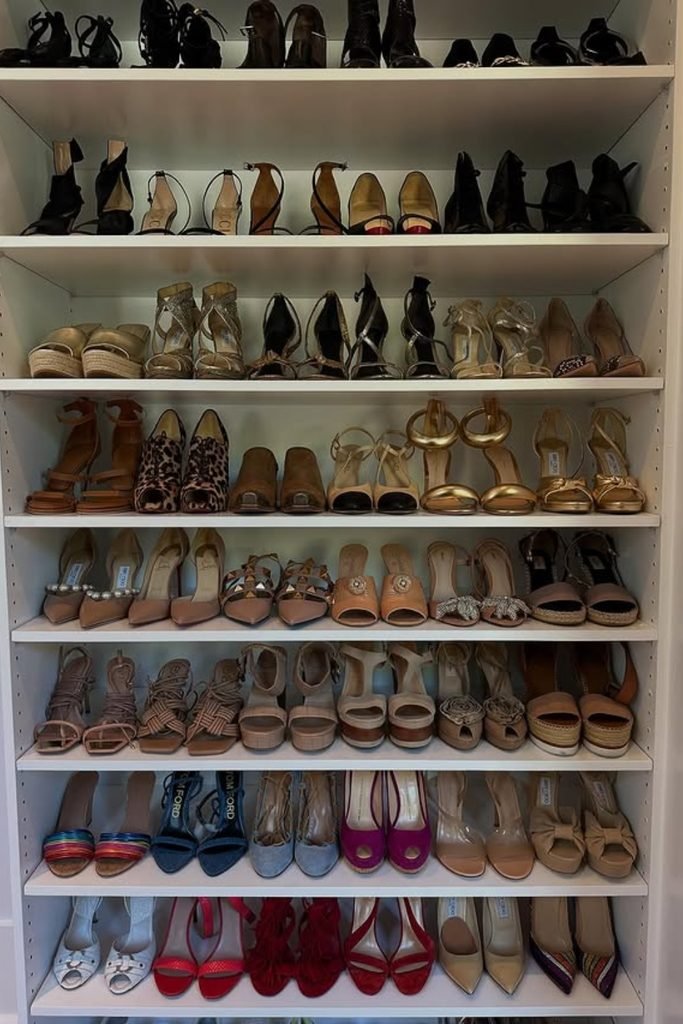
How Can You Organize Shoes Without Buying More Storage?
Start by removing shoes you no longer wear so the storage you already have works more efficiently.
Rearrange existing shelves by frequency, type, or size instead of adding another organizer to the room.
Use empty space under beds, benches, dressers, or closet shelves for pairs that need less frequent access.
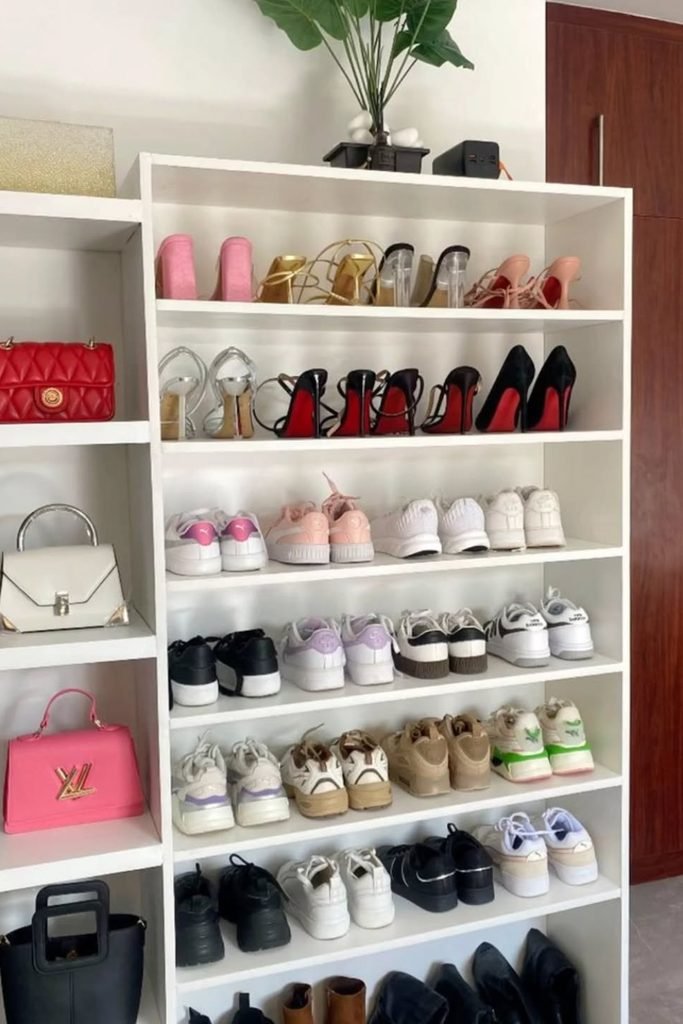
Repurpose baskets, boxes, small cabinets, or unused drawers you already own to create simple shoe zones.
Stack compatible pairs carefully or adjust shelf spacing so you can fit more shoes without creating clutter.
Focus on using overlooked space better before deciding that your home actually needs additional shoe storage.
Which Shoes Should Stay Visible and Which Should Be Hidden?
Keep frequently worn shoes visible so you can grab them quickly without opening boxes or searching through cabinets.
Display attractive pairs you enjoy seeing, especially if open shelving is already part of the room.
Hide seasonal, formal, worn, or rarely used shoes inside cabinets, drawers, bins, or labeled boxes.
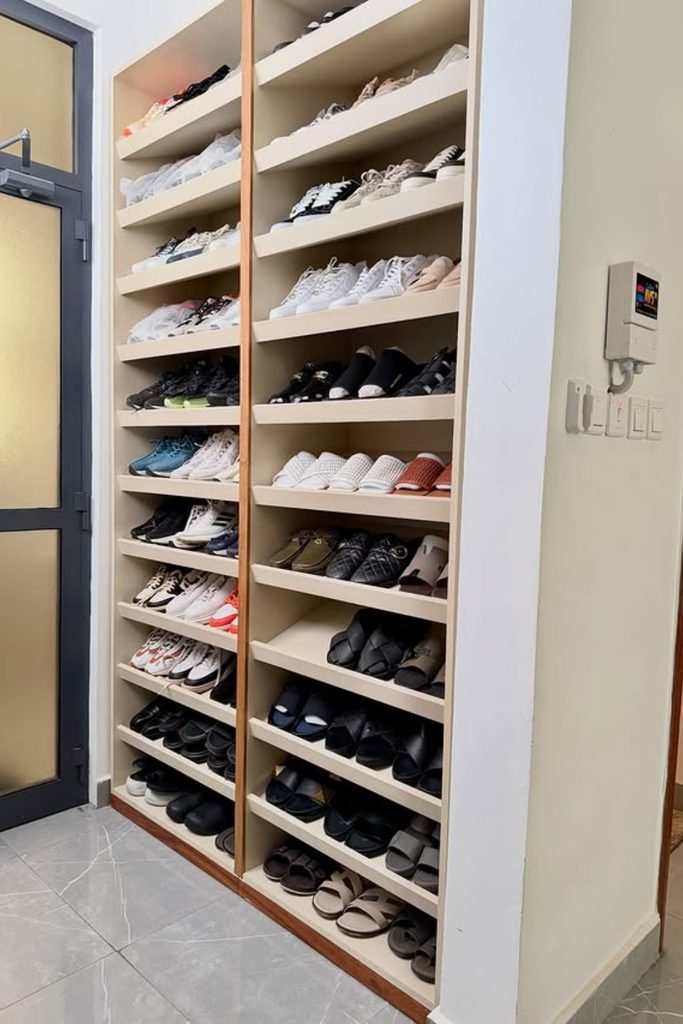
Store muddy, bulky, or mismatched footwear out of sight to keep entryways and closets looking less busy.
Reserve prime visible space for shoes that combine regular use with a neat, presentable appearance.
Use a mix of open and concealed storage so accessibility does not create unnecessary visual clutter.
How Can You Keep Your Shoe Collection From Outgrowing Your Space?
Set a fixed amount of storage space and avoid expanding it every time you buy another pair.
Review your shoes regularly and remove pairs that are damaged, uncomfortable, duplicated, or no longer worn.
Use a one-in, one-out rule when your shelves or cubbies have already reached their comfortable capacity.
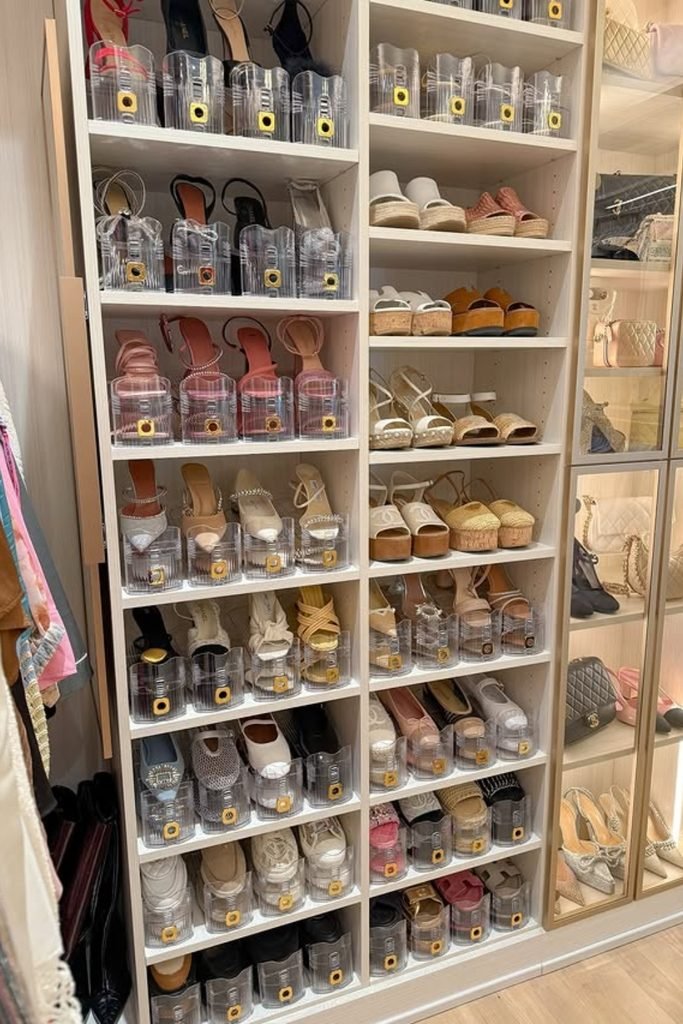
Keep seasonal shoes rotated out so your everyday storage does not feel overcrowded throughout the year.
Avoid buying near-duplicate styles unless they serve a genuinely different purpose in your daily wardrobe.
Treat overflowing shelves as a signal to edit the collection rather than immediately adding more storage.
Which Shoe Storage Method Works Best for Your Space
| Space | Best Storage Method | Best For |
| Small closet | Stackable shoe shelves | Maximizing vertical space |
| Entryway | Bench with cubbies | Everyday shoes |
| Under the bed | Flat bins or organizers | Seasonal and occasional pairs |
| Large closet | Adjustable shelving | Bigger shoe collections |
| Behind a door | Hanging shoe organizer | Flats, sandals, and lightweight shoes |
| Narrow hallway | Slim shoe cabinet | Concealed storage in tight areas |
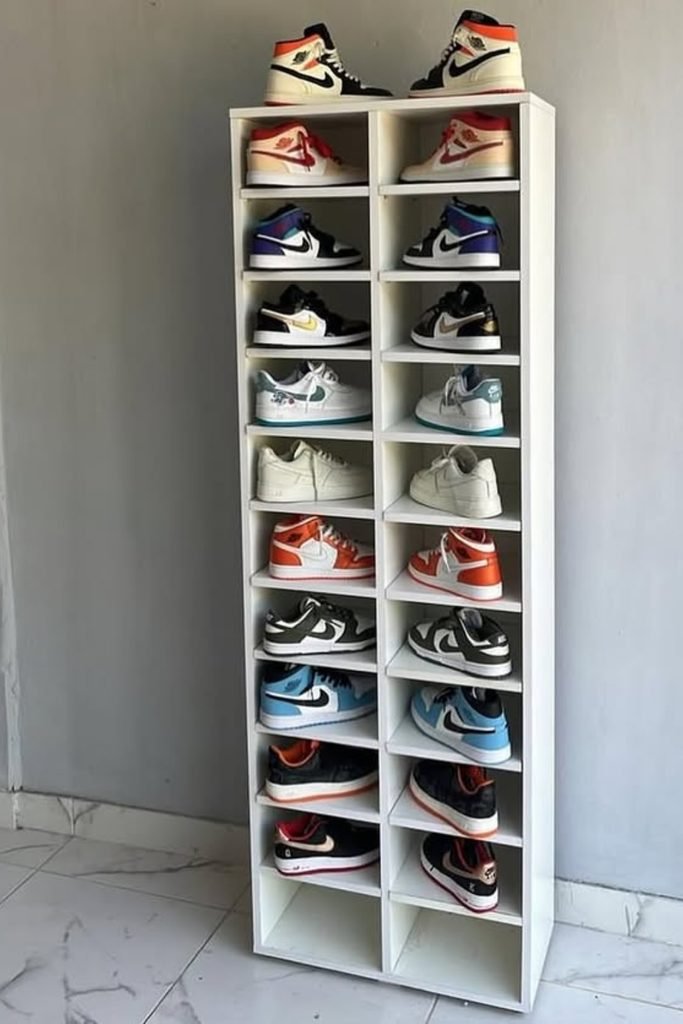
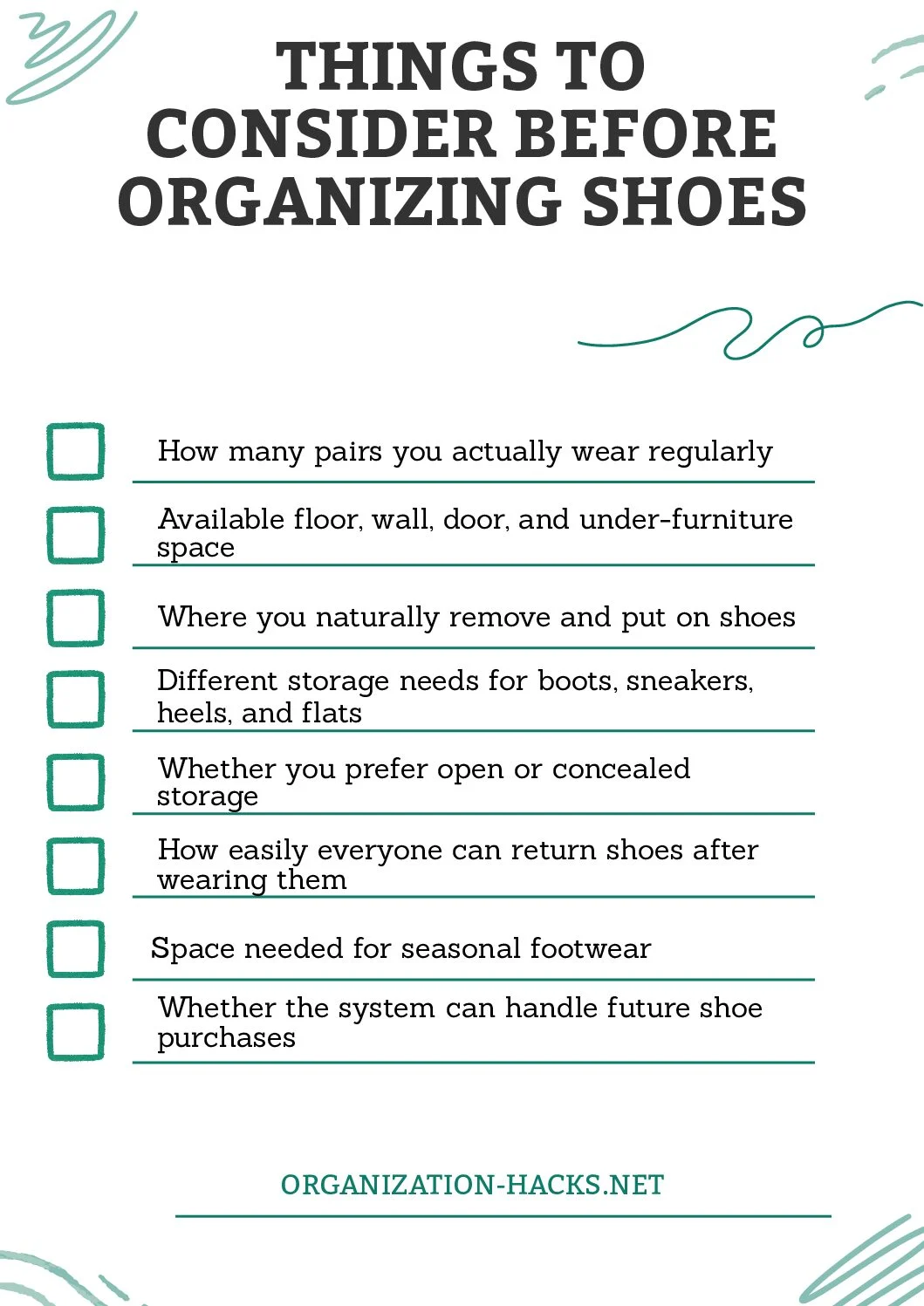
Things to Consider Before Organizing Your Shoes
Conclusion
A practical shoe organization system should fit your space, routine, and the types of footwear you actually own.
You can use overlooked areas wisely, keep everyday pairs accessible, and avoid filling prime storage with rarely worn shoes.
Regularly editing & resetting your collection will help your shoe storage stay functional instead of becoming cluttered again.
FAQs
How Do You Organize Shoes in a Small Space?
Use vertical shelves, over-the-door organizers, under-bed storage, and slim cabinets to make use of spaces that normally stay empty.
Keep everyday pairs accessible and move seasonal or rarely worn shoes into less convenient storage areas.
What Is the Best Way to Store Shoes Without Damaging Them?
Store shoes clean and dry in a well-ventilated area, with enough space to prevent pairs from being crushed or misshapen
Use boxes, shelves, or shoe supports for delicate footwear, and avoid stacking heavy shoes directly on softer pairs.