A bathroom is small, but it holds more daily-use items than almost any other room in the house.
That combination of limited space & constant use is exactly why clutter builds up so quickly here.
Unlike a closet or garage, a bathroom gets touched multiple times a day, often in a rush.
In this article, you will find a system built around routines, categories, and realistic maintenance, not just storage tricks.
Let’s jump in!
Why Is Bathroom Clutter Different From Clutter in Any Other Room?
Most rooms collect clutter slowly, over weeks or months, as items pile up without much daily interaction.
A bathroom is different because it gets used several times a day, often by more than one person.
Every use adds a small chance for something to be left out, misplaced, or grabbed without being put back.
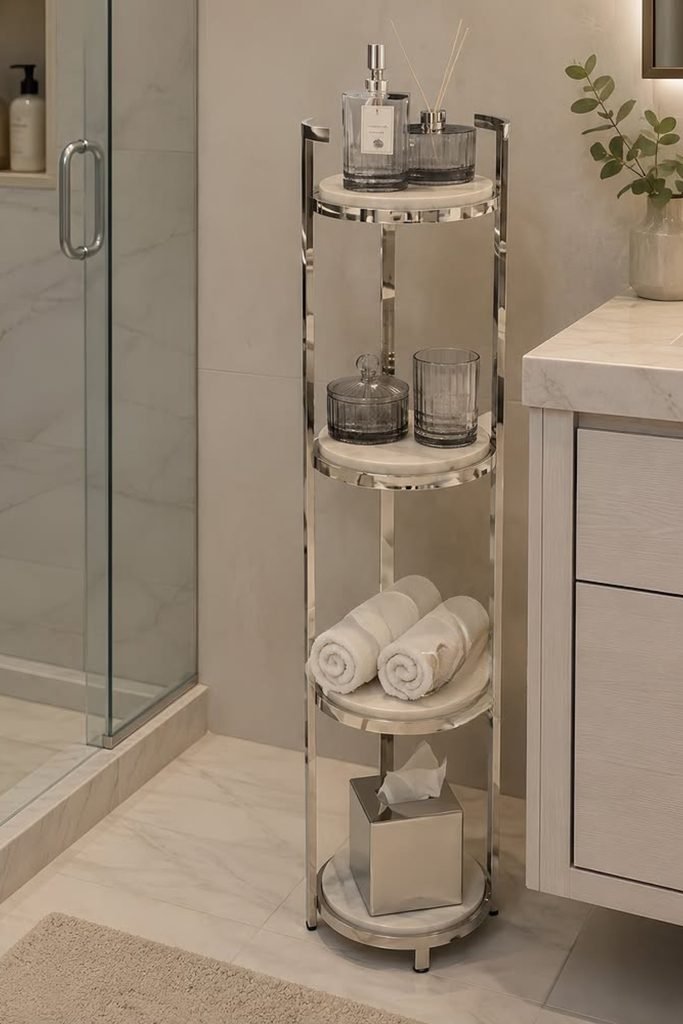
You can add limited counter & cabinet space, and even a few stray items can make the whole room feel disorganized.
Moisture & humidity also make bathroom storage harder, since not every container or material holds up well here.
That’s why bathroom organization needs its own approach instead of borrowing generic storage advice from other rooms.
Morning Routine Need Within Arm’s Reach
Mornings are usually rushed, so anything you use during that time should require zero searching.
The goal isn’t to store everything neatly out of sight, it’s to keep the right items instantly reachable.
1. Rush-Hour Essentials
Toothbrush, face wash, and moisturizer belong at counter height, not tucked away in a lower cabinet.
If you have to bend, dig, or open multiple doors to reach something you use daily, the placement is wrong.
You can reserve counter space specifically for items used every single morning, not occasional extras.
2. Shared Items a Fixed Spot
In shared bathrooms, items like shared toothpaste or hand soap should have one agreed-upon spot.
When there’s no fixed location, these items end up wherever the last person left them.
A consistent spot means less searching and fewer arguments about where something “should” be.
What Does Your Night Routine Need?
Night routines usually involve a different set of products, used more slowly and deliberately than morning ones.
Storing night-time items separately from daytime essentials keeps both routines faster and less confusing.
1. Set Up a Skincare Station
You can keep your night-time skincare products, cleanser, serum, moisturizer, in a small tray near the sink.
This tray should only hold what you actually reach for before bed, not your full skincare collection.
Having a fixed, visible spot for these products removes the “where did I put that” step right before sleep.
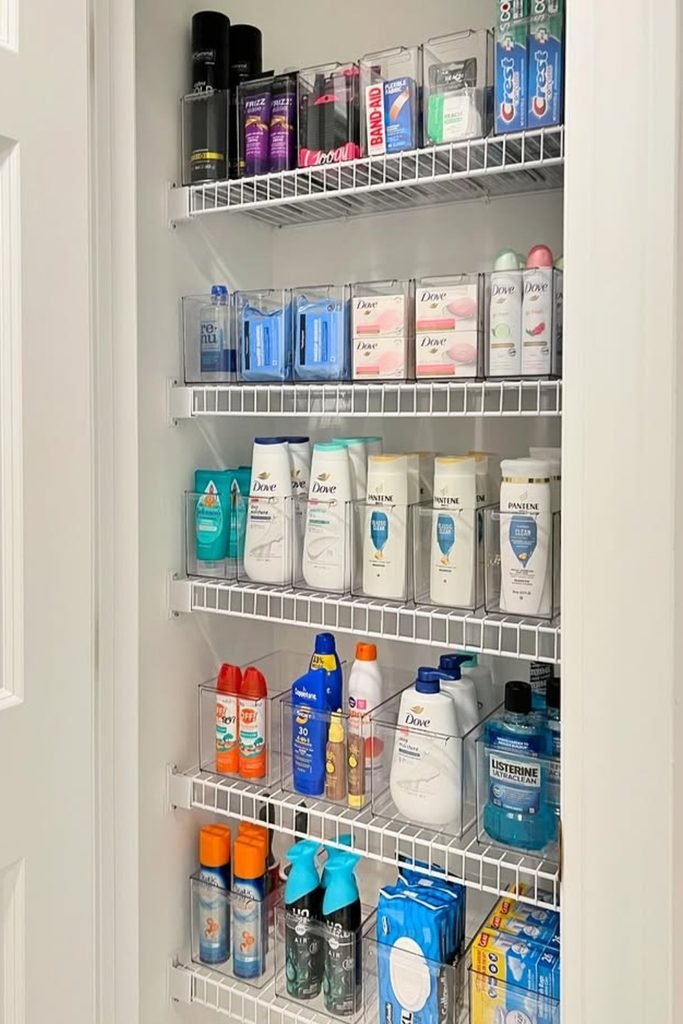
2. Oral Care and Medication Separate
Night-time oral care items, like a fluoride rinse, shouldn’t be mixed in with medication in the same space.
Keeping them in separate small compartments prevents mix-ups when you’re tired and not paying close attention.
This separation matters most in households where more than one person shares the same shelf.
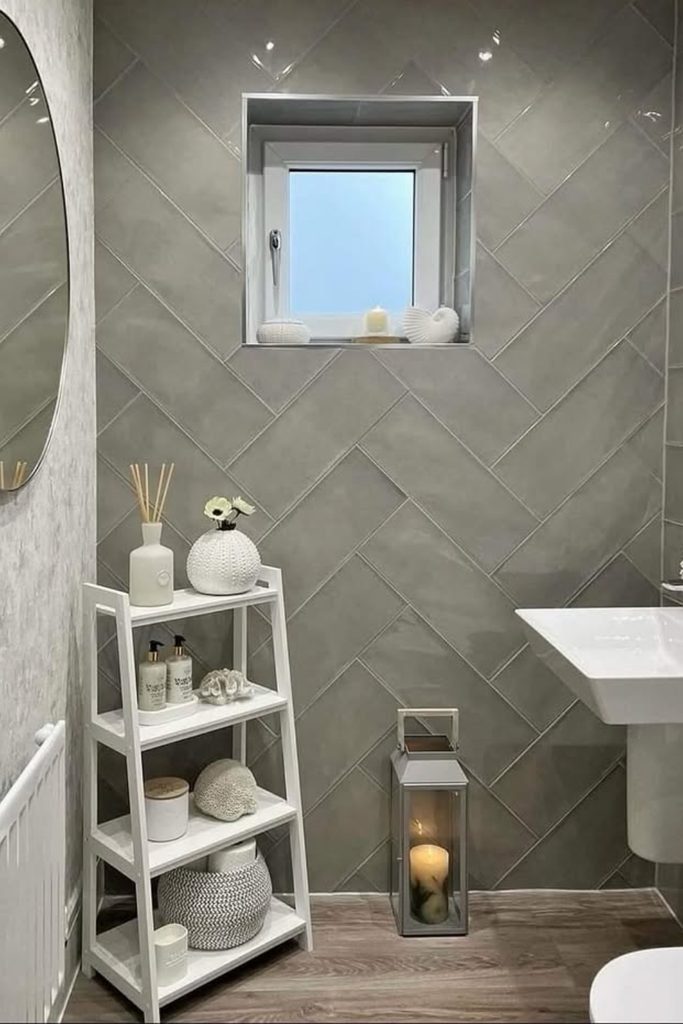
How Should You Store Products?
Sorting bathroom products by person often creates duplicate categories and wasted space across several small containers.
Sorting by category instead means everyone shares one clear system, which is easier to maintain long-term.
1. Skincare & Makeup
You can use a clear, stackable bin specifically for skincare & makeup, separate from hair or oral care items.
This keeps bottles upright, visible, and easy to check for near-empty products or approaching expiry dates.
One bin per category, rather than scattered pouches, makes restocking and cleaning noticeably faster.
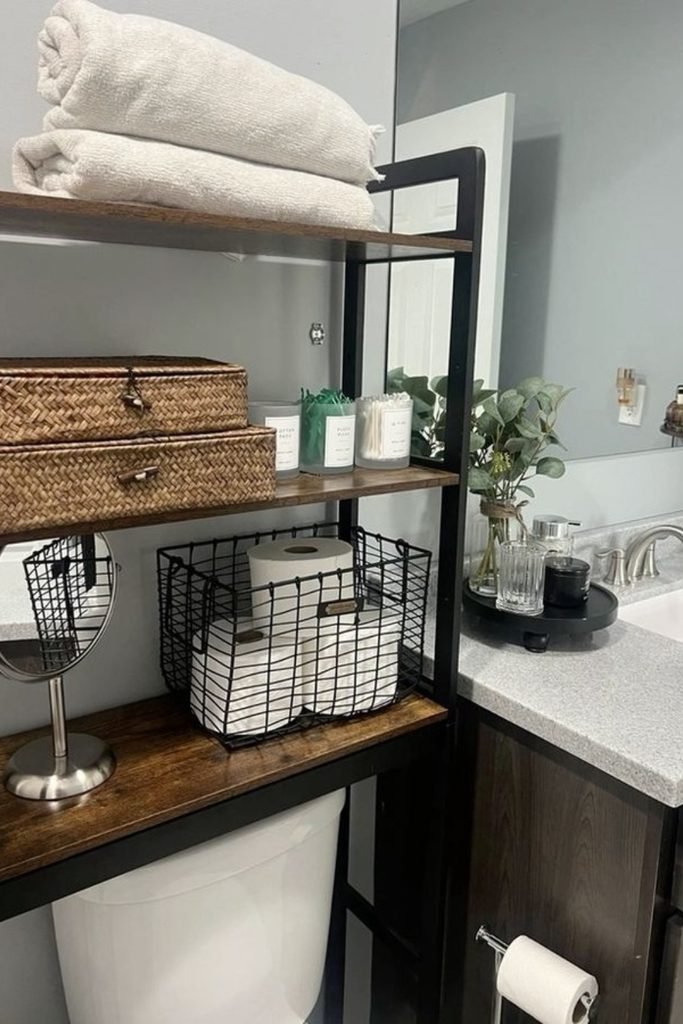
2. Hair Care
Group shampoo, conditioner, and styling products together in a caddy or shower-safe organizer.
Keeping hair tools like brushes and dryers in a nearby drawer prevents them from cluttering the counter.
A single hair-care zone means you’re never hunting through unrelated products to find what you need.
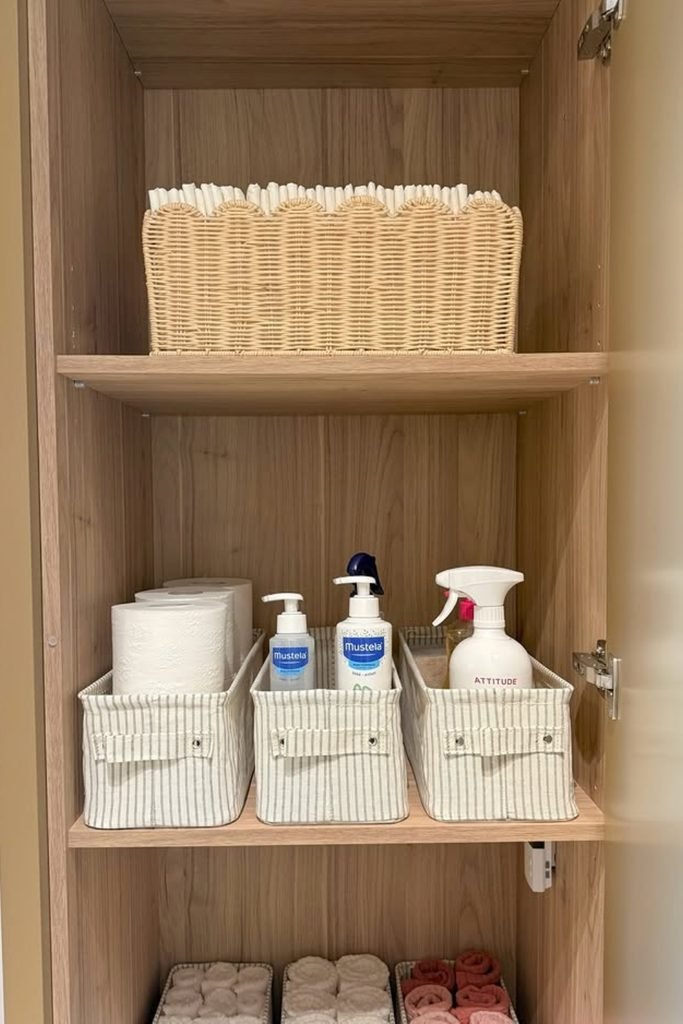
3. Oral Care
Use a small upright holder for toothbrushes, toothpaste, and floss so nothing lies flat and unused in a drawer.
Keeping this zone compact and visible makes it easy to spot when supplies are running low.
4. Cleaning Supplies
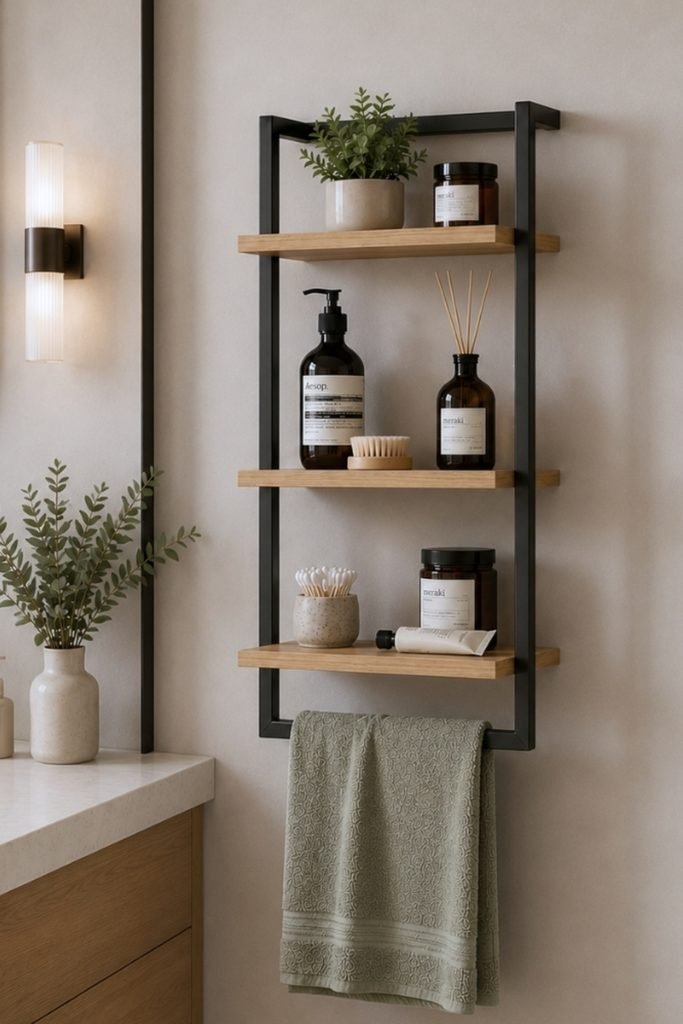
Store bathroom cleaners, sponges, and gloves in a separate area, away from personal care products entirely.
This isn’t just about tidiness, mixing cleaning chemicals near skincare or oral items is a real safety concern.
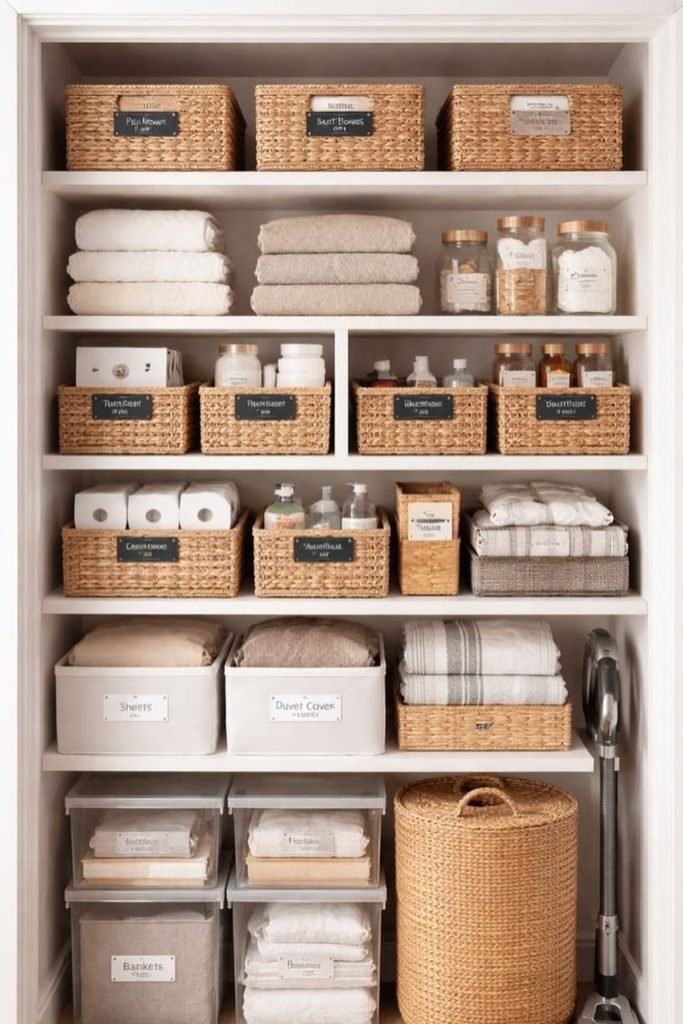
A under-sink caddy or a small closet shelf works well for this category.
Where Should Medications Actually Be Stored?
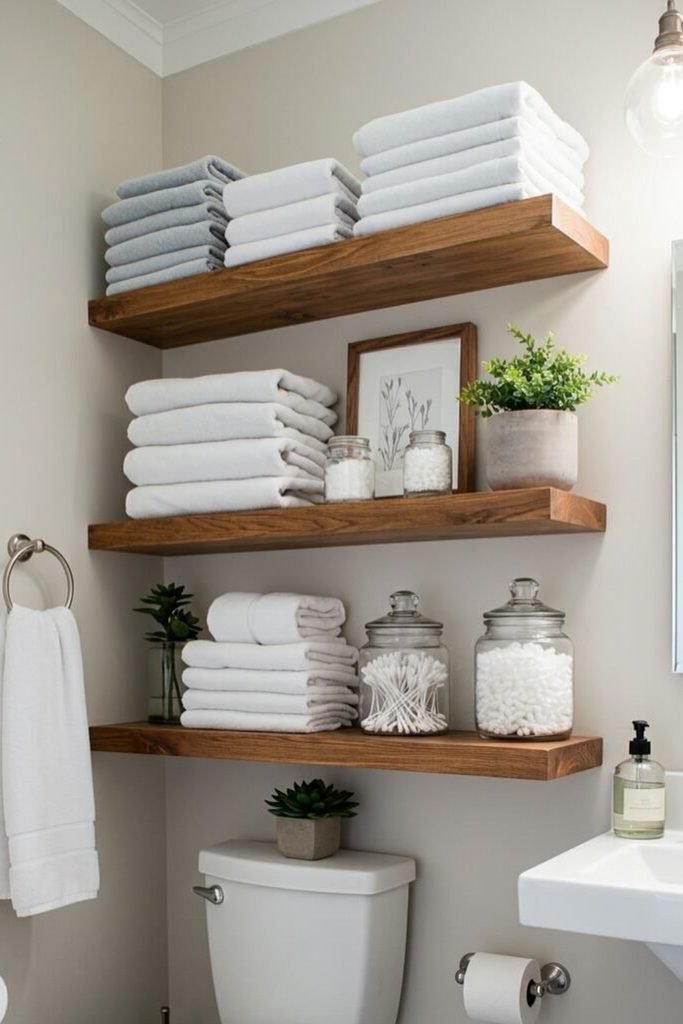
Bathrooms are a common place to store medication, but the heat and humidity here can actually shorten shelf life.
Steam from showers raises both temperature and moisture levels, which many medications are specifically labeled to avoid.
If you must keep medicine in the bathroom, choose a cabinet farthest from the shower, not directly above the sink.
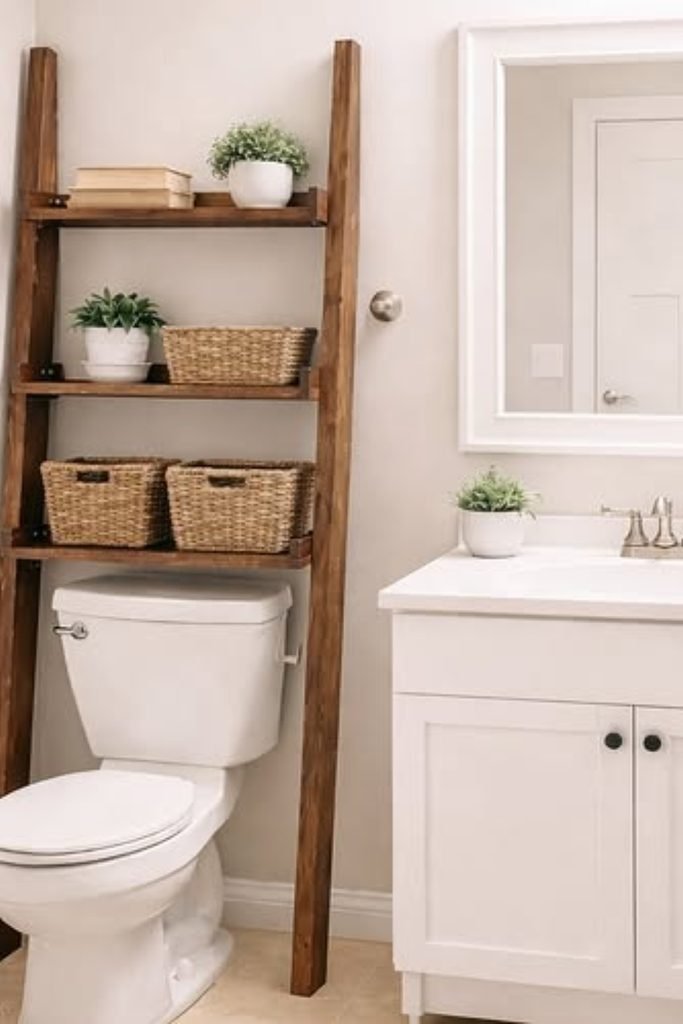
For anything temperature-sensitive, a drawer in the bedroom or a hallway closet is usually a safer choice.
Whatever you decide, keep medications secured and out of reach of children, regardless of which room they’re stored in.
Bathroom Storage with No Cabinet Space
Limited cabinet space doesn’t mean limited storage options, it just means looking beyond the cabinet itself.
1. Use the Back of the Door
An over-the-door organizer can hold hair tools, cleaning supplies, or extra toiletries without using any cabinet space.
This works especially well for lightweight items that don’t need to sit on a flat surface.
2. Add Tension Rods and Corner Shelving
A tension rod under the sink creates a hanging spot for spray bottles, freeing up shelf space below.
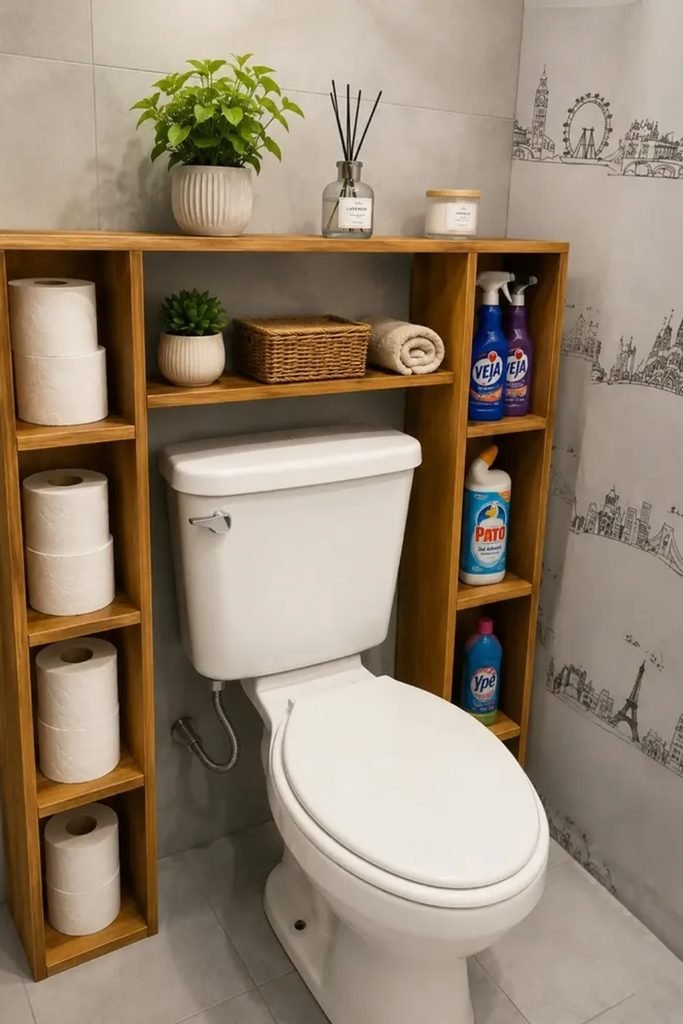
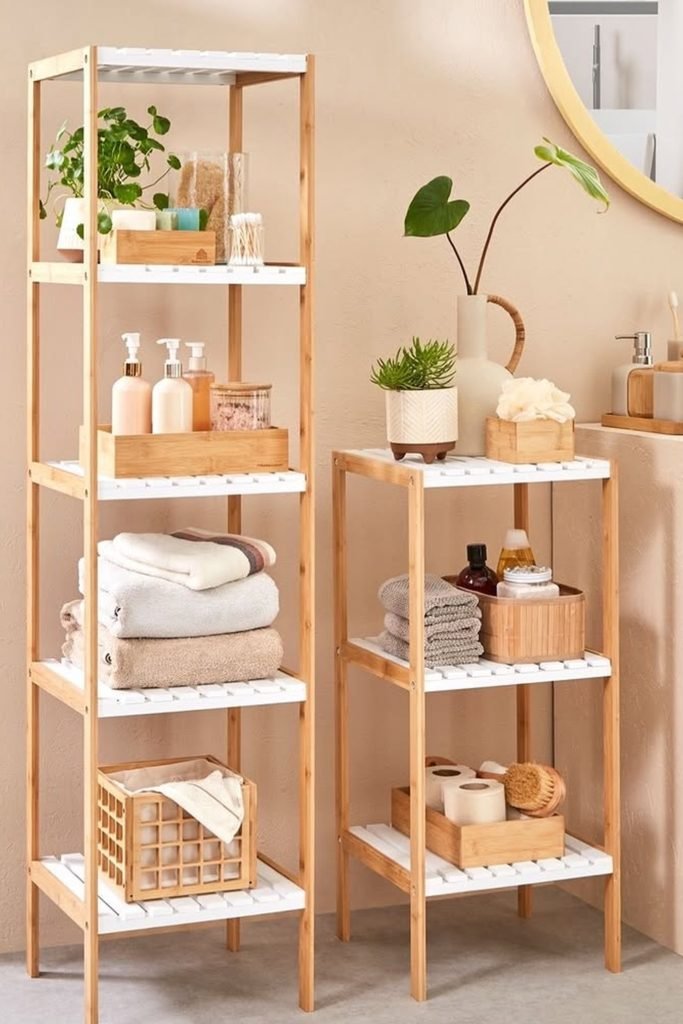
Corner shelving takes advantage of unused vertical space that most bathrooms simply waste.
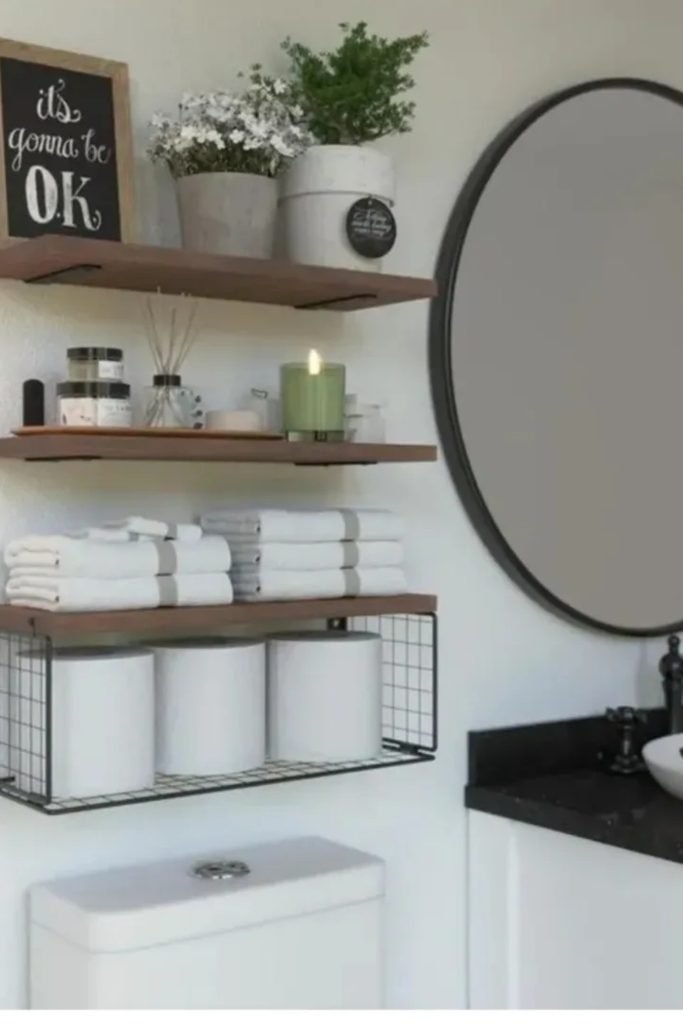
3. Magnetic Strips
Magnetic strips can hold small metal items like tweezers, nail clippers, or bobby pins right on the cabinet wall.
Small hooks work well for hanging a hairdryer cord or a loofah, keeping both off the counter.
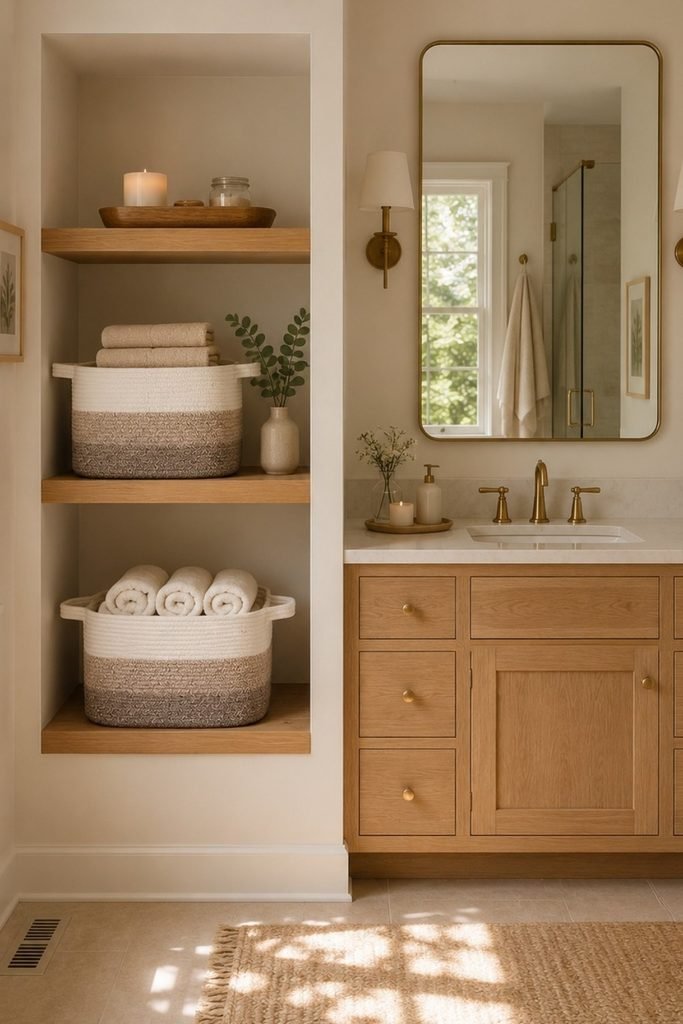
How Do You Keep Wet Items?
Wet items are one of the biggest reasons bathroom storage systems break down faster than storage in any other room.
Never store a wet towel or loofah inside a closed container, trapped moisture leads to mildew within days.
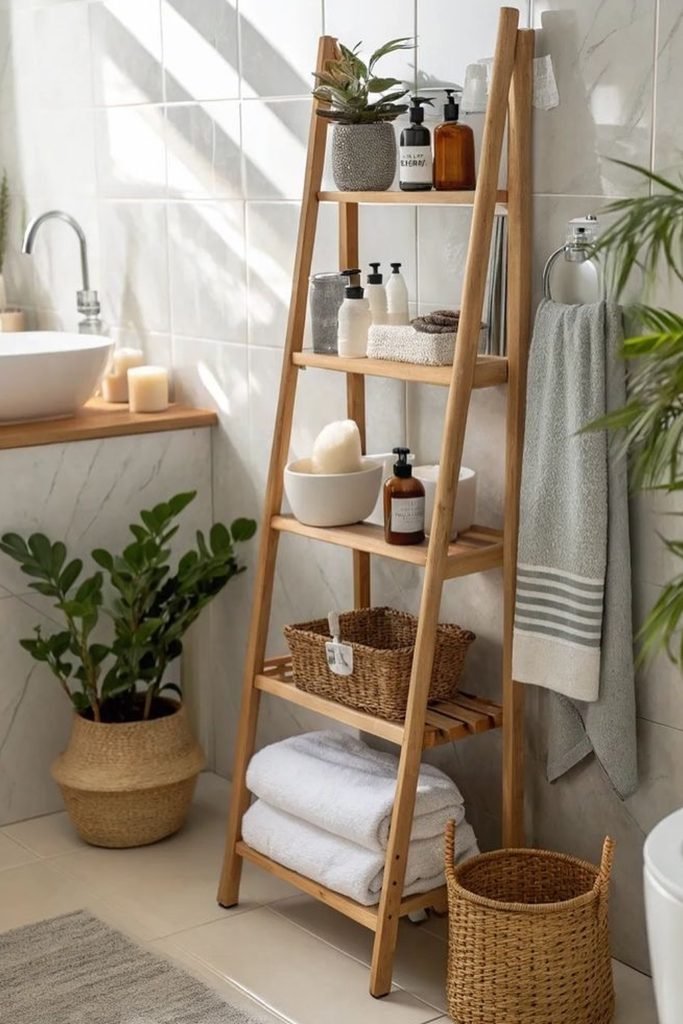
You can use a hook or a ventilated basket instead, so air can circulate around damp items until they fully dry.
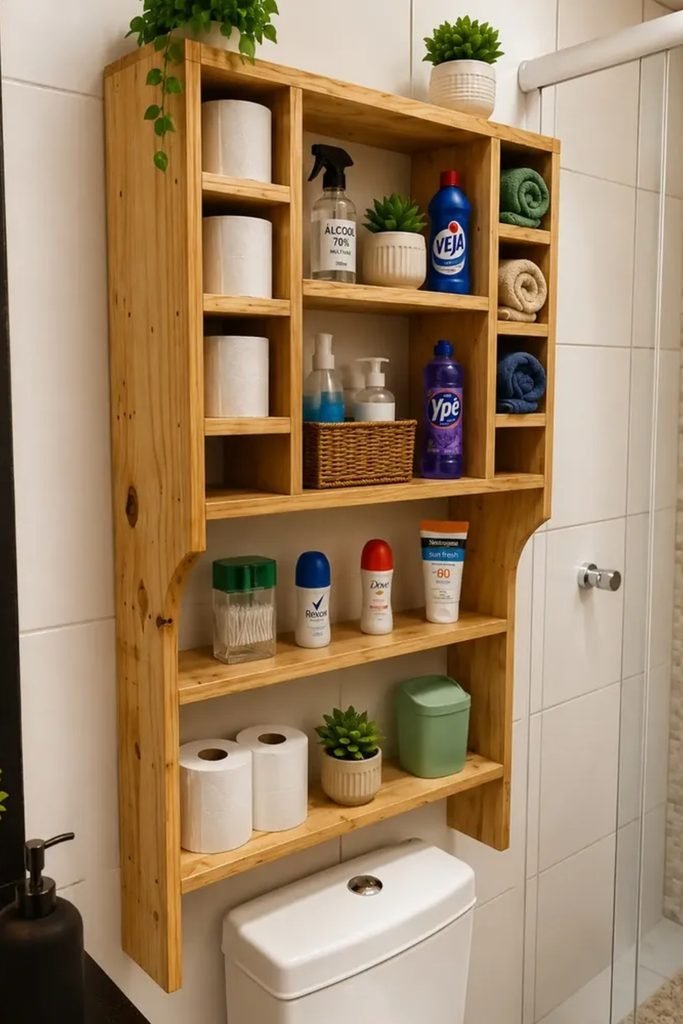
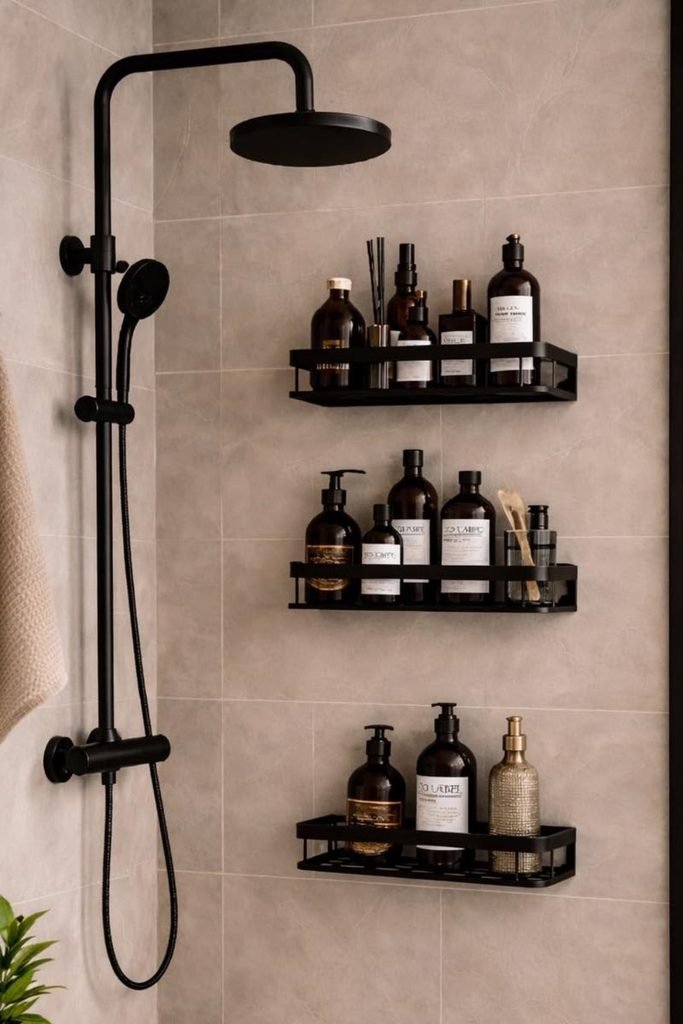
For shower items specifically, a hanging caddy with drainage holes prevents the pooling that causes bottles to get grimy.
If a storage bin or shelf ever feels damp to the touch, that’s a signal it needs better ventilation, not just cleaning.
How Should a Guest Bathroom Be Organized?
A guest bathroom serves a different purpose, so it shouldn’t be organized the same way as your everyday one.
1. Stock What Guests Need
You can keep a small, visible stock of essentials, extra towels, a spare toothbrush, hand soap, guests can find without asking.
Guests won’t open cabinets looking for supplies, so anything they might need should be out in the open.
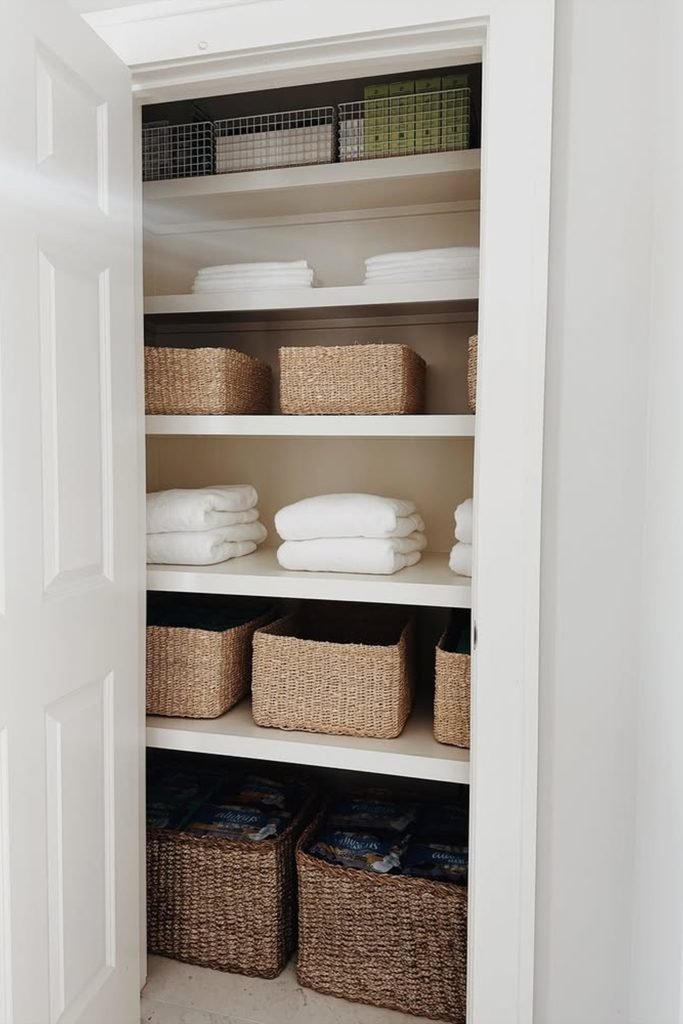
2. Hide Your Personal Items
Personal medications, skincare, or anything you’d rather not share a shelf with should be moved out of sight.
A quick pre-guest sweep, clearing the counter and tucking away personal items, takes just a few minutes.
Which Products You Can Actually Throw Away?
Holding onto products past their useful life is one of the most common sources of quiet bathroom clutter.

| Product Type | Toss When | Why |
| Skincare (opened) | 6–12 months | Loses effectiveness, risk of contamination |
| Mascara | 3 months | Bacteria growth near eyes |
| Medication | Check expiry date | Reduced or unpredictable effectiveness |
| Loofah | 3–4 weeks | Holds bacteria in damp environment |
| Towels | When rough/odor persists | Fabric breaks down, holds bacteria |
| Toothbrush | 3 months | Bristles wear down, less effective cleaning |
1. Skincare and Makeup Timelines
Most skincare products last six to twelve months once opened, while mascara should be replaced closer to three months.
If a product has changed in smell, texture, or color, that’s a sign to toss it regardless of the date.
2. Medication Expiry Checks
Check medication expiry dates every few months, and don’t rely on how the product looks to judge whether it’s still good.
Expired medication should be disposed of properly, not simply thrown in the regular trash.
3. When to Toss Towels, Loofahs, & Brushes
Loofahs should be replaced every three to four weeks since they hold onto bacteria in a damp environment.
Towels can last longer, but any that feel rough or hold onto odor after washing are due for replacement.
How to Maintain Bathroom Organization Daily?
Maintenance doesn’t need to be a big weekly project, small daily habits do most of the work.
Wipe down the counter once a day so products don’t leave rings or start collecting dust and grime.
Put items back in their designated zone immediately after use instead of leaving them wherever they were last touched.
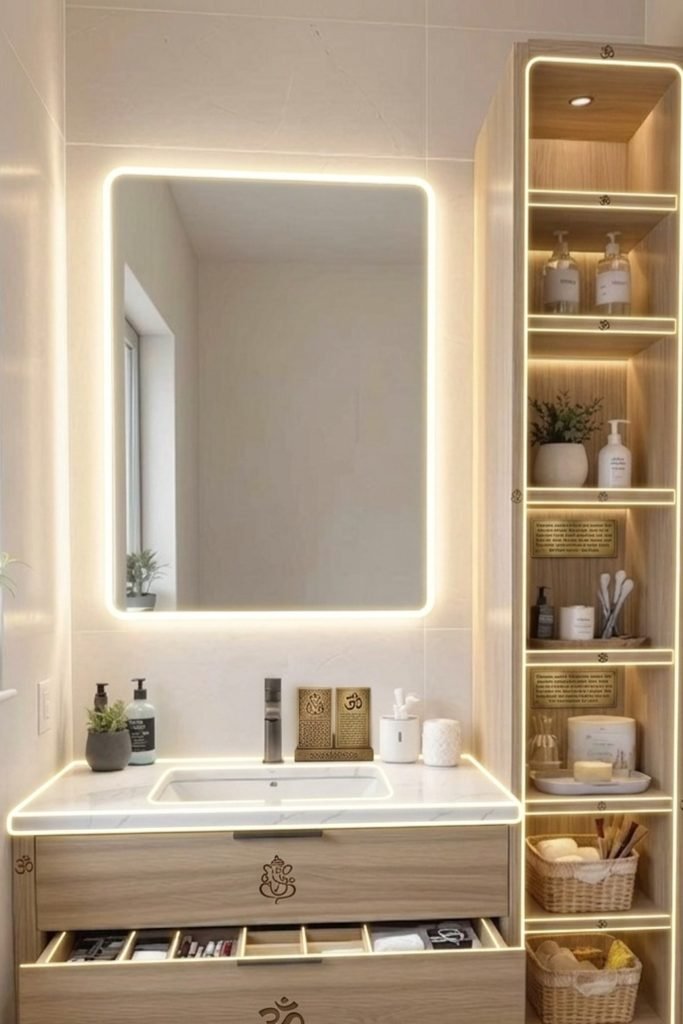
Do a quick weekly restock check for anything running low, so you’re never caught without an essential item.
Once a month, take five minutes to check for expired products and remove anything you no longer use.
This kind of light, repeated maintenance prevents the bigger, more frustrating reorganization projects later on.
Conclusion
Bathroom organization works best when it’s built around how the room actually gets used, not just how it looks.
Routine-based zones, category storage, and a few minutes of daily upkeep go a long way in a small space.
Once every product has a fixed home, mornings & nights both move faster with far less searching.
Small, consistent habits will keep this system working long after the initial setup is done.
FAQs
How Do You Organize a Bathroom With No Cabinets?
Rely on vertical and door space instead of traditional cabinets, over-the-door organizers, tension rods, and corner shelving all work well.
Magnetic strips and small hooks can also hold lightweight items without needing any built-in storage.
Grouping items by category in clear, portable bins makes it easy to store everything under a sink or in a nearby closet if needed.
Where Should You Store Medicine in the Bathroom?
If possible, avoid storing medicine in the bathroom altogether, since heat and humidity from showers can reduce its effectiveness.
If space requires it, choose a cabinet farthest from the shower and keep medication in its original, labeled packaging.
For temperature-sensitive medication, a drawer in another room is usually a better long-term choice.