Homeschooling can get messy pretty quickly when books pile up, worksheets go missing, & pencils seem to wander around your house by themselves.
A simple homeschool organization system can make school days easier for both parents & kids.
The goal is not to create a picture-perfect classroom, but to give books, supplies, papers, learning tools, and daily work a proper place.
In this article, you will find simple ways to organize each part of your homeschool setup so kids can find what they need, and put things back easily.
Let’s jump in!
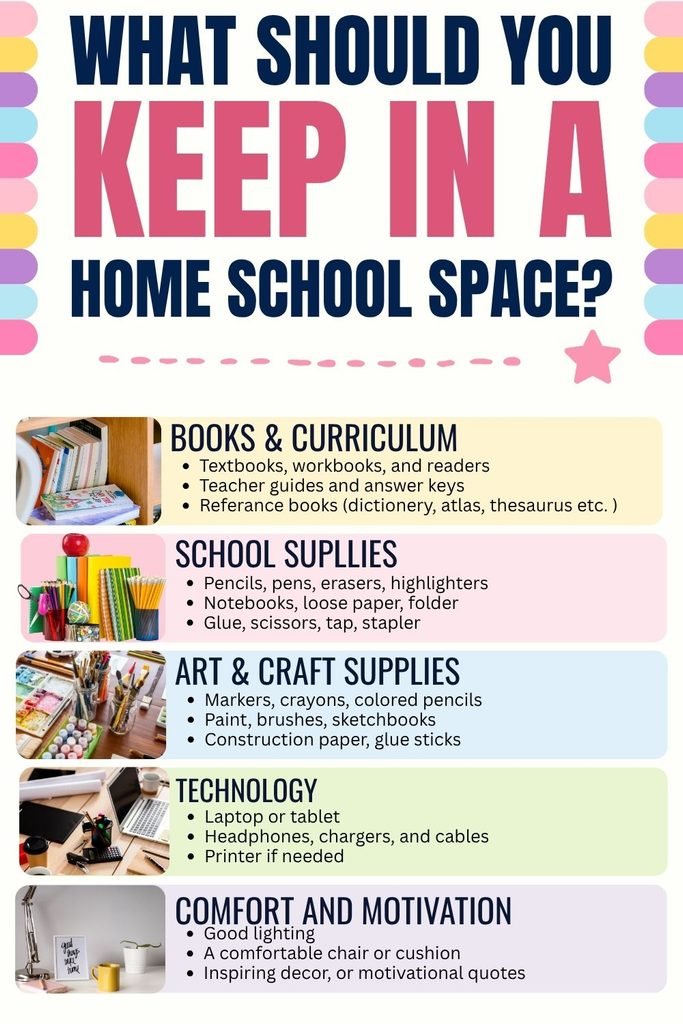
What Should You Keep in a Homeschool Space?
A homeschool space works better when you keep only the things your kids regularly need for learning.
Start with textbooks, workbooks, notebooks, worksheets, pencils, markers, art supplies, & basic learning tools.
You may also need curriculum materials, educational games, a laptop or tablet, headphones, & folders for finished & unfinished work.
Keep daily supplies within easy reach, while extra or rarely used materials can go into separate storage.
This helps prevent shelves & desks from becoming overcrowded.
Before buying organizers, sort everything into simple groups based on how your kids actually use each item.
Organizing Homeschool Books and Textbooks
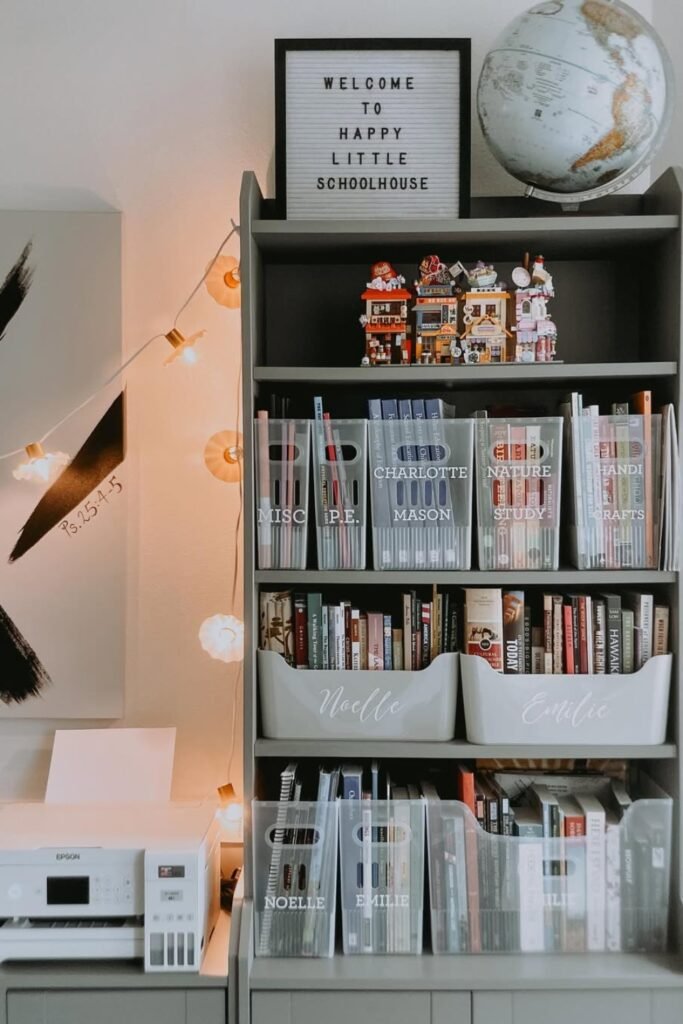
1. Use One Shelf Per Child
You can create a personal shelf for each child keeps their textbooks, notebooks, and learning supplies organized throughout the homeschool routine.
Add some name labels or simple tags helps children identify their materials quickly while building responsibility for their own study space.
Instead of mixing everyone’s books together, separate shelves make daily lessons smoother and reduce time wasted searching for missing resources.
2. Separate Books by Subject
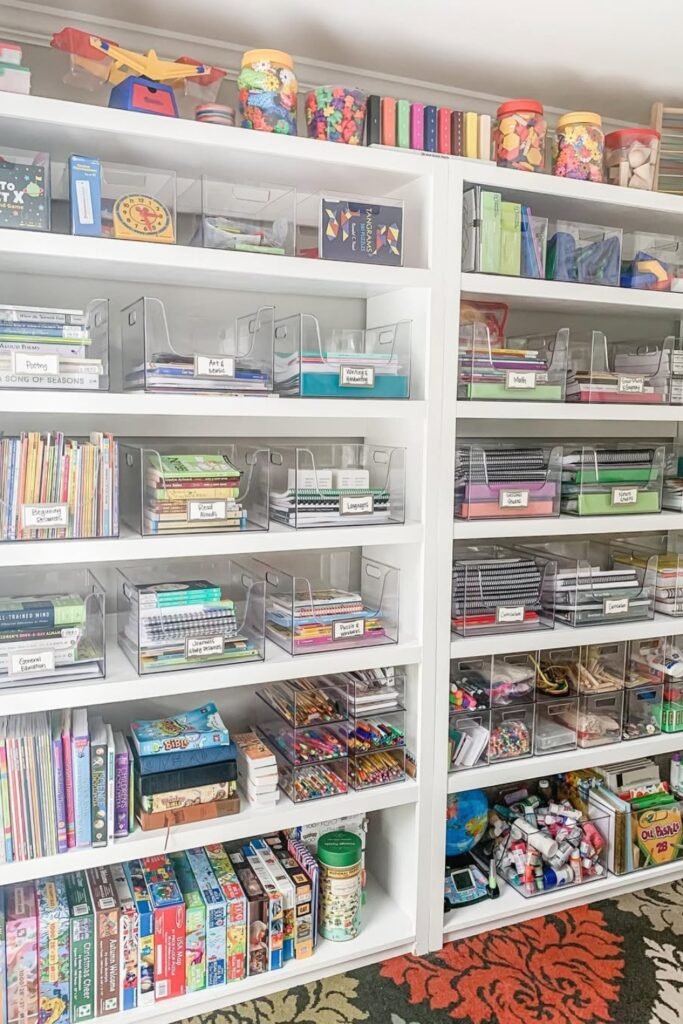
Sort the books into subject sections like math, science, reading, and history creates a cleaner system for everyday learning sessions.
Keeping the similar materials together allows children to locate lessons faster without moving through crowded shelves or messy book piles.
A subject-based arrangement also helps parents plan schedules because every resource stays grouped with related educational materials.
3. Keep Daily Books Within Reach
Placing frequently used textbooks and workbooks near the study area makes everyday homeschool routines easier and more efficient.
Moving occasional reference books to higher shelves or cabinets keeps important materials accessible without overcrowding the learning space.
With a simple reach-friendly setup, children can independently collect their supplies and begin lessons with fewer distractions.
4. Try Magazine Holders
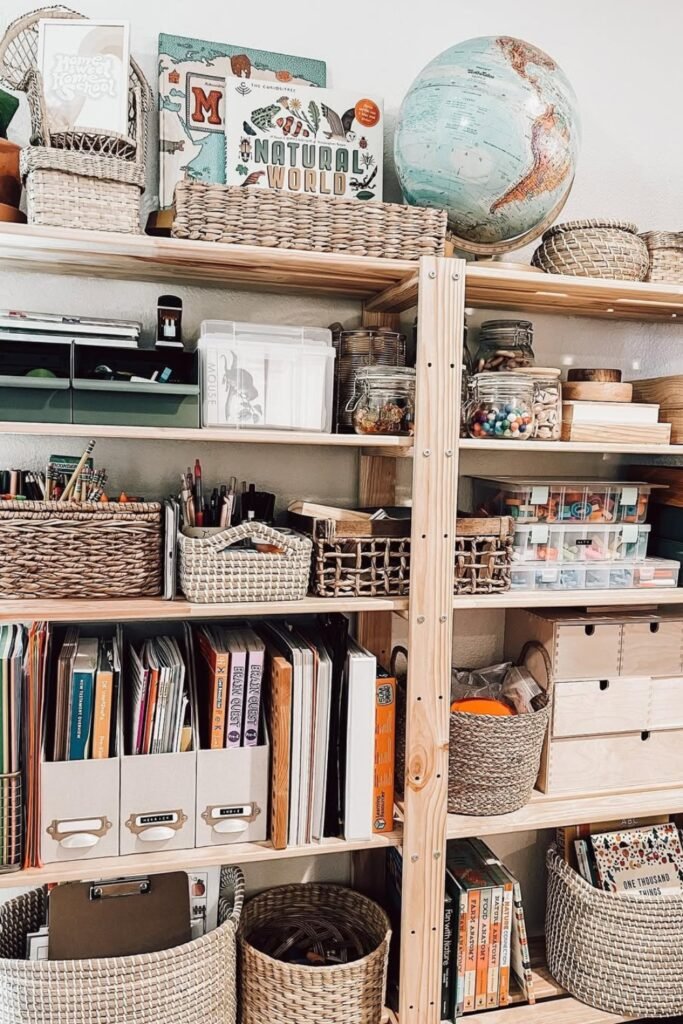
Using magazine holders creates a practical storage solution for thin workbooks, activity pages, and reading materials.
These containers keep lightweight books standing upright instead of sliding between larger textbooks or becoming difficult to locate.
You can choose labeled holders for different categories makes small learning resources easier to organize, access, and maintain throughout the year.
Organizing Notebooks and Workbooks
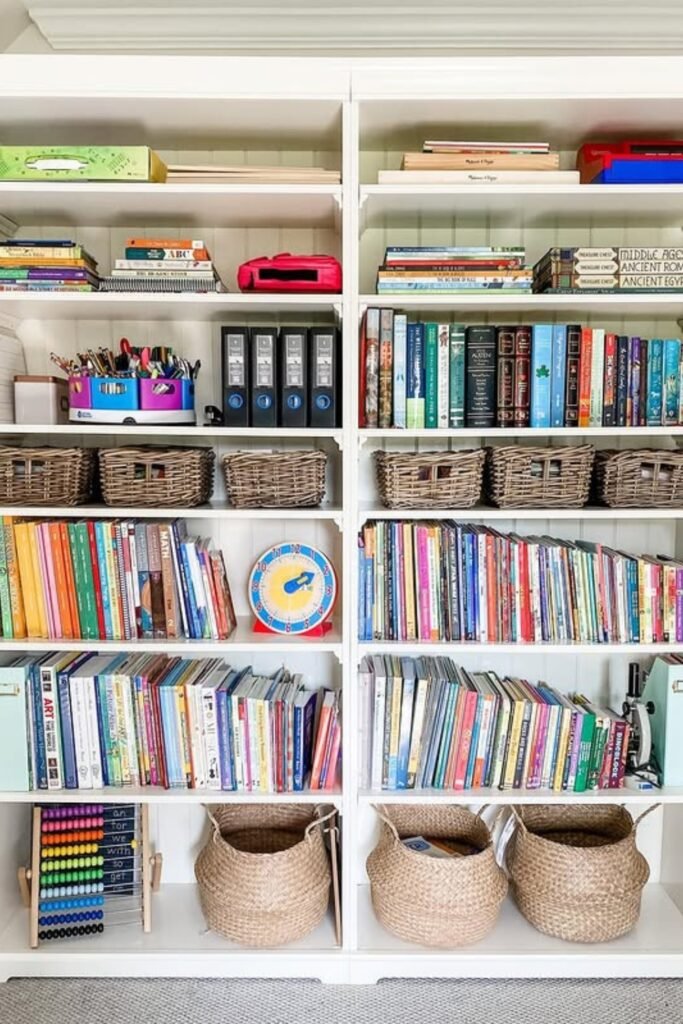
1. Color-Code Subjects
You can assigned each subject a specific color creates a visual system that helps children recognize materials faster during lessons.
Use the matching folders, labels, and containers makes math, science, and reading resources easier to separate and manage.
A simple color routine reduces confusion because every book, notebook, and supply has a clear organizational place.
2. Use Vertical File Holders
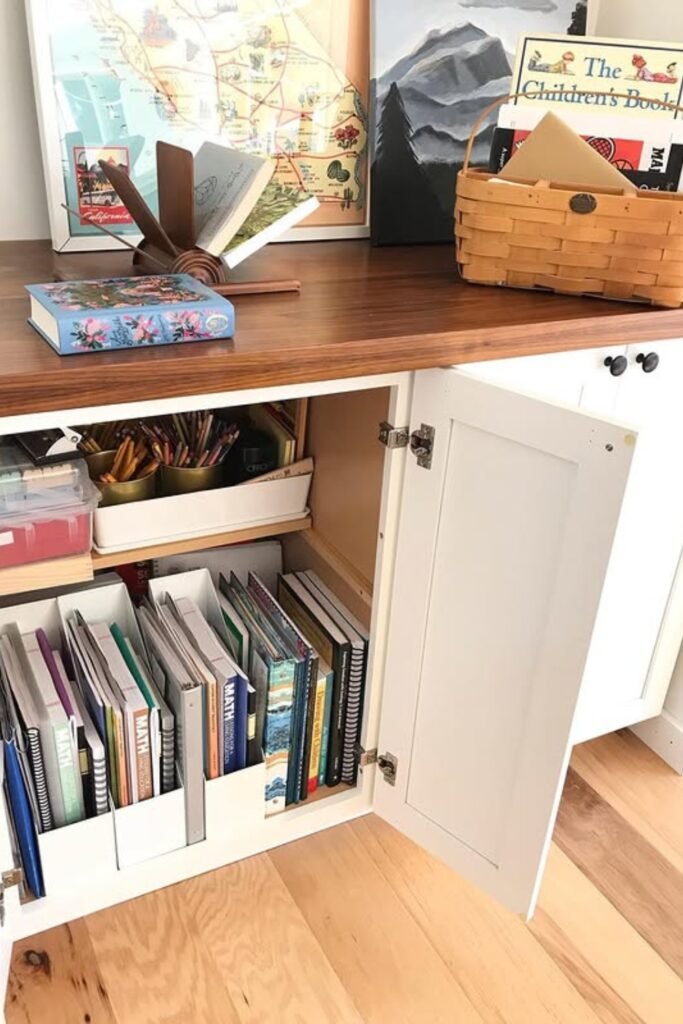
Keep the notebooks and workbooks upright in file holders prevents messy stacks from taking over the learning area.
Instead of moving several items, children can quickly remove the exact resource needed for their lesson.
This storage method saves desk space while keeping frequently used educational materials visible and accessible.
3. Create a Daily Bin
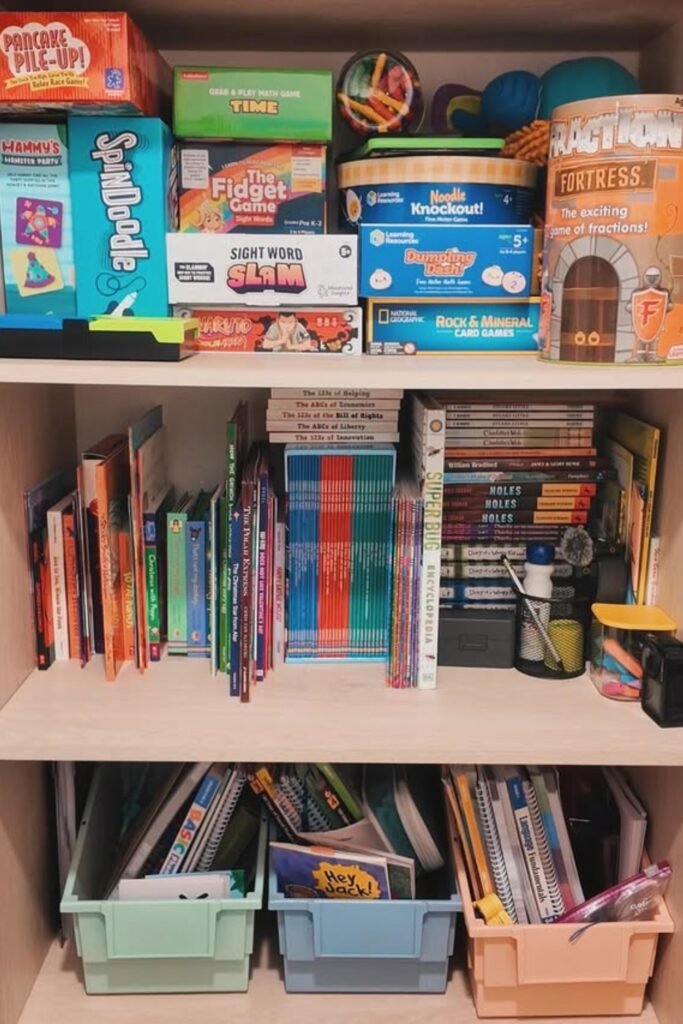
You can prepare a daily bin with required books and supplies creates a smoother start for each homeschool session.
Adding only the needed materials keeps the workspace clean and prevents unnecessary items from causing distractions.
A ready-to-use basket also encourages children to follow routines and take ownership of their school preparation.
Organizing Homeschool Technology
1. Create a Charging Station
Designating one charging station keeps laptops, tablets, and educational devices organized between homeschool lessons.
A dedicated setup also prevents tangled chargers and makes technology easier to access for the next school day.
You can use a specific location helps children remember where devices belong after finishing assignments or online activities.
2. Label Every Charger
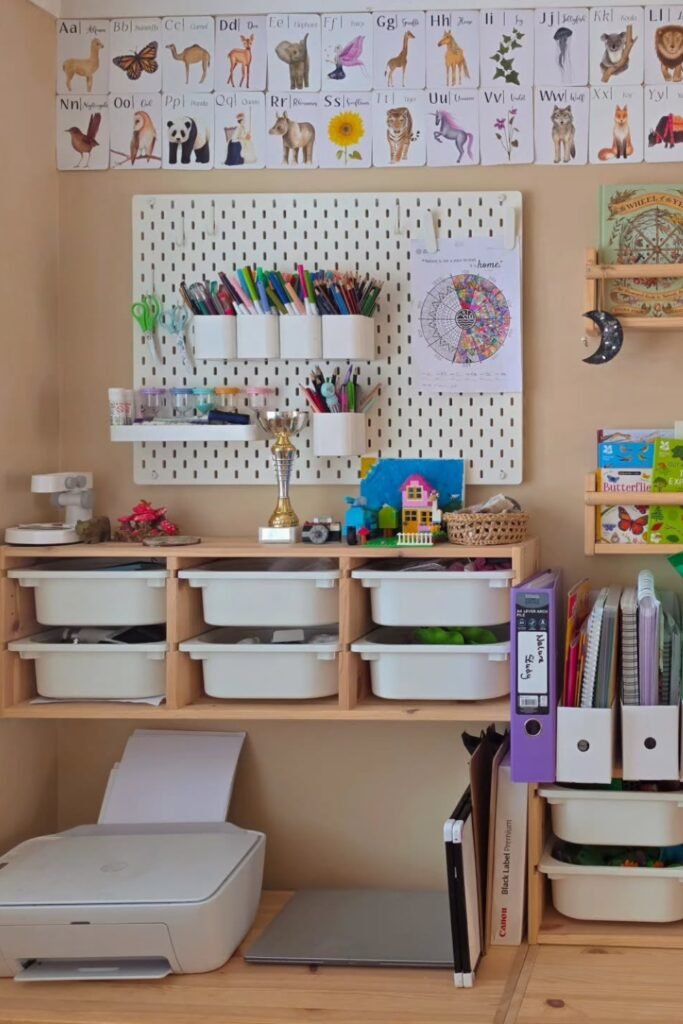
A simple labeling system keeps technology supplies organized and reduces unnecessary searching before online lessons begin.
You can add the clear labels to chargers and cables helps each child quickly identify their own device accessories.
Using names, colors, or small tags prevents cords from being swapped when multiple devices share the same area.
3. Control Loose Cables
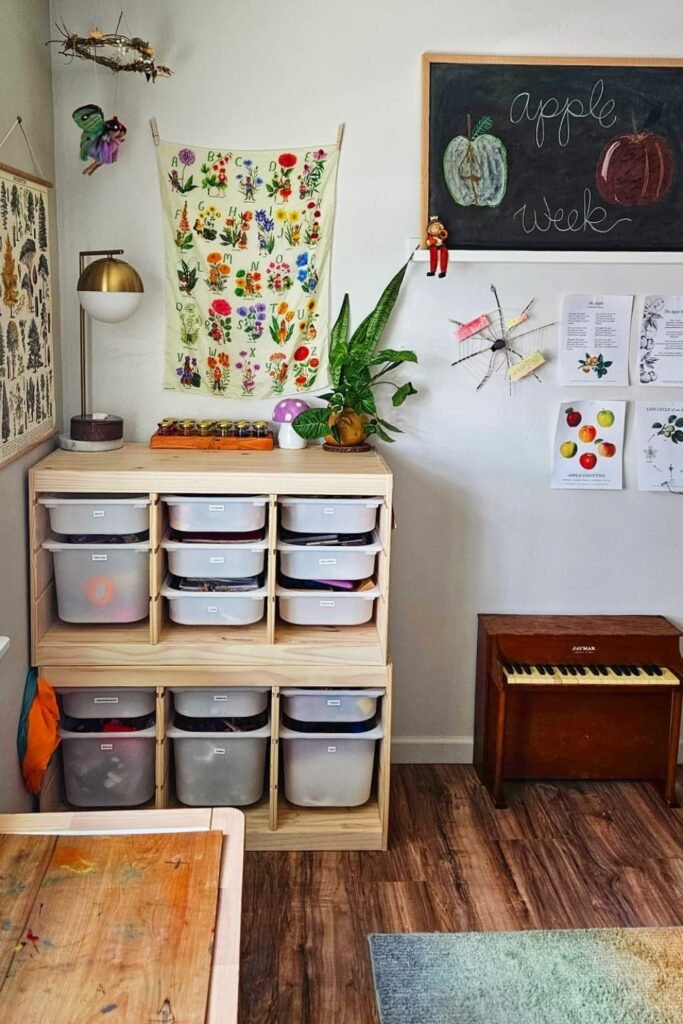
You can gather some loose cables with clips, ties, or organizers creates a cleaner and more functional homeschool workspace.
Keeping charging cords together prevents tangled wires from spreading across desks and creating visual clutter.
Tidy cable setup also protects devices while making daily technology routines easier for children to follow.
4. Give Headphones a Home
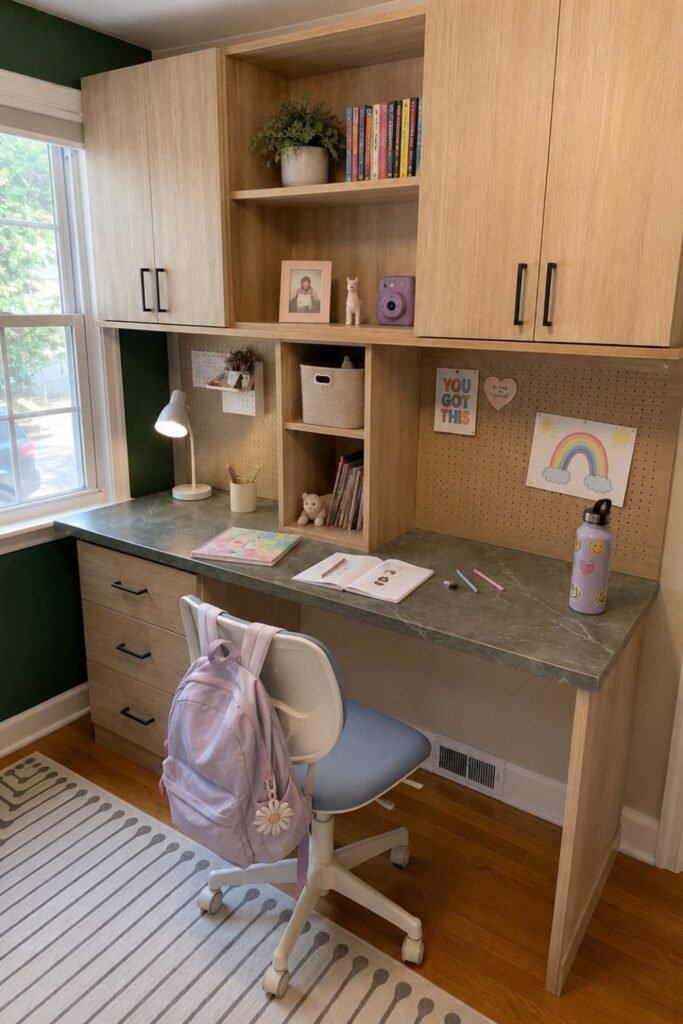
You can create a dedicated spot for headphones keeps audio supplies ready whenever virtual classes or activities begin.
Storing them on hooks, baskets, or personal bins prevents them from disappearing between lessons.
The consistent headphone station helps children build better habits while maintaining an organized technology area.
Organizing Worksheets and Loose Papers
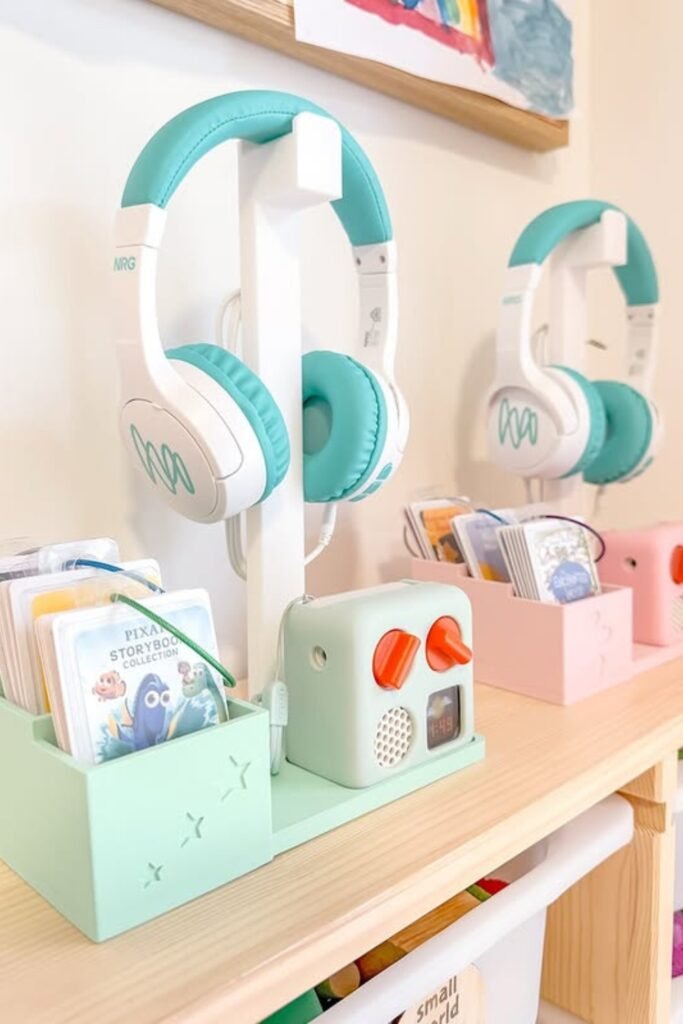
1. Create Subject Folders
Using separate folders for each subject keeps worksheets, assignments, and important papers organized throughout the school year.
You can label the folders by topic allows children to quickly return completed work without creating messy paper piles.
Simple filing system makes reviewing lessons easier and helps parents track educational progress over time.
2. Add an Inbox Tray
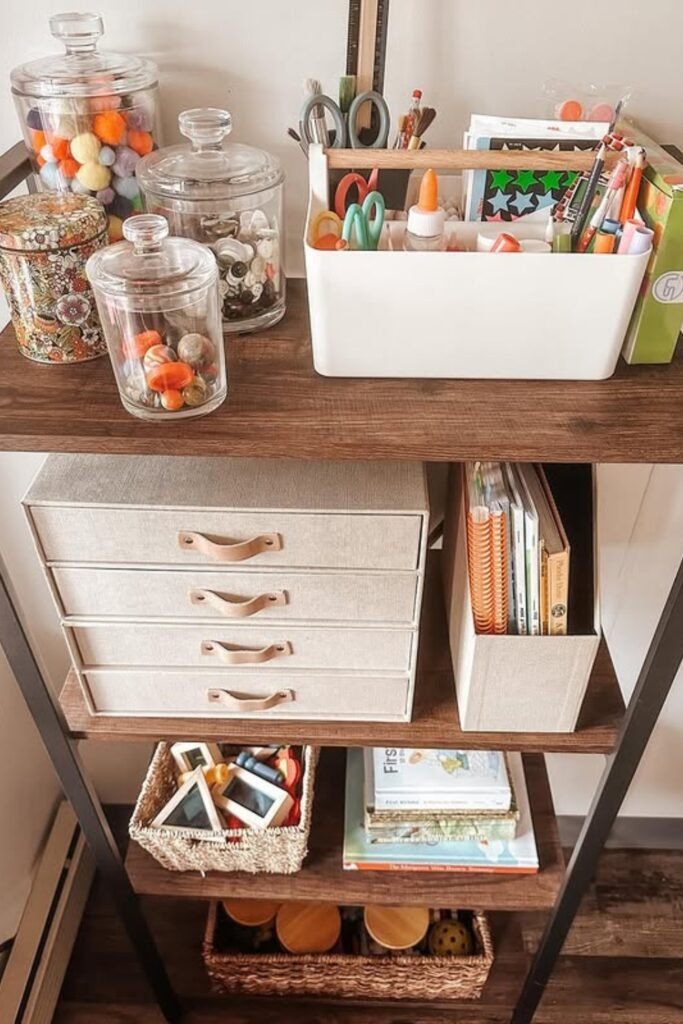
You can place a dedicated inbox tray near the study area creates a clear landing spot for new assignments.
Keep the fresh worksheets separate from finished work prevents papers from piling up and becoming difficult to manage.
An organized incoming system helps children know exactly where to find their next learning materials.
3. Make a Finished-Work Spot
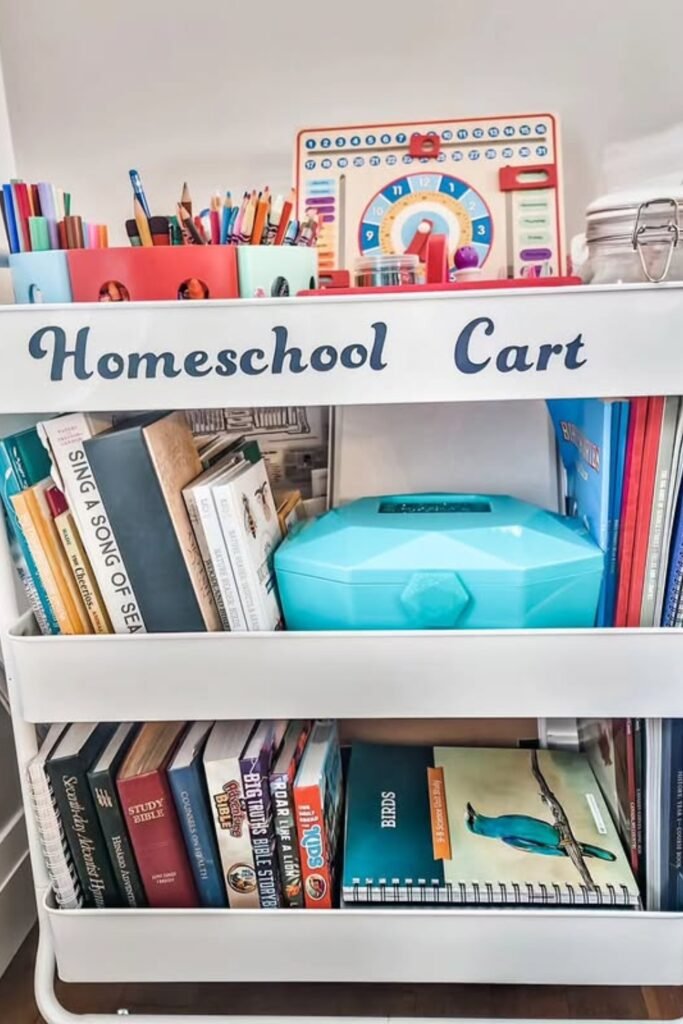
Create a finished-work tray gives completed assignments a temporary home before checking or filing.
Separate the done papers from active lessons keeps desks cleaner and prevents important work from getting misplaced.
A simple collection area makes grading routines smoother and helps track children’s daily progress.
4. Archive Older Papers
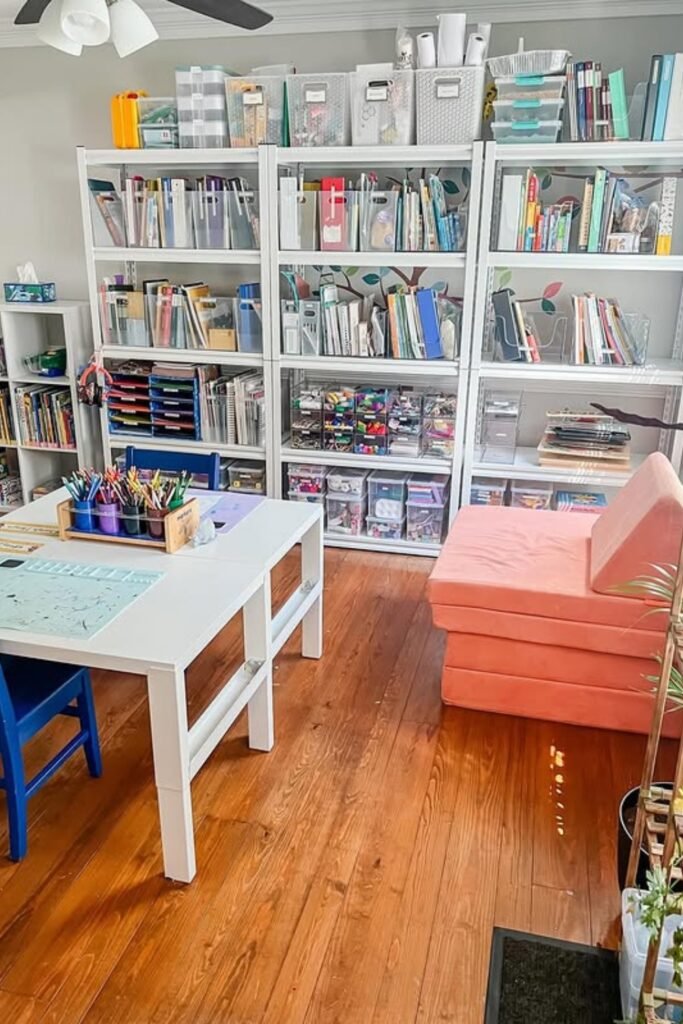
Save the important completed papers in labeled binders or boxes creates an organized record of learning achievements.
Moving older worksheets away from daily folders keeps current materials easier to access and maintain.
Regular archiving routine prevents overflowing storage while preserving memorable school projects and progress.
Organizing Art and Craft Supplies
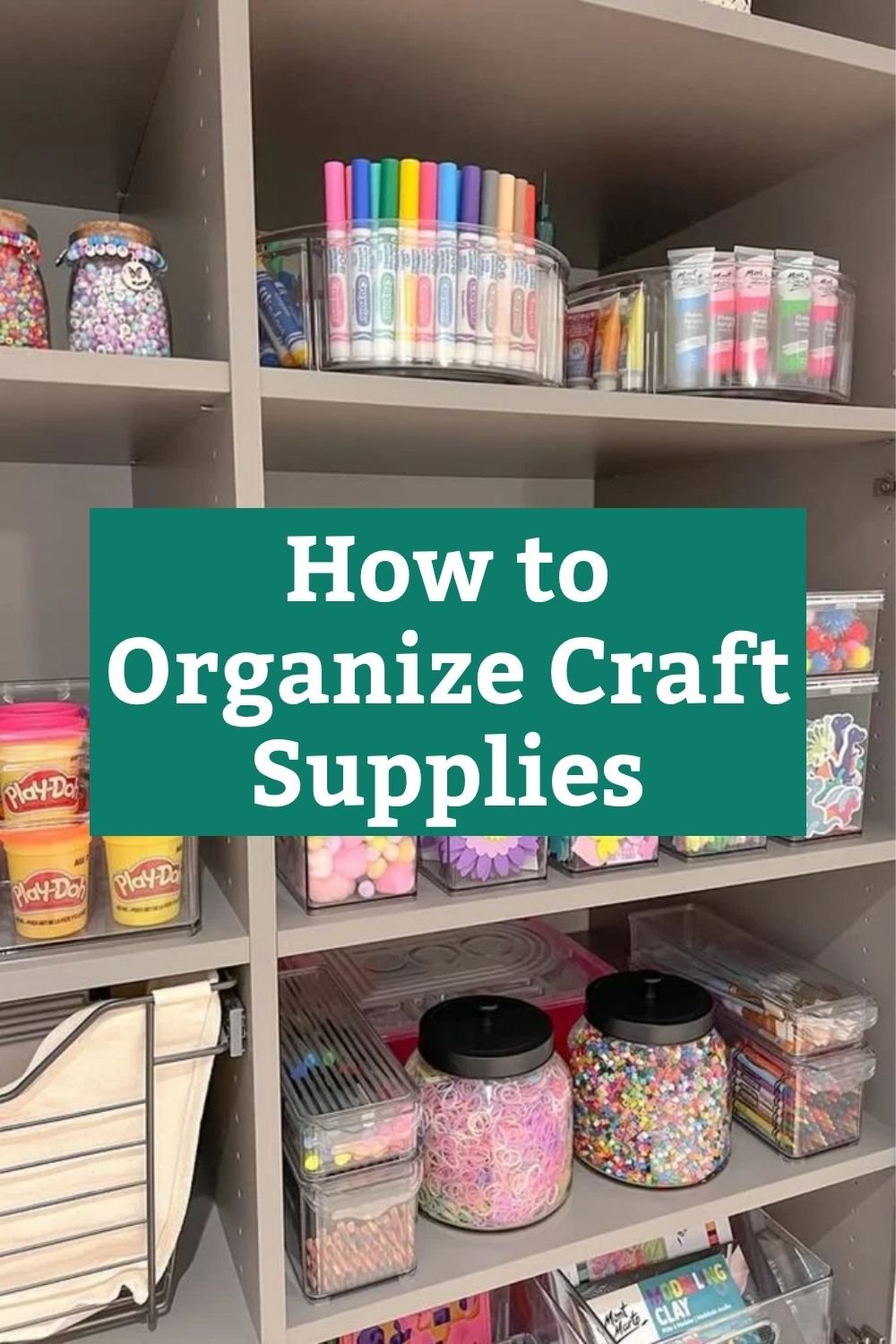
1. Use Clear Containers
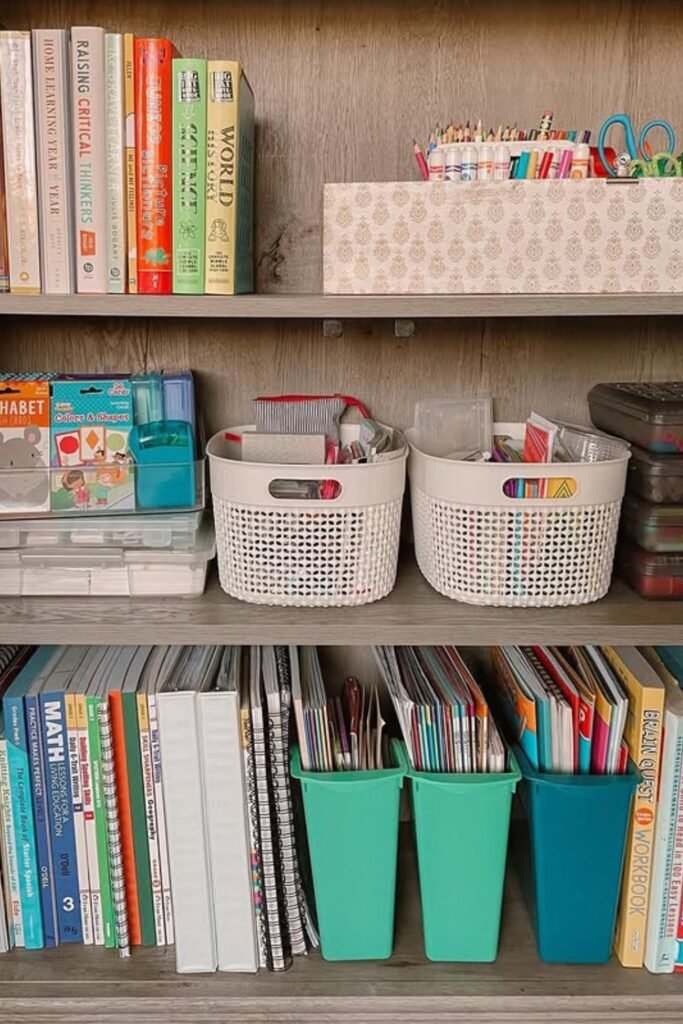
Store the craft materials in transparent containers makes crayons, paints, papers, and small supplies easy to identify.
Clear storage allows children to quickly choose what they need without searching through multiple boxes.
A visible organization system also encourages kids to return art supplies properly after creative activities.
2. Group Similar Supplies
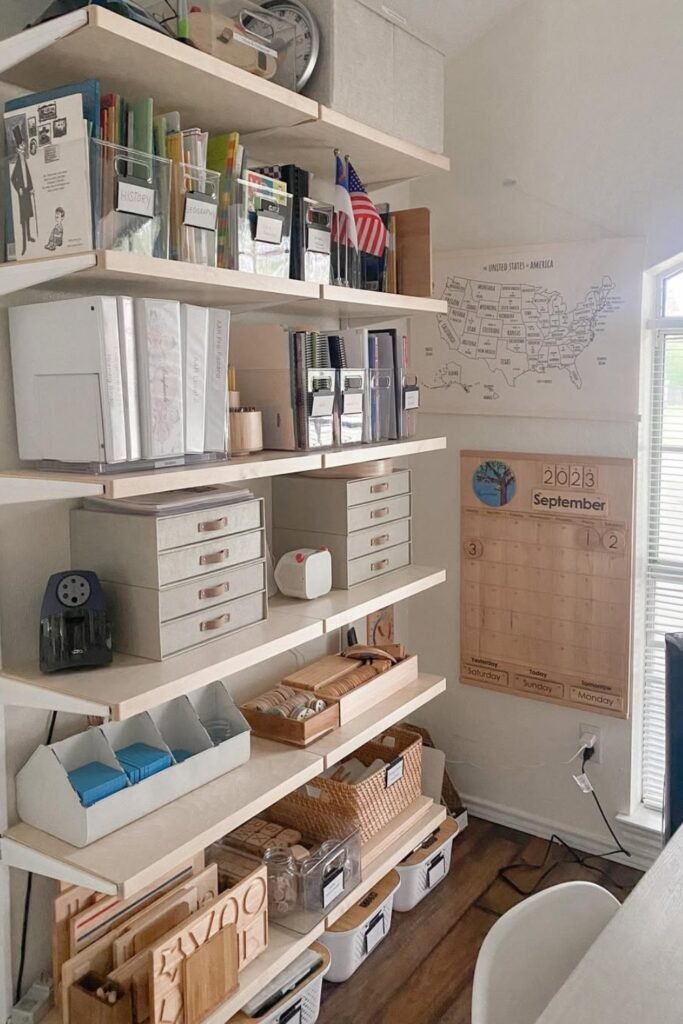
Seperate the drawing tools, painting materials, cutting items, and paper crafts creates a more organized creative station.
You can keep similar supplies together helps children find materials quickly and return everything to the correct place.
A grouped storage system reduces clutter and makes art activities easier to prepare each day.
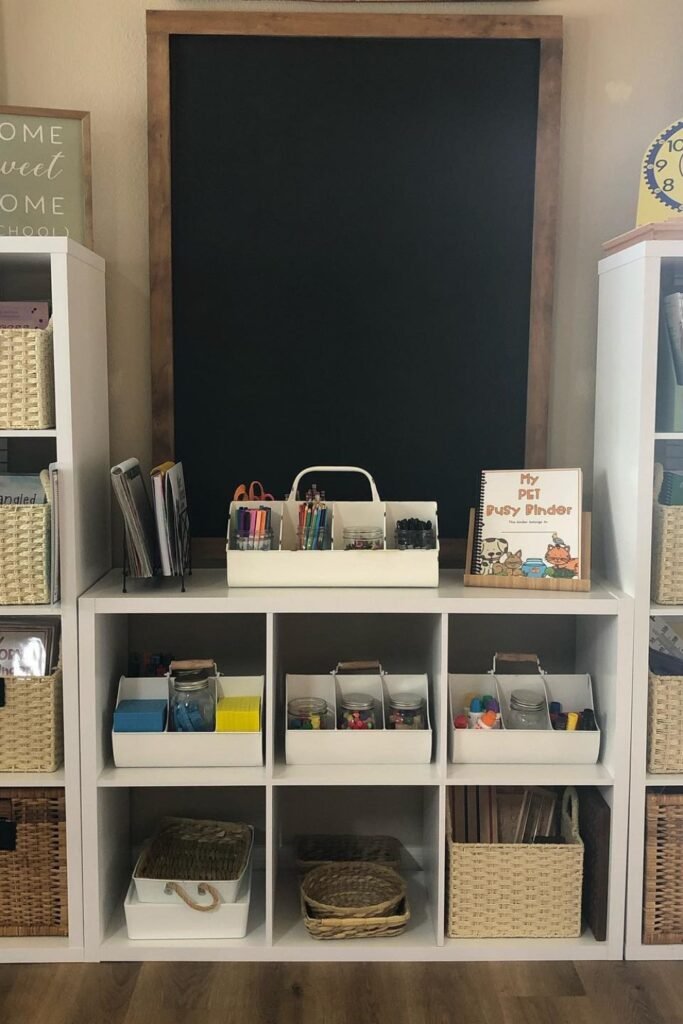
3. Add a Rolling Cart
A rolling cart keeps homeschool art supplies organized while making creative materials easy to reach during lessons.
The movable storage unit beside the learning table holds paints, papers, markers, and craft tools without taking extra room.
You can like this setup because children can move the cart when needed and choose their supplies independently during projects.
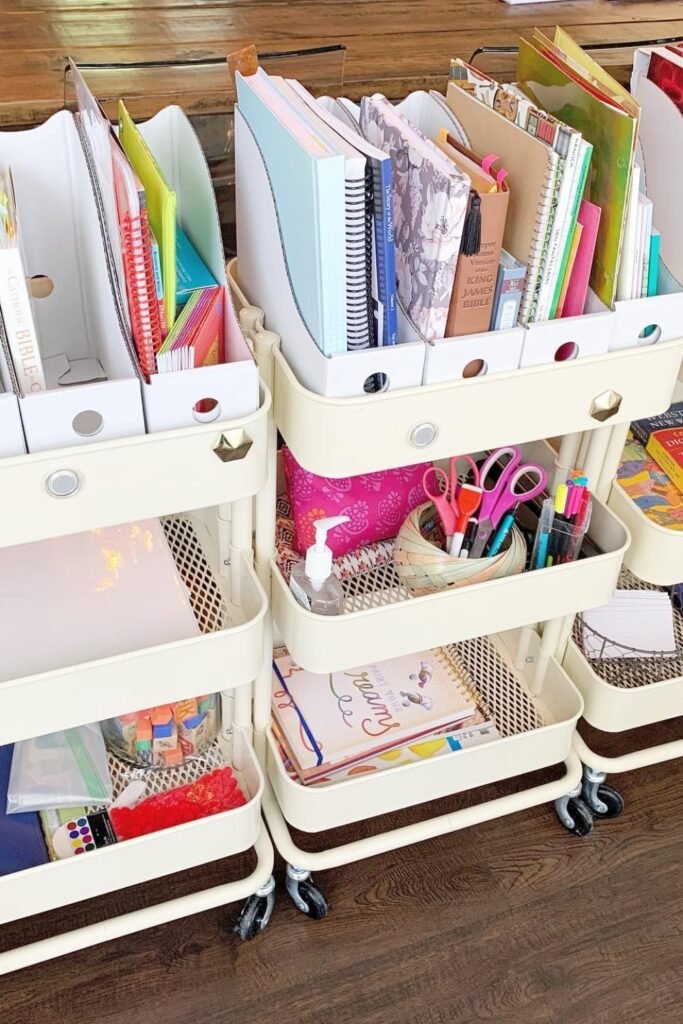
4. Keep Messy Supplies Higher
You can place the paint, glue, and permanent markers on higher shelves helps manage supplies that require extra care.
Everyday materials within reach while storing messy items safely creates a balanced workspace.
A thoughtful storage height prevents accidental spills and keeps creative areas cleaner throughout the day.
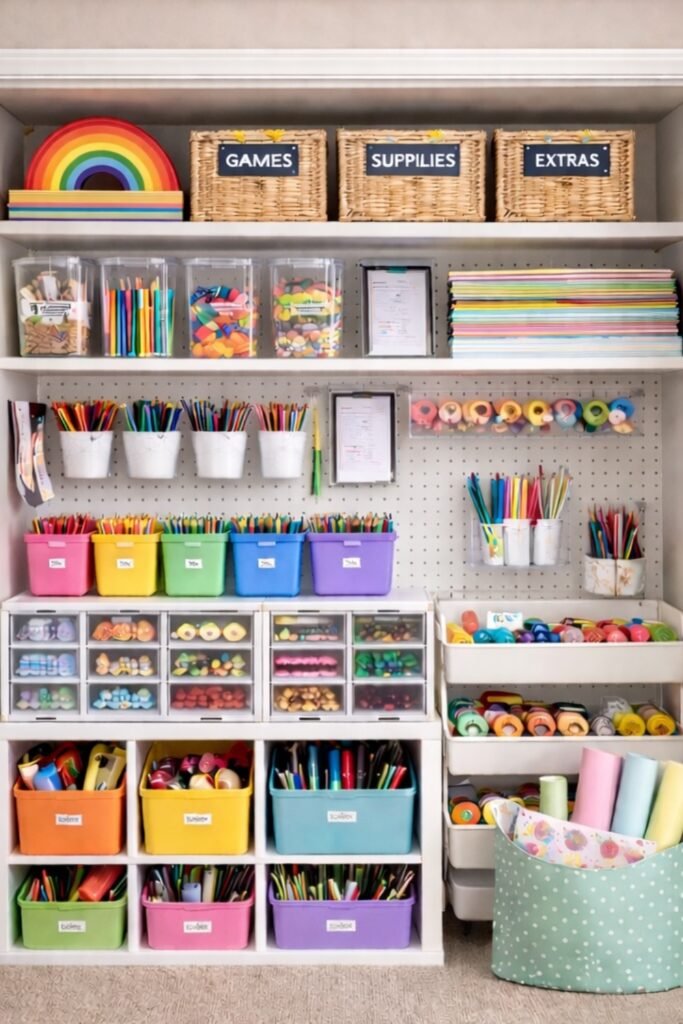
How to Organize Homeschool Supplies for Multiple Kids?
When you homeschool more than one child, keeping everyone’s supplies separate can prevent a lot of daily confusion.
Give each child a personal bin, shelf, or cubby for notebooks, folders, pencils, & current assignments.
You can also assign each child a color and use it for labels, folders, & storage containers.
Keep commonly shared supplies, such as scissors, glue, markers, rulers, & craft materials, in one central station that everyone can reach.
Curriculum materials should stay separate by child or grade level, especially when kids use different textbooks & workbooks.
Simple labels make it easier for children to find their own materials & return everything to the correct place after lessons.
Homeschool Organization Without a Dedicated School Room
You don’t need a separate classroom to keep homeschool supplies organized.
If your kids learn at the kitchen table, bedroom desk, or another shared space, use storage that can move or disappear after lessons.
Keep everyday pencils, markers, scissors, & other small supplies in a portable caddy.
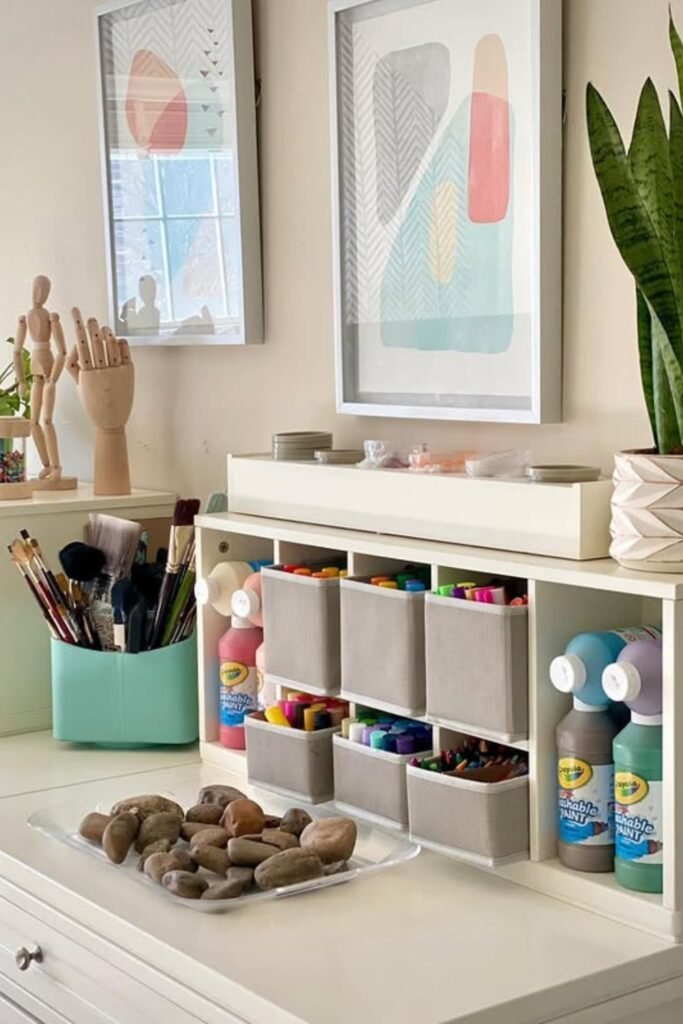
A rolling cart works well for books, workbooks, and larger learning materials. Store worksheets and completed assignments in a portable file box with labeled folders.
Closed cabinets and baskets can hold supplies you don’t want left in sight.
At the end of each school day, have kids return everything to its assigned place so the shared space can quickly return to normal.
Create a Homeschool Organization System Kids Can Maintain
A homeschool setup only stays organized when kids can manage it themselves.
Keep categories simple, use clear labels, & place everyday supplies where children can easily reach them.
Avoid complicated storage systems that require too many steps just to put away a book or pencil.
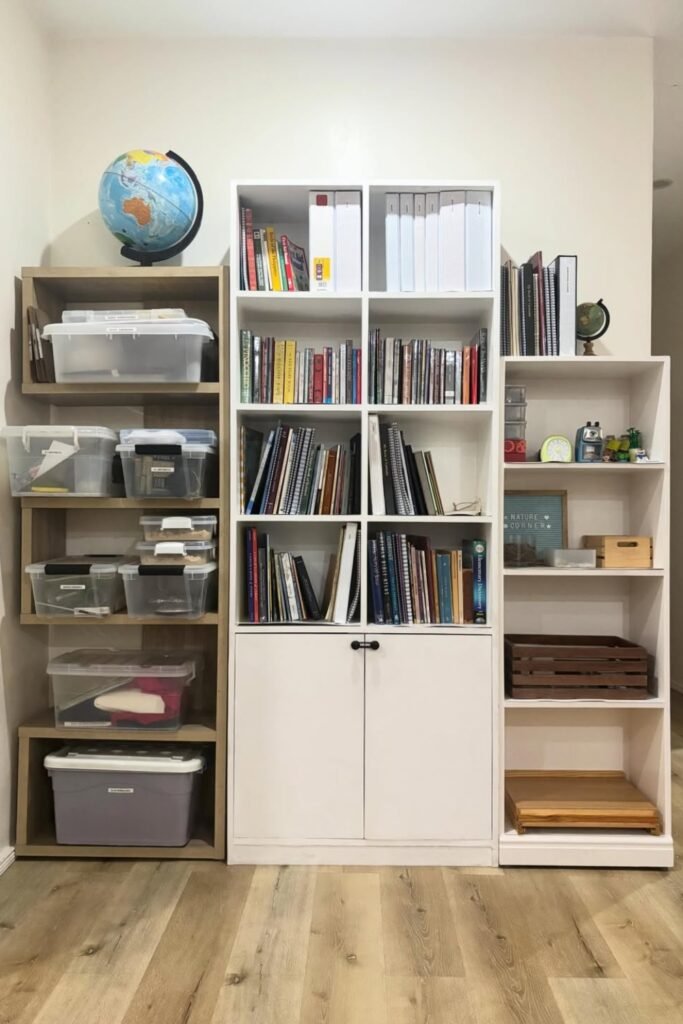
Give everything one clear home, from worksheets & textbooks to art supplies and learning tools.
Picture labels can help younger kids, while older children can use written labels or color coding.
Build a quick cleanup into the end of each school day so books return to shelves, papers go into folders, and supplies are ready for tomorrow.
FAQs
How can I keep homeschool supplies organized in a small space?
Use vertical shelves, rolling carts, portable caddies, & labeled bins instead of spreading supplies across the room.
Keep only everyday materials near the learning area & store extra books, craft supplies, & future curriculum elsewhere.
Giving everything one clear place can make even a small homeschool setup easier to manage.
How often should I reorganize my homeschool space?
Do a quick reset at the end of each school day & a deeper check once a week.
Remove unnecessary worksheets, refill supplies, & return misplaced books to their proper spots.
At the end of each term, sort through old curriculum & completed work so unused materials don’t slowly take over your storage.