A messy medicine cabinet isn’t just untidy; it can hide expired medicines until the moment you actually need them.
When fever, allergies, or a small injury hits, you might waste time searching through random bottles when you really need quick access.
The bigger problem is expiry blindness: medicines can sit there for months or years without anyone checking if they’re still safe to use.
In this article, you can build a safety-first system that keeps expiry dates visible and essential medicines easy to reach.
Let’s jump in!
Why Your Medicine Cabinet Is Messy?
Most medicine cabinets become very messy because medicines are stored with the thought that they might be useful someday.
The problem is that you may not have a fixed schedule for checking what is still safe to keep.
Over time, expired medicines can stay beside current ones without anyone noticing the difference.
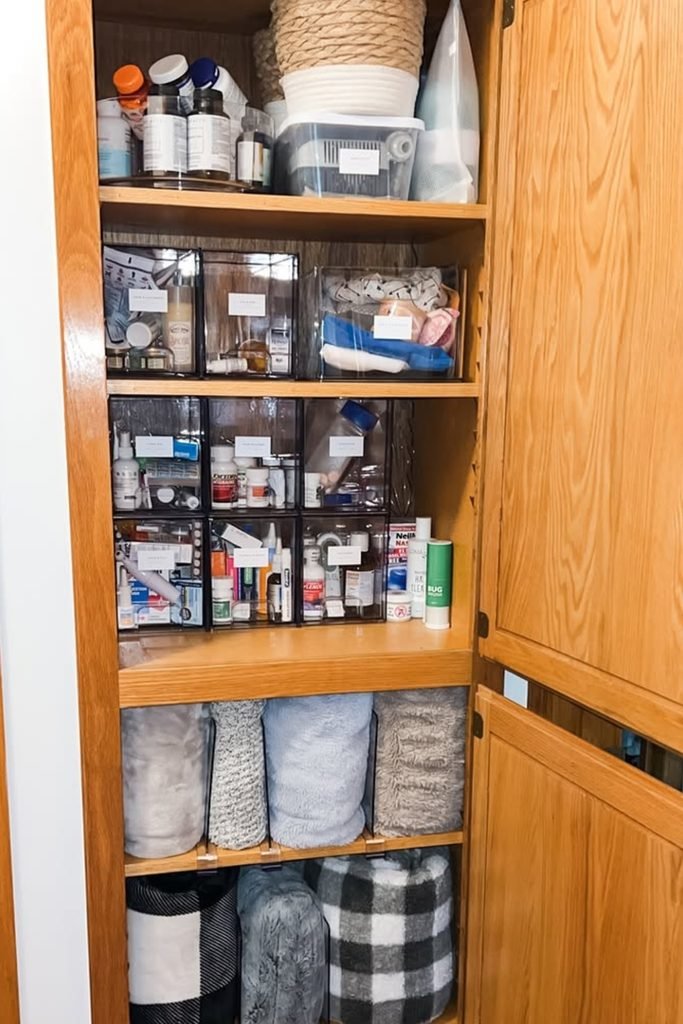
Unlabeled bottles, loose strips, & half-used products can make it even harder to know what should stay or go.
Without a regular checking routine, the cabinet can slowly turn into a mix of useful medicine & forgotten expired items.
Difficutlies You Will Face Due to Clutter Medicine Cabinet
During a fever, cut, or sudden allergy, you want the right medicine or first-aid item immediately.
But when everything is mixed together, even finding one basic item can take several frustrating minutes.
That delay matters more when someone is already uncomfortable, bleeding, or waiting for quick relief.
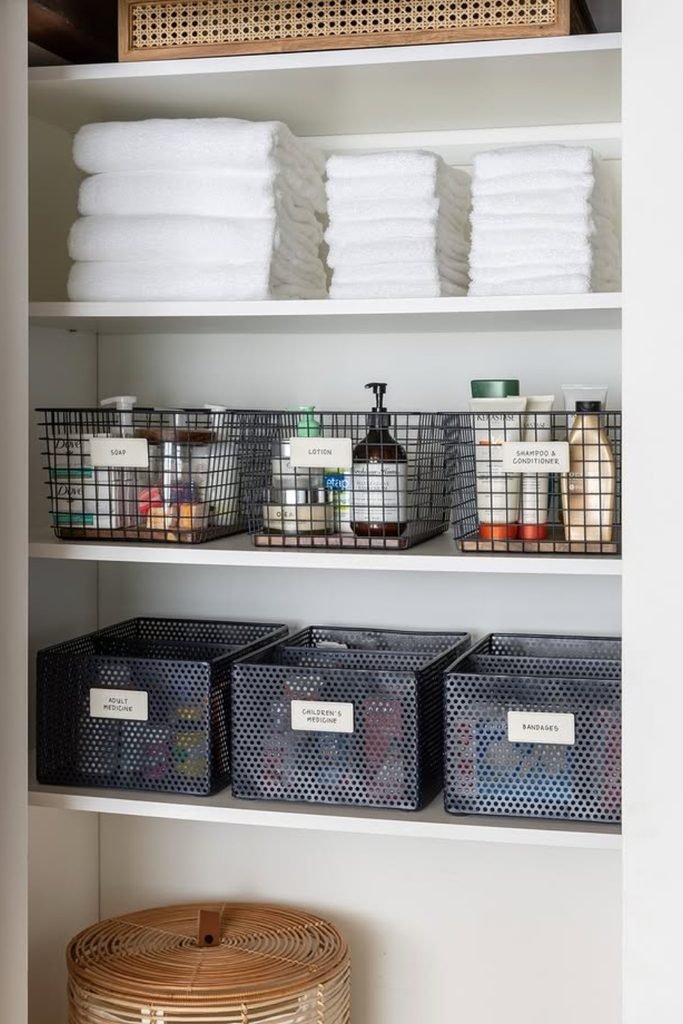
You may also grab the wrong product simply because labels, categories, & expiry dates are difficult to check quickly.
What starts as a small emergency can become more stressful because the cabinet slows down your response.
That’s why medicine cabinet organization is ultimately a safety issue, not just a tidiness issue.
How to Divide Medicine Cabinet?
Sorting medicines only by type can still slow you down when you need something quickly.
A better system is to organize items based on how urgently you may need to reach them.
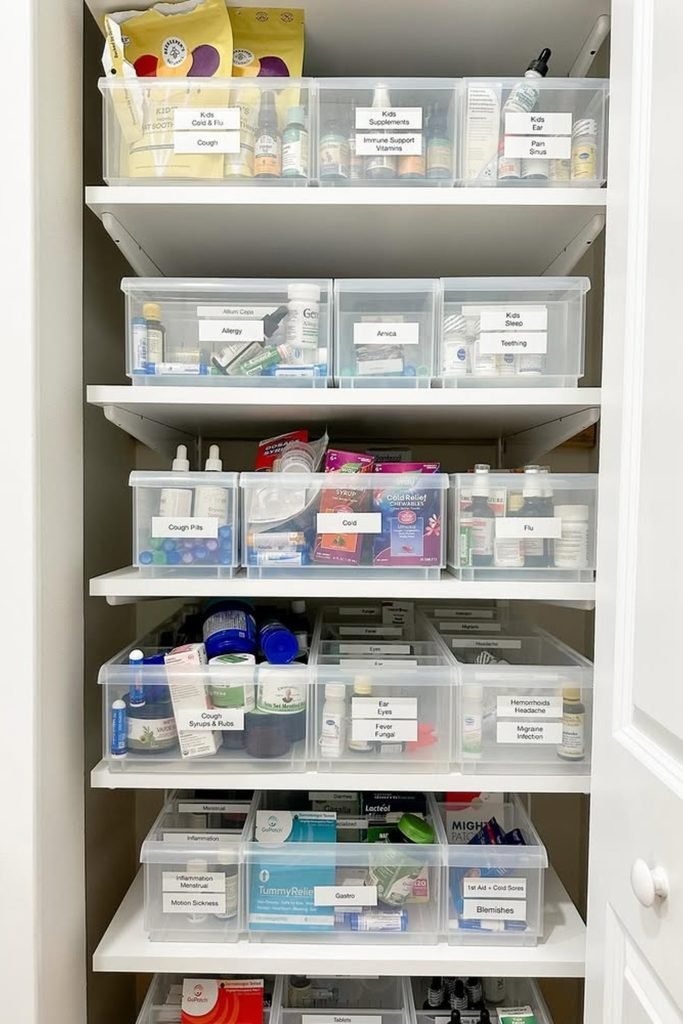
Keep fast-response medicines easiest to access, while less urgent products can sit farther back.
This makes the cabinet easier to use when every second feels important.
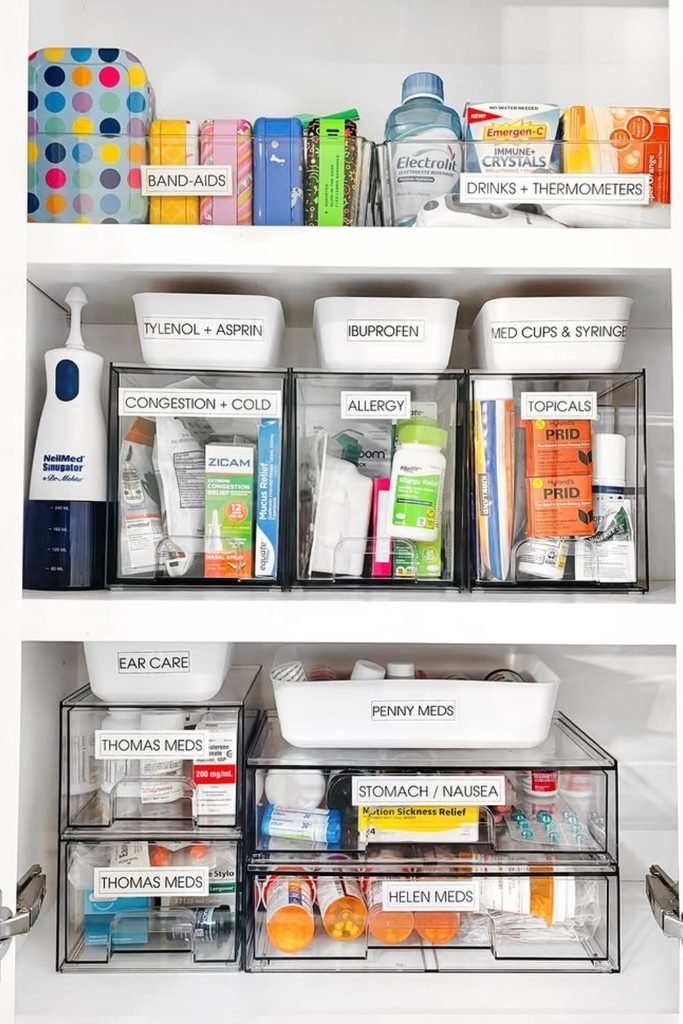
1. Emergency-Access Zone
Keep allergy medicine, asthma inhalers, and fever reducers at eye level where you can spot them instantly.
Place these items at the very front so nothing blocks access during an urgent situation.
Everyone in the household should know exactly where this emergency-access zone is located.
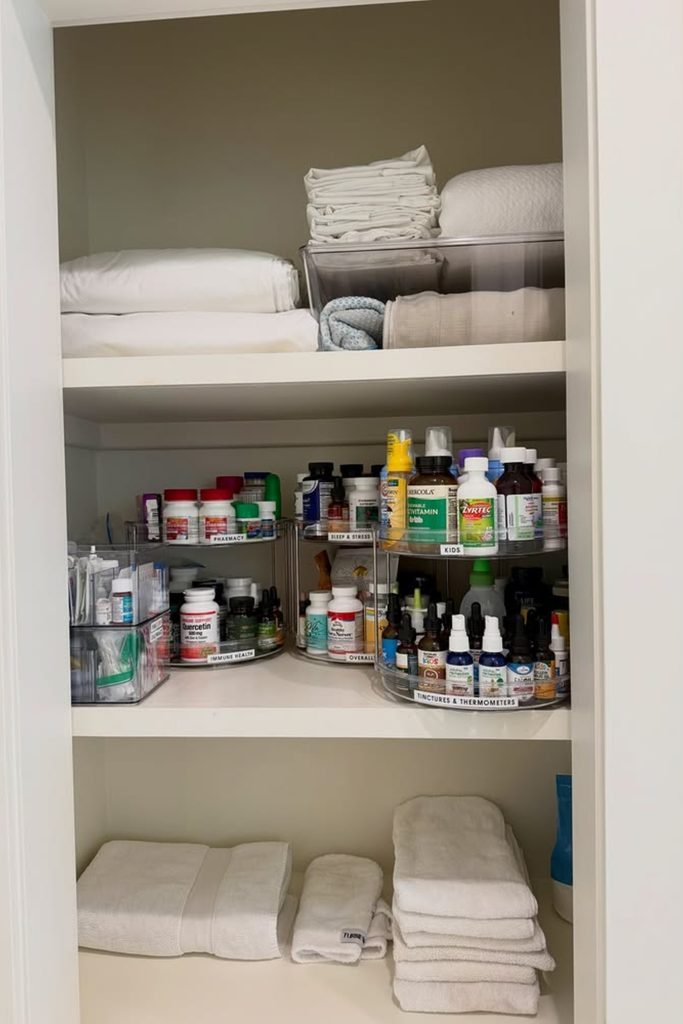
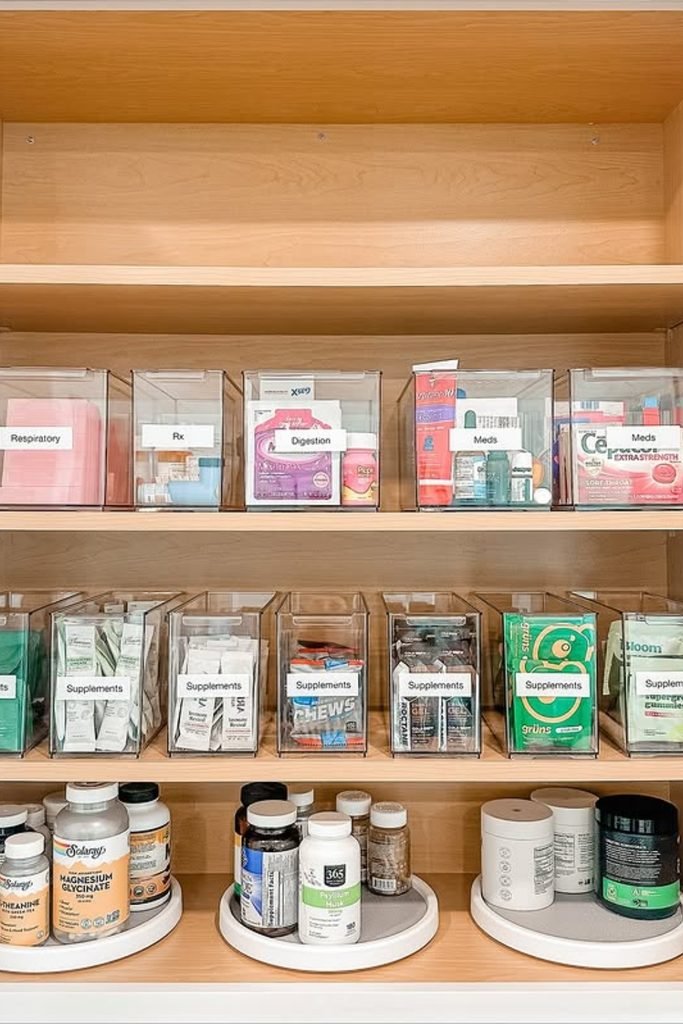
2. Daily/Routine Medicine Zone
Keep daily prescriptions, vitamins, and supplements together in one fixed and easy-to-remember spot.
A consistent location makes your routine simpler and reduces the chance of forgetting regular medicines.
Avoid mixing them with occasional products that can make everyday medicines harder to notice.
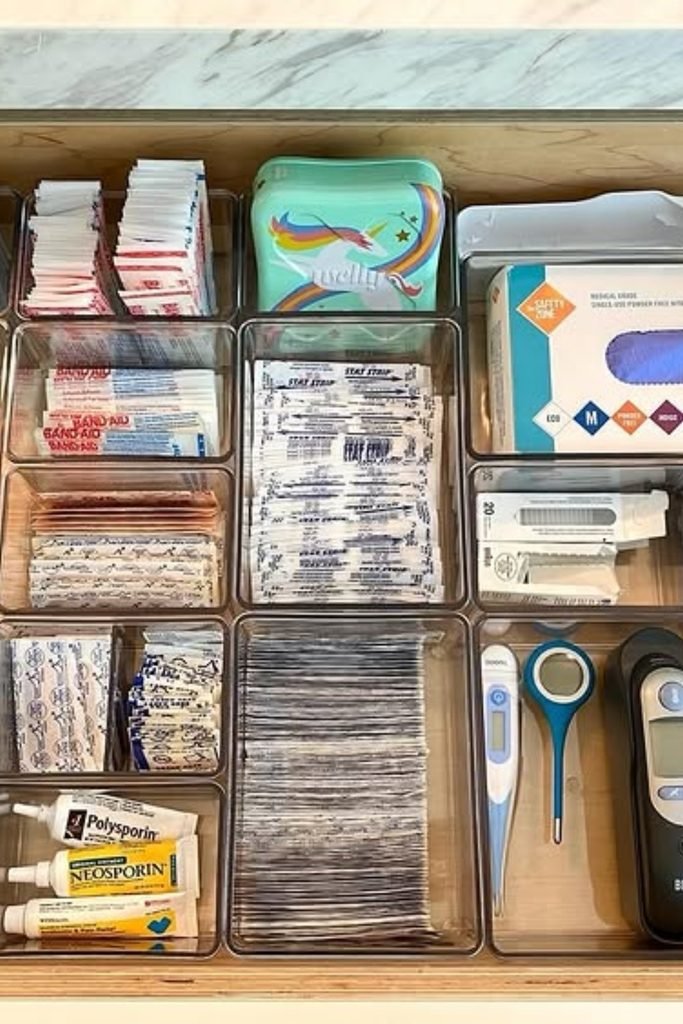
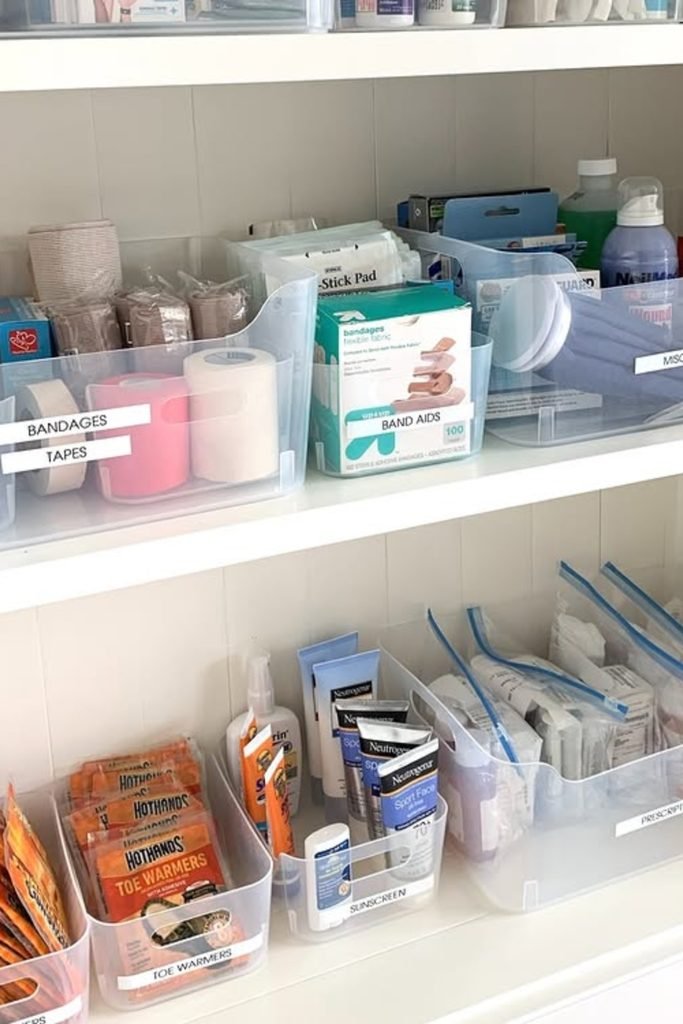
3. First-Aid Zone
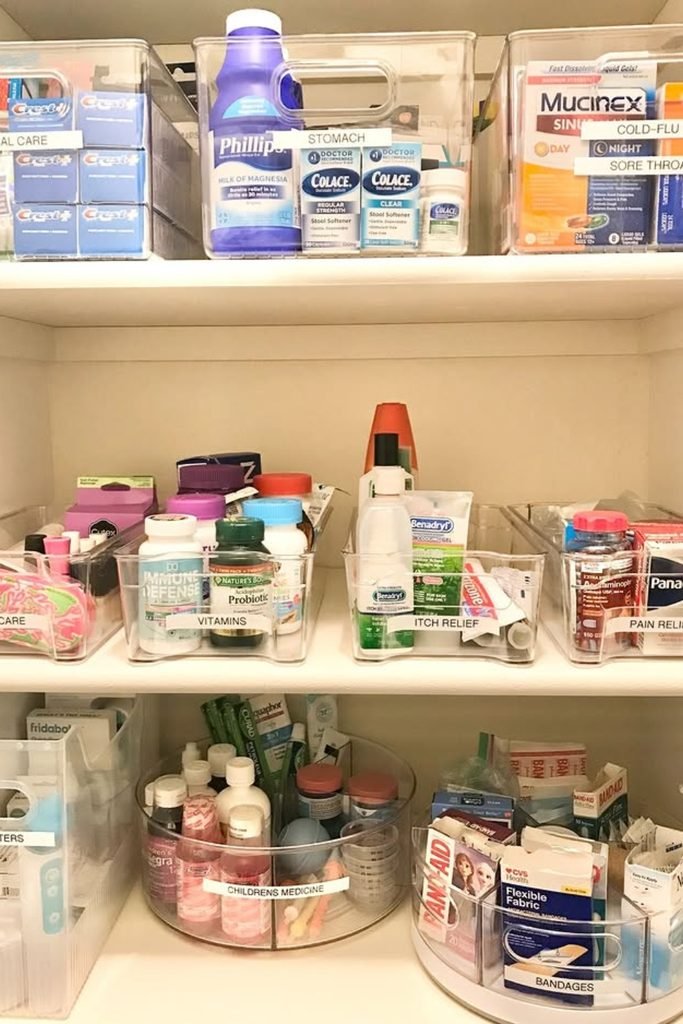
Create a separate section for bandages, antiseptic, cotton, gauze, and other basic wound-care supplies.
Keeping these items together helps you respond quickly when someone gets a cut or minor injury.
Make sure frequently used first-aid supplies stay visible instead of buried behind medicine bottles.
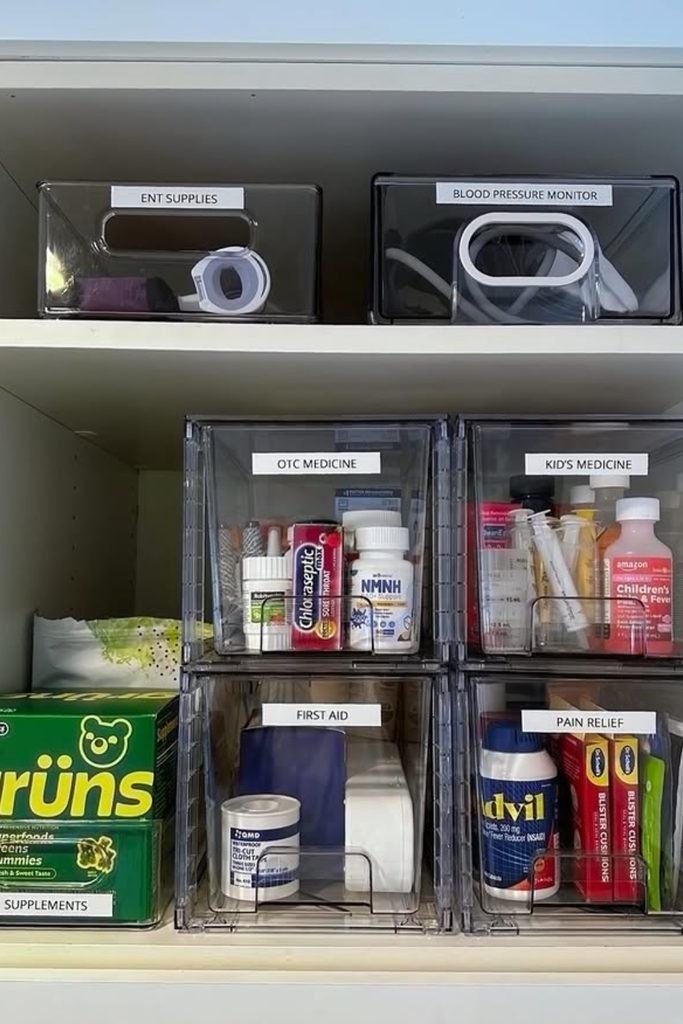
Organize According to Medicine Expiry Dates
Not every medicine should be treated the same, especially when some products expire much faster than others.
Items with shorter shelf lives should stay more visible so they are checked and used before older stock gets forgotten.
Longer-lasting products can sit farther back without taking attention away from items that need earlier review.
1. Short-Shelf-Life Items
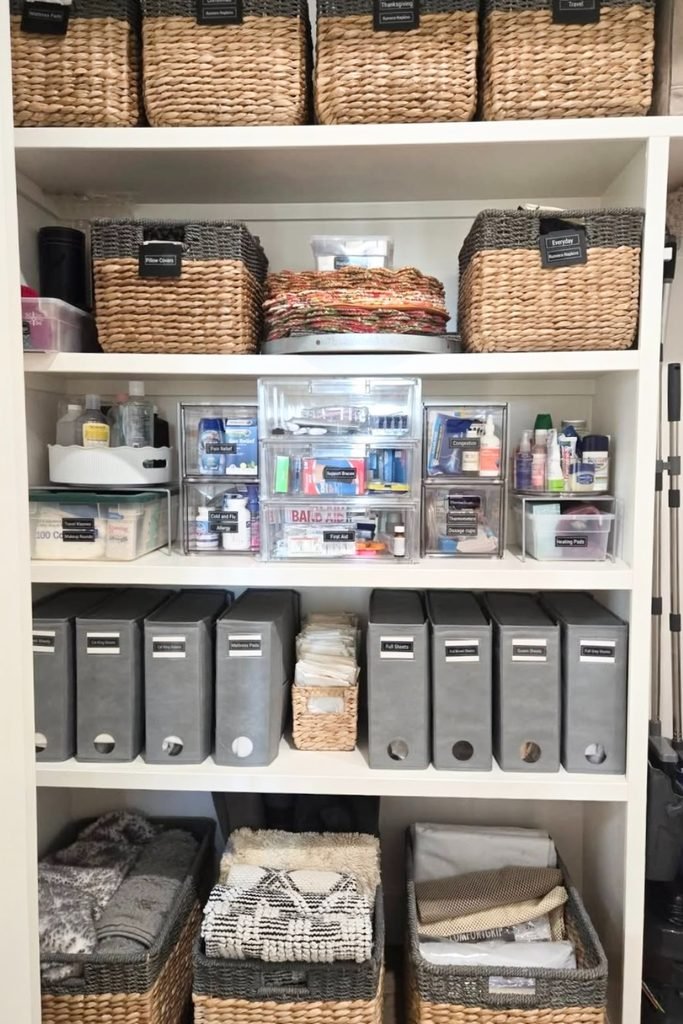
Keep liquid medicines and opened ointments in the front row where their dates are easy to notice.
These products often need closer attention because opening them can shorten how long they remain suitable to use.
Place them where you will naturally check them first instead of letting them disappear behind other medicines.
2. Long-Shelf-Life Items
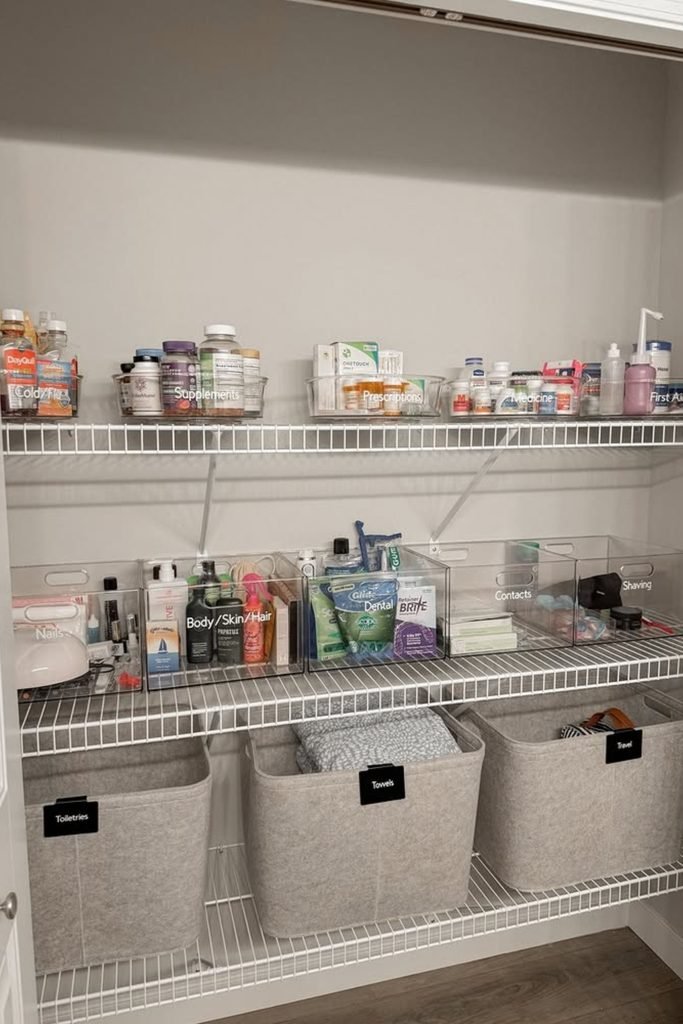
Sealed tablets and longer-lasting first-aid supplies can usually stay farther back without creating the same expiry risk.
They still need expiry checks, but they do not require the most visible space in the cabinet.
Use the front area for higher-risk items while keeping these products neatly grouped behind them.
3. Check Every 3 Months – Bin
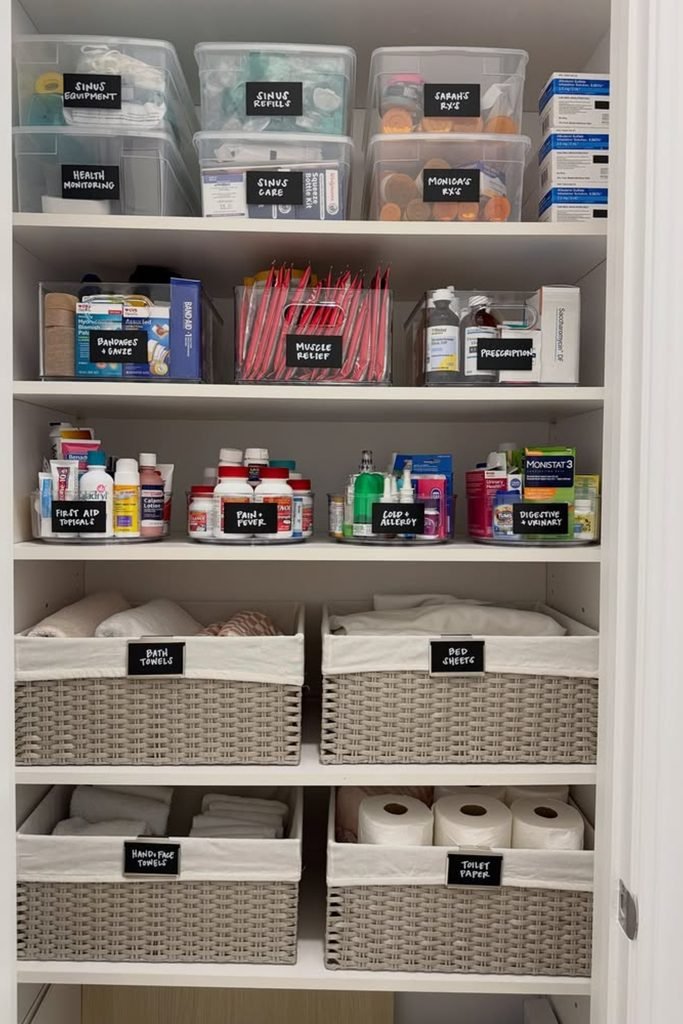
Create one small bin for medicines with unclear dates, older packaging, or anything you are unsure about.
Review this bin every three months so questionable items do not quietly remain mixed with current medicines.
This gives you a simple trigger for checking items that are most likely to be forgotten.
How to Setup Expiry-Check System?
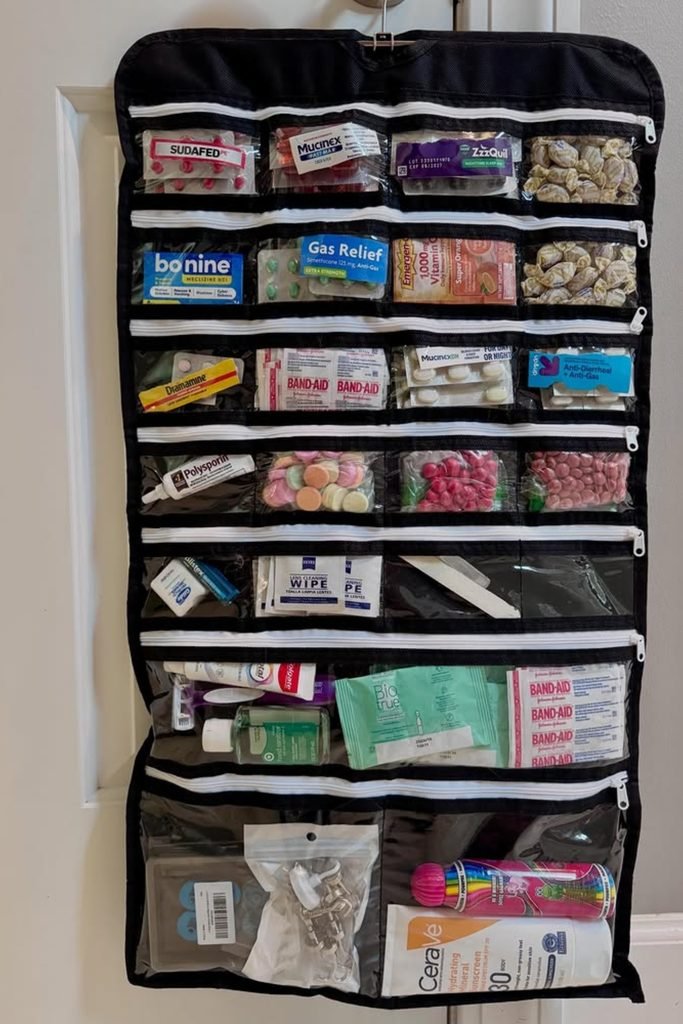
Write the expiry date clearly with a bold marker whenever the original print is too small to notice quickly.
Make this a habit every time a new medicine enters the cabinet so no item depends on tiny packaging dates.
Set a recurring reminder every three months to scan every shelf, bin, and bottle for approaching expiry dates.
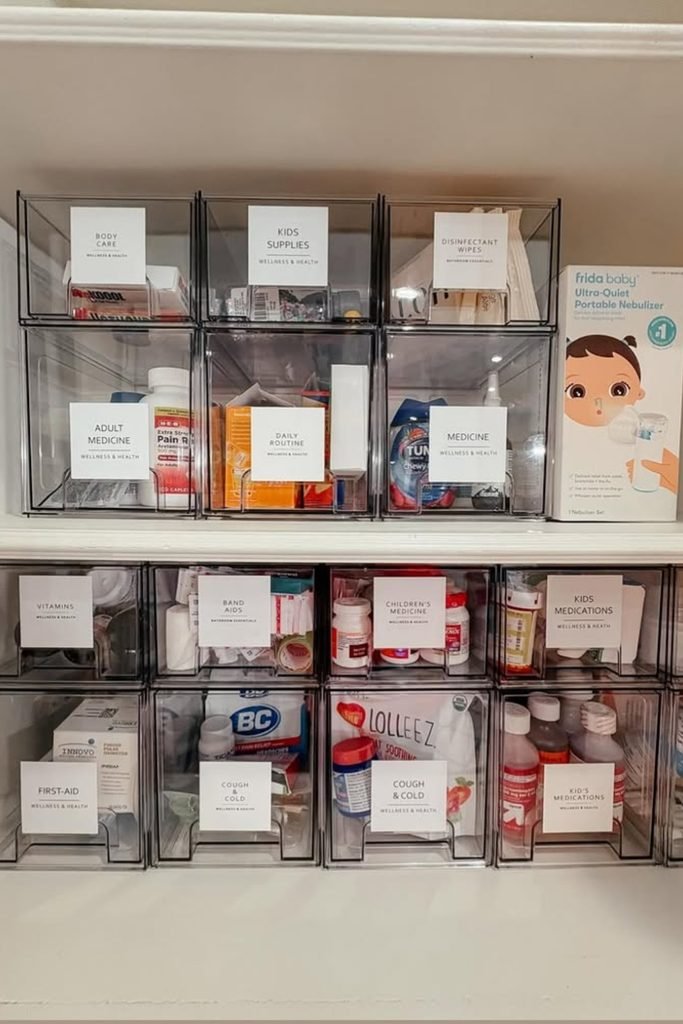
Remove expired medicines immediately instead of leaving them inside the cabinet where they could accidentally be used later.
You can follow the medicine label or local disposal guidance so expired products are removed safely rather than simply stored somewhere else.
Which Medicines Should Be in the Cabinet?
Not every medicine belongs in the same cabinet, especially if that space is exposed to bathroom heat or humidity.
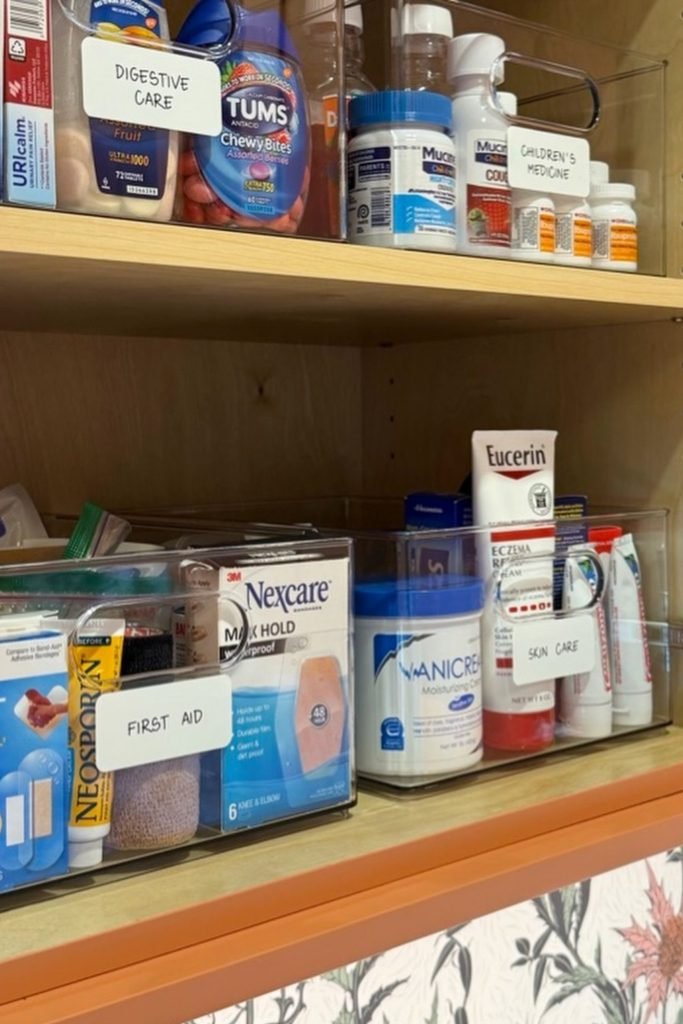
Choose storage based on the medicine label, moisture sensitivity, temperature requirements, & how quickly you need regular access.
| Medicine Type | Cabinet / Elsewhere | Why |
| Daily-use medicines | Cabinet, if cool and dry | Keeps regularly needed medicine easy to access without compromising recommended storage conditions. |
| Humidity-sensitive medicines | Elsewhere | A cool, dry drawer or closet protects them better from bathroom moisture and heat. |
| Refrigerated medicines | Elsewhere | These must stay refrigerated according to their storage instructions. |
| Liquid medicines | Cabinet, if label allows | Easy access is useful, but temperature and storage directions should always come first. |
| Emergency medicines | Easy-access location | They should be quickly reachable while still being stored according to label instructions. |
| Occasional-use medicines | Cool, dry storage | They do not need prime cabinet space and can be stored safely away from heat and moisture. |
Organize Kids and Adults Medicines
Keeping children’s and adults’ medicines mixed together increases the chance of grabbing the wrong product or strength.
Separate them clearly so each person’s medicine can be identified quickly without checking every bottle during a stressful moment.
Use distinct zones while keeping all medicines secured according to child-safety and storage instructions.
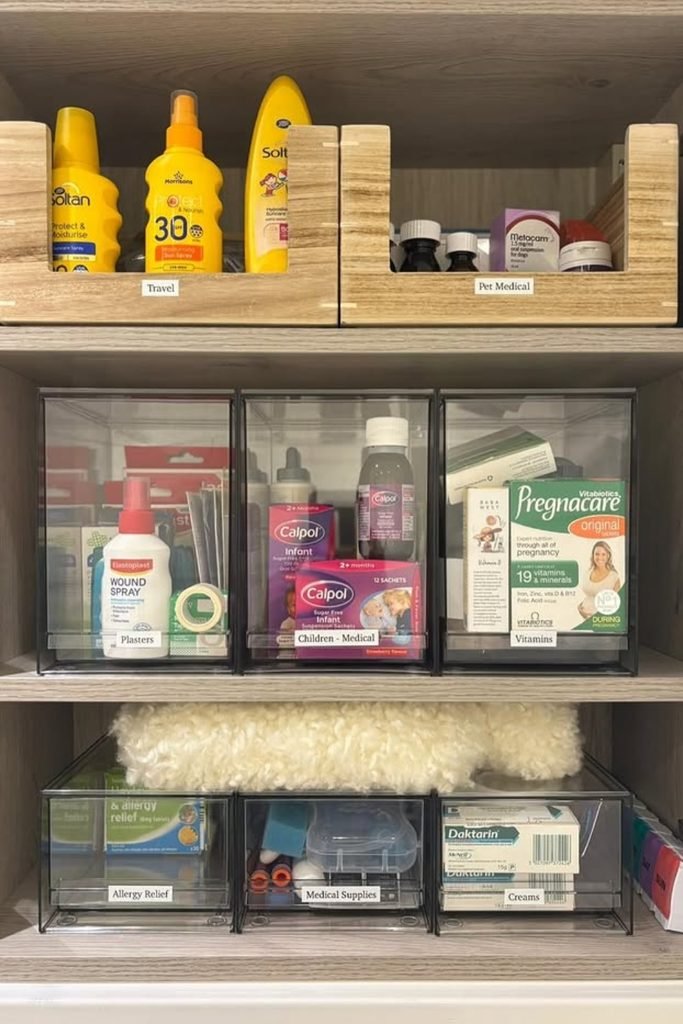
1. High-Shelf Adult
Keep adult-only, prescription, and dosage-sensitive medicines in a high, secure area that children cannot access.
Group prescriptions by person when needed so similar-looking bottles are less likely to be confused.
Keep each medicine in its labeled container so the correct name, strength, and instructions remain visible.
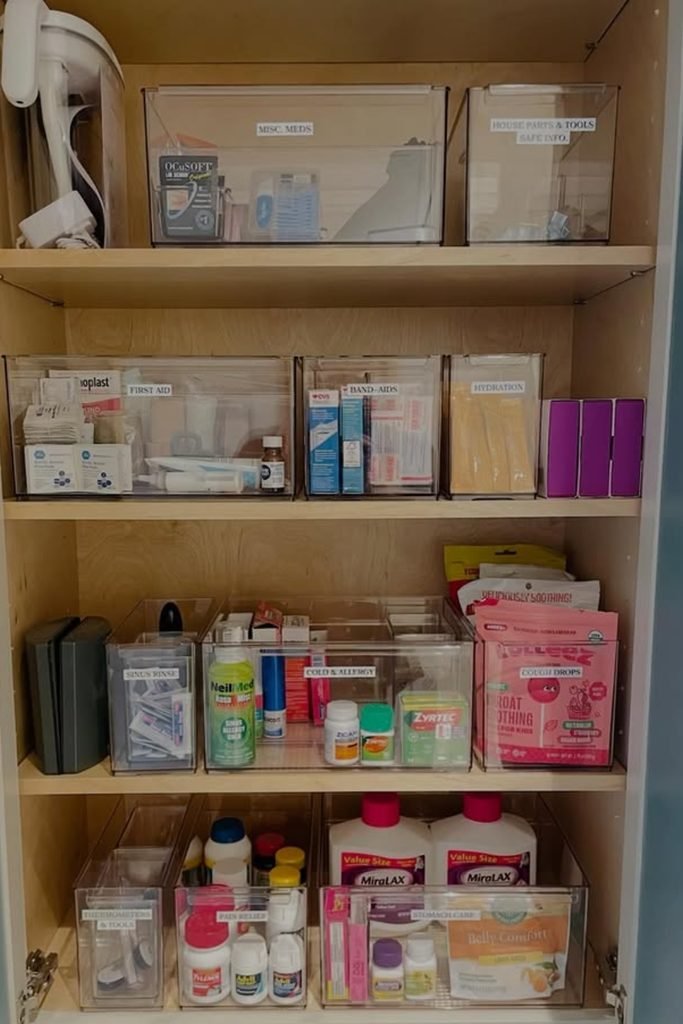
2. Clearly Labeled Kids’ Zone
Create a clearly labeled section for children’s medicines so they never get mixed with adult products.
Keep the original dosing instructions or clinician-provided guidance with each medicine rather than relying on memory.
Even within a kids’ zone, medicines should remain secured and completely out of children’s reach.
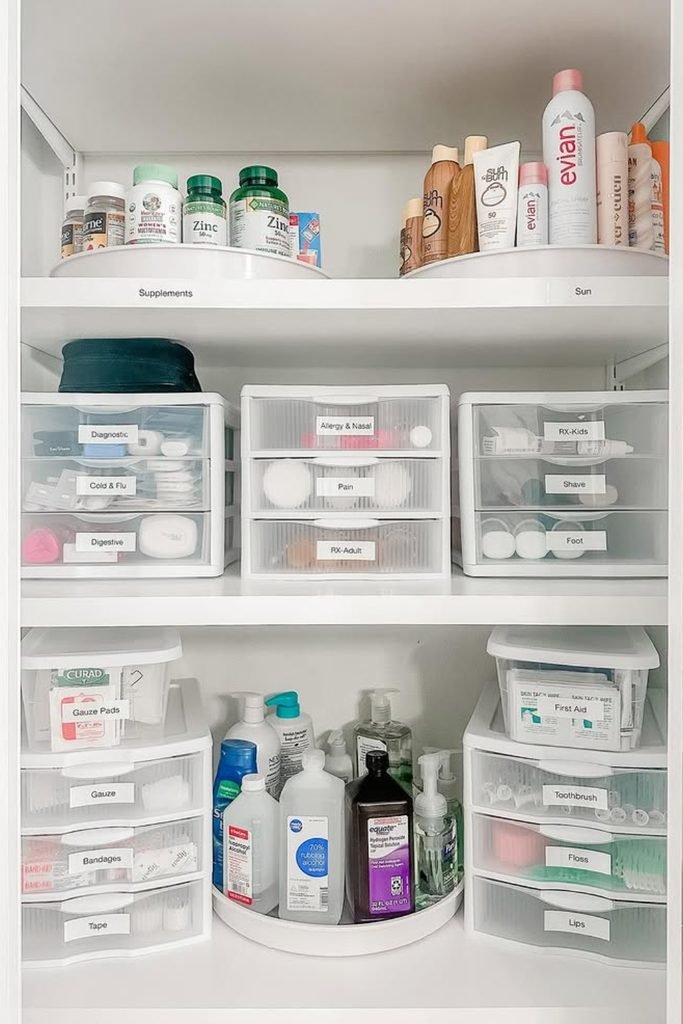
Keep Medicine Labels Readable
A well-organized cabinet is still unsafe if you cannot clearly read the medicine name, strength, expiry date, or directions.
Labels and instructions should remain visible enough that nobody has to guess what a product is or how it is used.
Make readability part of your organization system instead of treating packaging information as something disposable.
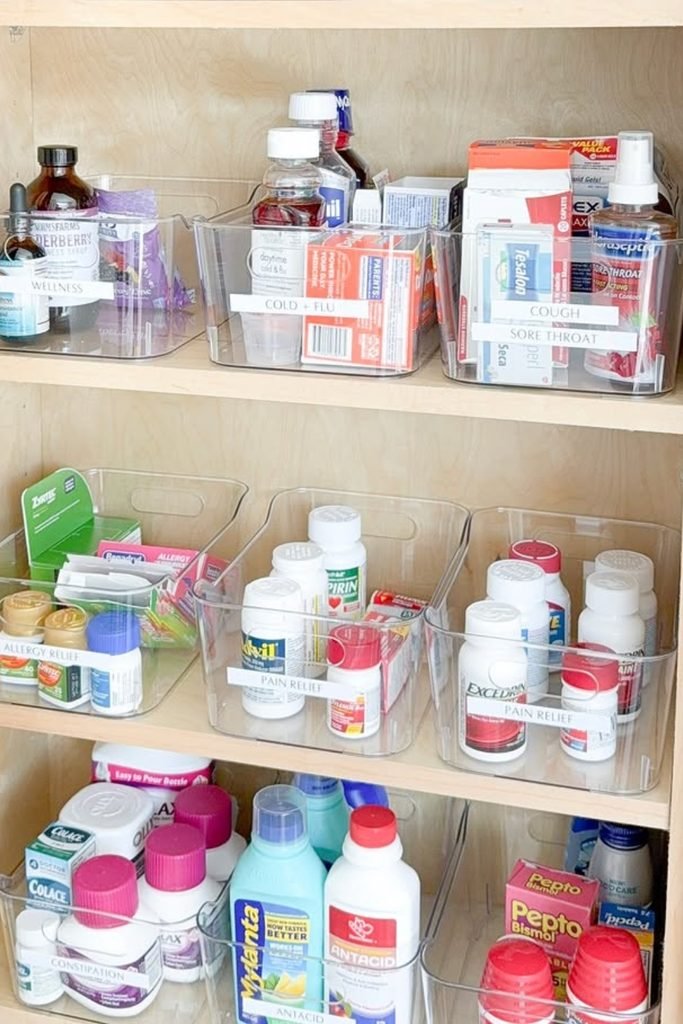
1. The Original-Box Rule
Keep the original box whenever it contains dosage directions, warnings, storage instructions, or other information missing from the bottle.
Store the box with its medicine so important instructions remain easy to reference whenever the product is needed.
Only discard the packaging after the medicine is finished or when all necessary information remains clearly available elsewhere.
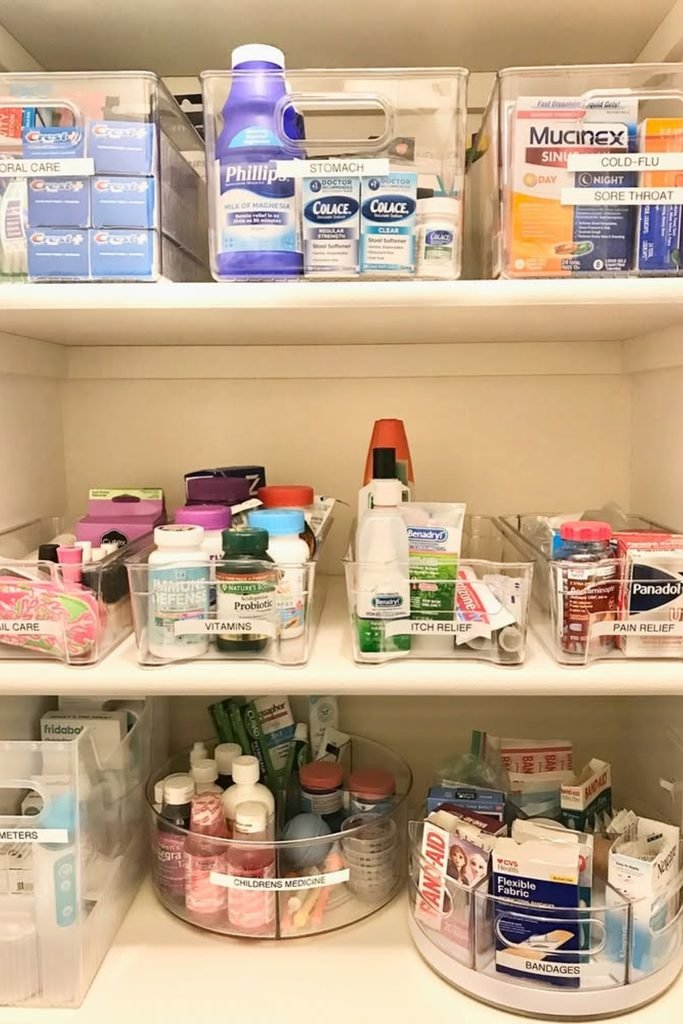
2. The Faded-Label Fix
Deal with faded or damaged labels immediately instead of leaving an unreadable medicine in active storage.
Only rewrite information you can reliably verify from the original packaging, pharmacy label, or another trusted source.
If the medicine cannot be confidently identified, do not guess – set it aside and replace or dispose of it appropriately.
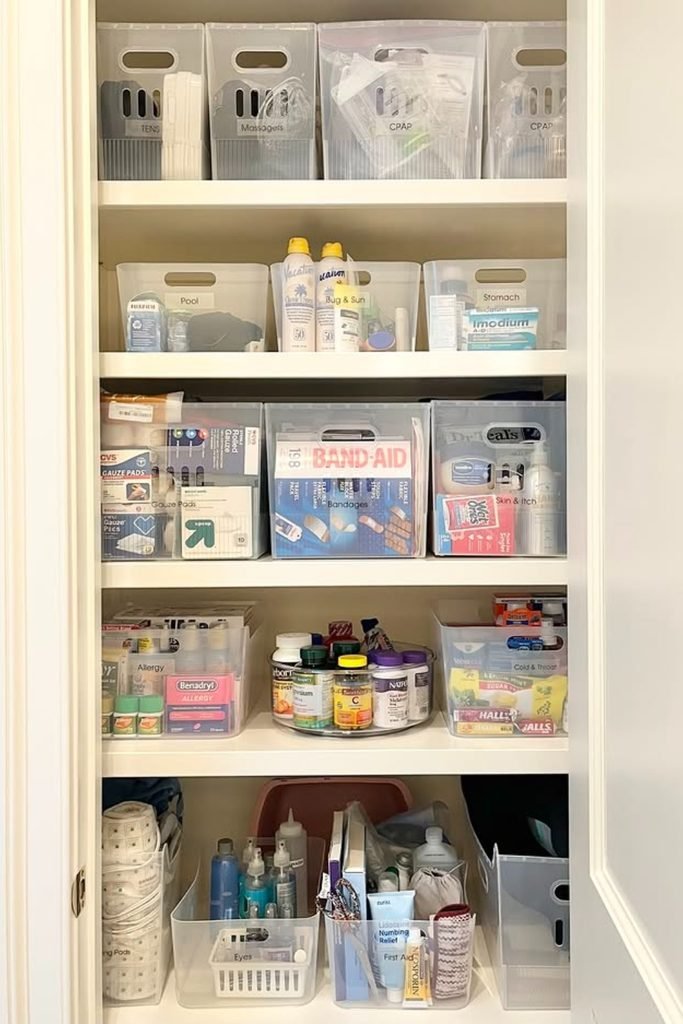
What to Do With Half-Used Prescriptions and Old Medicines?
Leftover prescriptions should not stay in the cabinet indefinitely just because you might need them again someday.
As soon as a prescription course ends, review what remains and whether it should still be kept.
Use a pharmacy or authorized medicine take-back program whenever one is available, especially for stronger prescription drugs.
Don’t automatically throw medicines into household trash; follow the product label or local disposal guidance for safe handling.
Make prescription finished = review immediately a rule so old medicines never quietly build up in your cabinet.
The Restock System for Emergency Medicines
A well-organized medicine cabinet still fails if essential supplies are empty when you suddenly need them.
Restocking should happen before medicines run out, especially for items kept in your emergency-access zone.
Use a simple checking routine so missing or nearly finished essentials never catch you by surprise.
1. Check Emergency Zone Monthly
Check fever reducers, allergy medicines, and other emergency essentials once a month to see what is running low.
Look at both remaining quantity and expiry dates so a full-looking bottle does not give false reassurance.
This quick check helps you replace important items before an illness or minor emergency happens.
2. Replace Immediately
Add an item to your shopping or pharmacy list as soon as you notice it is finished or nearly empty.
Avoid telling yourself you will replace it later, because that is exactly how emergency supplies get forgotten.
Immediate restocking keeps your cabinet ready instead of making you discover missing medicine when you need it most.
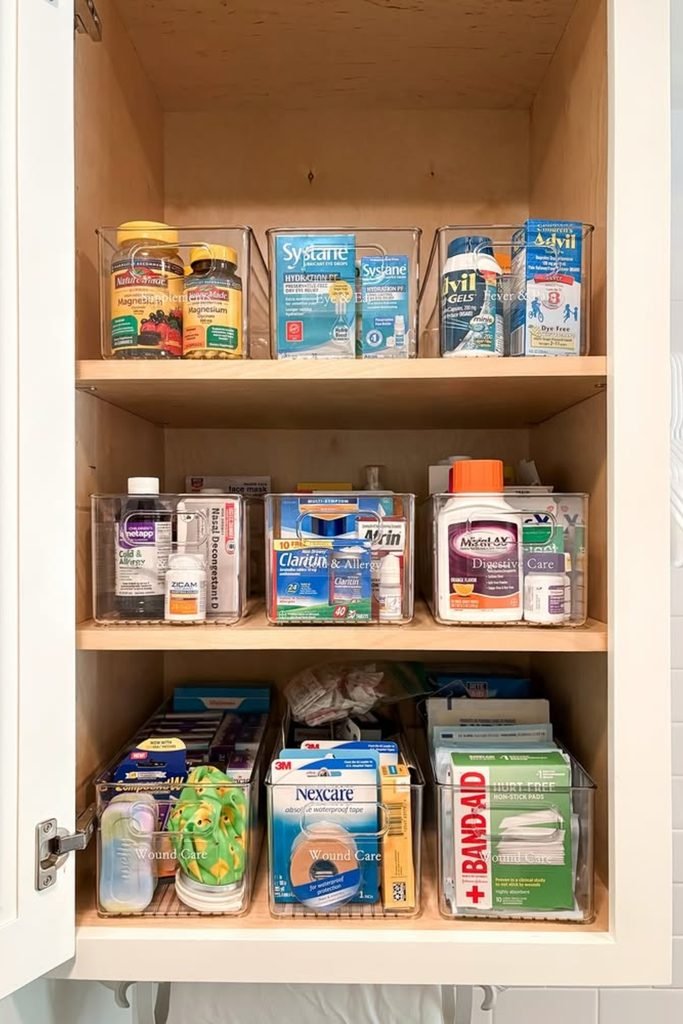
A 5-Minute Quarterly Medicine Cabinet Check
- Scan every medicine and immediately pull out anything expired or with an unreadable date.
- Check opened liquids, ointments, and older products that may need closer attention than sealed medicines.
- Confirm emergency-zone essentials are stocked, clearly labeled, and still within their usable dates.
- Remove duplicates, empty packaging, and medicines that no longer need to remain in active storage.
- Return everything to its correct zone and safely handle anything that needs disposal or replacement.
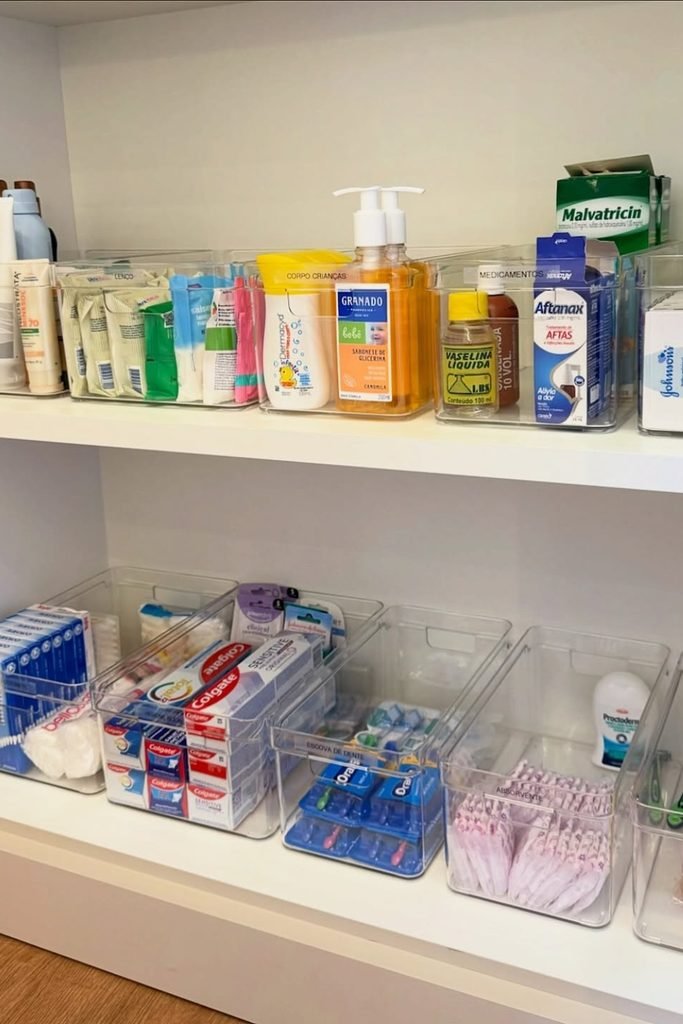
Keep a Medicine Cabinet Organized Long-Term
First, keep emergency, daily, first-aid, and occasional-use items in permanent zones so everyone knows where to look.
Next, expiry-sort each zone by keeping shorter-life or older medicines more visible than longer-lasting products.
Then, label-check regularly so names, strengths, instructions, and expiry dates remain readable without guesswork.
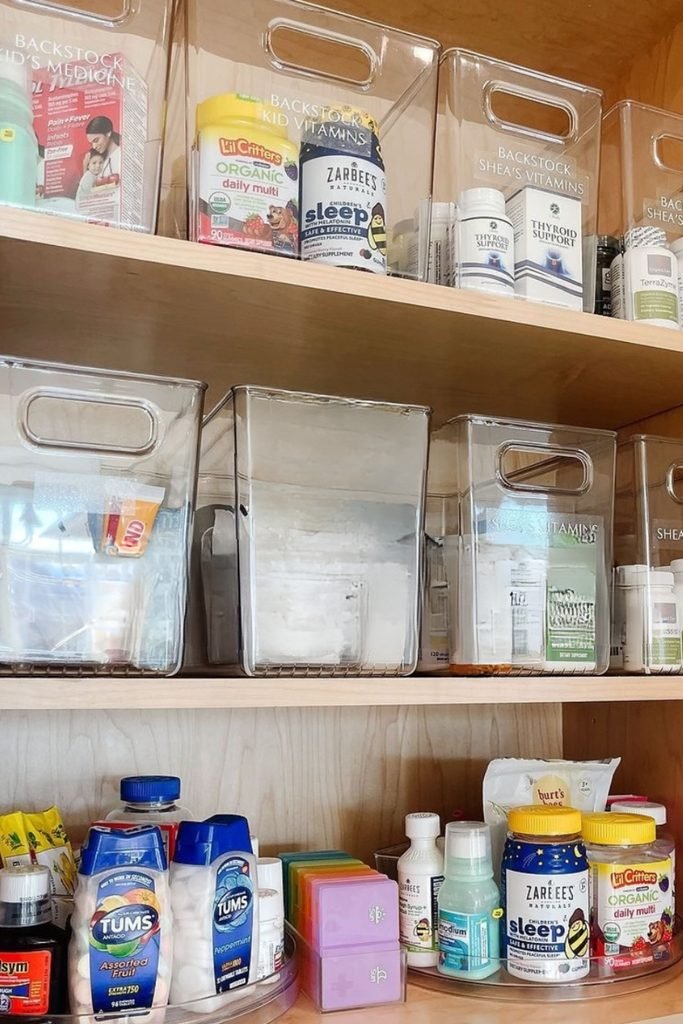
Every three months, reset the cabinet by removing expired items, checking stock levels, and returning misplaced products.
Following the same cycle consistently keeps the cabinet safe and emergency-ready without requiring constant organizing.
Conclusion
Medicine cabinet organization works best when the goal is faster, safer access rather than simply making shelves look tidy.
Clear zones help you find what you need, while visible expiry dates stop forgotten medicines from staying unnoticed.
Regular label checks, responsible disposal, and timely restocking prevent small problems from becoming stressful during an emergency.
Build one repeatable system and maintain it quarterly so your cabinet stays useful when you actually need it.
FAQs
How Often Should You Check Your Medicine Cabinet for Expired Items?
A full cabinet check every three months gives you a simple routine for catching expired or nearly expired medicines early.
You should also check dates whenever adding new medicine, finishing a prescription, or reaching for something you rarely use.
Shorter-life or opened products may need more frequent checks according to their specific label or storage instructions.
What’s the Safest Way to Dispose of Old Medicine?
A pharmacy or authorized medicine take-back program is generally the preferred option when one is available in your area.
For medicines without a take-back option, follow the disposal instructions on the label and your local disposal guidance.
Avoid keeping unwanted prescriptions indefinitely, especially strong medicines that could be accidentally used by someone else.